
Boost Your App Security Posture: Expert Insights on Application Security Posture Management
In today’s threat landscape, organizations face unprecedented pressure to secure their applications against sophisticated cyberattacks. Application security posture management (ASPM) has emerged as a critical discipline that bridges the gap between development teams and security operations. Rather than treating security as an afterthought, modern enterprises recognize that a strong application security posture requires continuous visibility, assessment, and remediation throughout the entire software development lifecycle.
The challenge is clear: traditional security approaches that rely on periodic penetration testing or vulnerability scanning are no longer sufficient. Applications today are deployed at scale, updated frequently, and integrated with countless third-party components and dependencies. Without a comprehensive framework to manage security across all these dimensions, organizations leave themselves exposed to critical risks including data breaches, ransomware attacks, and compliance violations.
This guide explores the essential strategies, tools, and practices that security leaders and development teams use to strengthen their application security posture management initiatives. Whether you’re just beginning your ASPM journey or looking to mature your existing program, these expert insights will help you build a more resilient security foundation.

Understanding Application Security Posture Management
Application security posture management represents a fundamental shift in how organizations approach software security. Rather than viewing security as a compliance checkbox, ASPM treats security as an ongoing operational discipline that requires constant attention and refinement. The core principle is simple: you cannot protect what you cannot see.
At its foundation, ASPM involves discovering all applications within your environment, understanding their architecture and dependencies, identifying security weaknesses, and tracking remediation efforts. This requires visibility across multiple dimensions including source code, build artifacts, runtime behavior, and infrastructure configuration. Organizations implementing ASPM typically find that they have far more applications than they initially realized, many of which were developed by teams that had limited security training or resources.
The ASPM approach differs significantly from traditional vulnerability management. While vulnerability management focuses on identifying and patching known weaknesses, ASPM takes a broader view that encompasses architectural flaws, insecure coding practices, misconfigurations, and risky dependencies. This holistic perspective helps organizations understand not just what vulnerabilities exist, but why they exist and how to prevent similar issues in future development cycles.
Industry leaders increasingly recognize that application security must be integrated into the development process rather than bolted on afterward. According to CISA guidance, organizations should implement security practices that align with the Software Supply Chain Risk Management (SSCRM) framework, ensuring security considerations are embedded at every stage of application development and deployment.
Key Components of a Strong ASPM Program
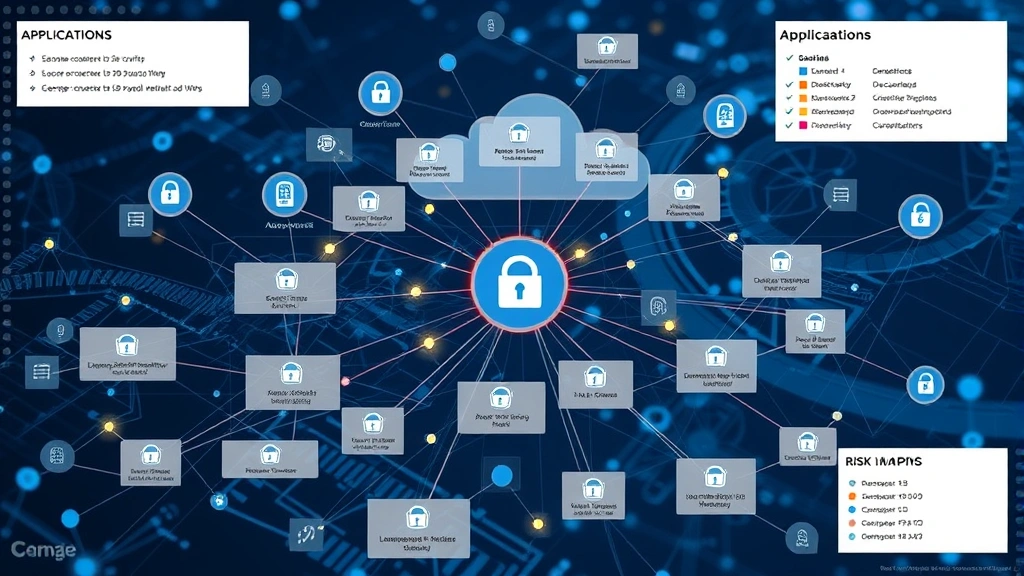
A mature application security posture management program typically includes several interconnected components that work together to provide comprehensive coverage. Understanding each component helps organizations build a balanced program that addresses multiple attack vectors and risk factors.
Asset Discovery and Inventory Management: The foundation of any ASPM program is knowing what applications exist in your environment. This includes both internally developed applications and commercial off-the-shelf (COTS) software. Many organizations struggle with shadow IT, where applications are deployed without proper documentation or governance. Implementing discovery tools that scan your infrastructure, cloud environments, and development repositories helps establish a complete application inventory.
Vulnerability Scanning and Assessment: Automated tools should continuously scan applications for known vulnerabilities, misconfigurations, and weak security practices. This includes static application security testing (SAST), dynamic application security testing (DAST), and software composition analysis (SCA) to identify vulnerable dependencies. These tools work best when integrated directly into the development pipeline, providing feedback to developers as they write code.
Risk Prioritization and Scoring: Not all vulnerabilities carry equal risk. A sophisticated ASPM program uses risk scoring frameworks to prioritize remediation efforts based on factors including vulnerability severity, asset criticality, exploitability, and business context. This ensures security teams focus on the issues that matter most.
Remediation Tracking and Compliance: ASPM programs must track remediation efforts from identification through resolution. This includes managing SLAs for different severity levels, ensuring accountability, and generating reports that demonstrate progress to stakeholders. Integration with ticketing systems and project management tools helps keep remediation efforts aligned with development schedules.
Threat Intelligence Integration: Connecting your ASPM program to threat intelligence feeds ensures you understand emerging threats relevant to your applications. This helps prioritize vulnerabilities that are actively being exploited or targeted by threat actors, rather than treating all vulnerabilities equally.
Implementing Continuous Vulnerability Assessment
Continuous vulnerability assessment is the operational heartbeat of a strong application security posture. Rather than conducting security assessments on a schedule (quarterly, annually), continuous assessment provides real-time visibility into the security state of applications as they evolve.
The shift to continuous assessment requires rethinking how organizations approach security testing. Traditional penetration testing conducted once or twice per year provides a snapshot in time, but applications change constantly. New code is deployed, dependencies are updated, configurations are modified, and new attack techniques emerge. A continuous assessment model acknowledges these realities and provides ongoing monitoring.
Implementing continuous assessment involves deploying multiple scanning tools that work in concert. Static analysis tools examine source code before compilation, identifying coding flaws and security weaknesses. Dynamic analysis tools test running applications from the outside, simulating attacker behavior. Software composition analysis examines dependencies and third-party libraries, identifying known vulnerabilities in components your application relies on. Infrastructure scanning examines the systems hosting your applications, identifying misconfigurations and security gaps.
The key to successful continuous assessment is automation. Manual security testing cannot keep pace with modern development velocity. Automated tools must be integrated into CI/CD pipelines, running on every commit or build. This provides immediate feedback to developers, allowing them to fix issues before code reaches production. Organizations that have implemented this approach report significant improvements in their ability to catch and remediate security issues early in the development lifecycle.
According to NIST cybersecurity guidance, organizations should implement continuous monitoring and assessment as part of their overall security program, with particular attention to identifying and responding to configuration changes that might introduce vulnerabilities.
Integration with DevSecOps Workflows
One of the most important aspects of modern ASPM is integration with DevSecOps practices. DevSecOps represents the cultural and technical shift required to embed security into development workflows rather than treating it as a separate, downstream function.
Successful DevSecOps integration requires several key changes. First, security tools must be integrated into the continuous integration and continuous deployment (CI/CD) pipeline. Rather than waiting for code to be deployed to production and then scanning it for vulnerabilities, security scanning should happen as part of the build process. This allows developers to identify and fix issues immediately, before code is committed to production.
Second, security teams must work collaboratively with development teams rather than adversarially. This means providing clear, actionable feedback about security issues, helping developers understand why something is a problem, and supporting them in implementing secure fixes. Many development teams view security requirements as obstacles to productivity, but security teams that position themselves as enablers rather than blockers gain much greater cooperation.
Third, security must be part of the definition of done for software development. Rather than being an afterthought, security requirements should be integrated into user stories, acceptance criteria, and testing procedures. This ensures that security is considered from the beginning of development rather than being retrofitted at the end.
Fourth, organizations should implement security gates in their deployment pipelines. These gates automatically block deployment of applications that contain critical vulnerabilities or violate security policies. While these gates must be configured carefully to avoid slowing development excessively, they provide an important safeguard against deploying insecure code to production.
Organizations implementing these DevSecOps practices typically see improvements in several areas: faster remediation of security issues, fewer vulnerabilities reaching production, improved collaboration between development and security teams, and ultimately a stronger application security posture.
Metrics and Measurement Frameworks
Measuring the effectiveness of your application security posture management program is essential for demonstrating value to stakeholders and identifying areas for improvement. However, security metrics can be tricky to get right. Poor metrics can actually incentivize undesirable behaviors or mask real security problems.
Effective ASPM metrics typically focus on outcomes rather than just activities. Counting the number of vulnerabilities found is not as meaningful as tracking the number of vulnerabilities remediated, the time from discovery to remediation, and the types of vulnerabilities being introduced in new code. These outcome-focused metrics provide better insights into whether your program is actually reducing risk.
Key metrics to track include:
- Mean time to remediation (MTTR): How long does it take to fix vulnerabilities once identified? Shorter times indicate more responsive remediation processes.
- Vulnerability introduction rate: How many new vulnerabilities are being introduced in new code? Declining rates indicate that security practices are becoming more effective.
- Coverage metrics: What percentage of applications are included in your ASPM program? Higher coverage indicates more comprehensive risk management.
- Risk reduction: Is the overall risk profile of your application portfolio declining? This requires risk scoring and tracking over time.
- Compliance metrics: Are applications meeting security compliance requirements? What percentage of applications are compliant with your security policies?
Beyond these quantitative metrics, organizations should also track qualitative indicators such as developer security awareness, security culture maturity, and the effectiveness of security training programs. These indicators help explain why metrics are improving or declining and inform decisions about resource allocation and program improvements.
Common Pitfalls and How to Avoid Them
Organizations implementing application security posture management programs often encounter predictable challenges. Learning from others’ experiences can help you avoid costly mistakes and accelerate your program maturation.
Pitfall 1: Tool Overload: Many organizations attempt to solve security problems by purchasing multiple point solutions, resulting in a fragmented toolchain that creates more work than value. Tools should integrate with each other and with your existing development infrastructure. Start with a core set of tools and expand thoughtfully based on actual needs.
Pitfall 2: Unrealistic Expectations: ASPM is not a quick fix. Building a mature program takes time, typically 12-24 months to achieve meaningful results. Organizations that expect immediate perfection often become discouraged and abandon their efforts. Set realistic milestones and celebrate incremental progress.
Pitfall 3: Security-Development Disconnect: Some organizations implement ASPM as a security team initiative without meaningful developer involvement. This creates friction and reduces effectiveness. Security and development teams must work together from the beginning, with clear communication and shared goals.
Pitfall 4: Ignoring False Positives: Security scanning tools generate false positives—alerts about issues that aren’t actually problems. If developers spend too much time investigating false positives, they become discouraged and start ignoring alerts. Invest in tuning your tools and validating findings to minimize false positives.
Pitfall 5: Lack of Governance: Without clear policies and governance, ASPM programs can become inconsistent. Some applications receive rigorous security assessment while others receive none. Establish clear policies about which applications require assessment, what standards they must meet, and how exceptions are handled.
Pitfall 6: Insufficient Training: Developers cannot write secure code if they don’t understand security principles. Invest in security training for your development teams, tailored to their specific technology stacks and application domains. Regular training helps keep security top-of-mind as development practices evolve.
Building a Resilient Security Culture
Ultimately, the success of your application security posture management program depends on building a security-conscious culture within your organization. Tools and processes are important, but culture determines whether people actually follow security practices.
Building this culture requires several elements working together. First, security leadership must visibly prioritize application security, not just in words but through resource allocation and decision-making. When security gets cut during budget crises, everyone notices and concludes that security is not actually a priority.
Second, developers must understand why security matters. Rather than presenting security as a burden or compliance requirement, help developers see security as essential to protecting users, maintaining reputation, and building products that customers can trust. Many developers are motivated by these principles and will embrace security practices when they understand the impact.
Third, organizations should recognize and reward security contributions. This might include acknowledging developers who proactively identify and fix security issues, recognizing teams that achieve strong security metrics, or creating career paths for security-focused engineers. What gets measured and rewarded tends to get done.
Fourth, learning from security incidents should be built into your culture. When breaches or vulnerabilities occur, organizations should conduct thorough post-incident reviews focused on understanding root causes and improving processes rather than assigning blame. This creates psychological safety around discussing security problems, which is essential for identifying issues before they become breaches.
Finally, security should be integrated into your organization’s broader values and mission. When security is seen as core to how the organization operates rather than as a separate function, it becomes much more effective. This integration typically requires sustained effort over years, but the payoff in terms of reduced risk and improved incident response is substantial.
Organizations that have successfully built strong security cultures report that their teams are more proactive about identifying and addressing security issues, their incident response is more effective, and their overall risk profile is significantly lower than peers who have not invested in cultural change.
FAQ
What is the difference between ASPM and traditional vulnerability management?
Traditional vulnerability management focuses on identifying and patching known vulnerabilities in deployed systems. ASPM takes a broader approach that encompasses the entire application lifecycle, including identifying architectural flaws, insecure coding practices, misconfigurations, and risky dependencies. ASPM also emphasizes prevention—building security into development processes to reduce vulnerabilities before they reach production.
How long does it take to implement an ASPM program?
Implementing a mature ASPM program typically takes 12-24 months, depending on the size and complexity of your organization. Start with foundational elements like asset discovery and basic vulnerability scanning, then gradually add more sophisticated capabilities like risk prioritization and automated remediation tracking. Quick wins in the first few months can help build momentum and stakeholder support.
What tools do we need for ASPM?
A typical ASPM toolchain includes static application security testing (SAST), dynamic application security testing (DAST), software composition analysis (SCA), and infrastructure scanning tools. You’ll also need tools for asset management, vulnerability tracking, and remediation workflow management. Rather than purchasing many point solutions, look for integrated platforms that combine multiple capabilities and integrate with your existing development infrastructure.
How do we balance security with development speed?
The key is automating security checks so they don’t slow down development. When security scanning is integrated into CI/CD pipelines and provides immediate feedback, developers can fix issues quickly without waiting for separate security reviews. Additionally, security gates should be configured to block deployment only for critical issues, allowing lower-risk items to proceed while being tracked for later remediation. This approach actually accelerates development by catching issues early rather than discovering them in production.
What’s the role of threat intelligence in ASPM?
Threat intelligence helps organizations prioritize their remediation efforts by identifying vulnerabilities that are actively being exploited or targeted by threat actors. Rather than treating all vulnerabilities equally, organizations can focus resources on the most dangerous issues. Integrating threat intelligence feeds into your ASPM platform helps ensure that your team is aware of emerging threats relevant to your applications and can respond quickly.
How do we measure ASPM program success?
Focus on outcome-focused metrics rather than activity metrics. Track the mean time to remediation, the rate at which new vulnerabilities are being introduced in code, the percentage of applications covered by your program, and the overall risk reduction in your application portfolio. These metrics provide better insights into whether your program is actually reducing risk than simply counting the number of vulnerabilities found.


