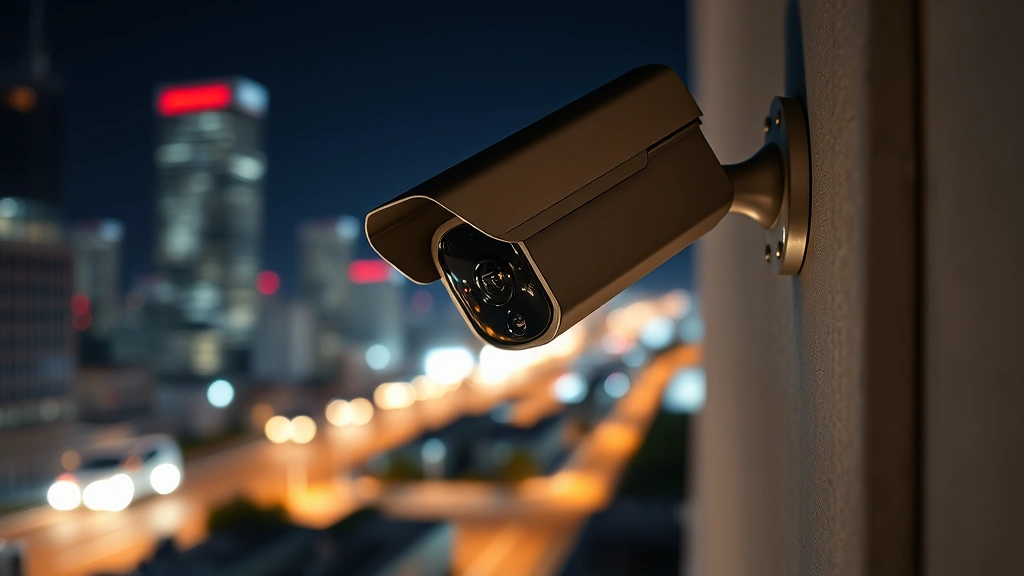
Top 4K Night Vision Cameras: Expert Review & Security Guide
Night vision security has evolved dramatically in recent years, with 4K color night vision cameras now offering unprecedented clarity in low-light environments. Unlike traditional infrared systems that produce grayscale footage, modern 4K night vision technology captures rich color detail even in near-total darkness, making it an essential component of any comprehensive security strategy. This advancement represents a significant leap forward in surveillance capabilities, enabling property owners and security professionals to identify threats with greater accuracy and detail.
The demand for high-quality night surveillance has never been higher, driven by rising security concerns and the need for reliable monitoring across residential, commercial, and industrial applications. When selecting the best 4K color night vision security camera, several critical factors come into play: sensor sensitivity, low-light performance, image processing capabilities, and integration with existing security infrastructure. Understanding these elements helps ensure you invest in equipment that truly meets your security needs rather than settling for marketing hype.

How 4K Night Vision Technology Works
Modern 4K night vision cameras utilize advanced sensor technology and sophisticated image processing algorithms to deliver color footage in low-light conditions. The fundamental principle involves sensors with exceptional sensitivity to light, typically measured in lux ratings. A camera rated at 0.001 lux or lower can capture recognizable color images in environments where the human eye would perceive only darkness.
The technology works through several interconnected mechanisms. Large sensor pixels collect more photons from available light sources, while enhanced image sensors amplify these signals without introducing excessive noise. Additionally, advanced ISP (Image Signal Processing) algorithms intelligently enhance contrast, reduce noise, and preserve color accuracy simultaneously. This is fundamentally different from infrared night vision, which relies on heat detection rather than visible light amplification.
Consider the role of complementary metal-oxide-semiconductor (CMOS) technology in this equation. CMOS sensors have become increasingly sophisticated, with manufacturers implementing features like back-illuminated designs that improve light sensitivity by 30-40% compared to conventional front-illuminated sensors. Some premium models incorporate stacked sensor architectures that separate the photodiode layer from the signal processing layer, enabling faster readout speeds and better low-light performance.
The distinction between passive night vision and active illumination matters significantly. Passive systems rely entirely on ambient light (moonlight, streetlights, starlight), while active systems incorporate infrared or specialized LED illuminators. The best 4K color night vision cameras often employ hybrid approaches, seamlessly switching between passive and active modes based on available light levels.

Top Camera Models Compared
The market offers several exceptional 4K night vision cameras, each with distinct advantages and trade-offs. Understanding how leading models compare helps narrow your selection based on specific requirements.
Premium Professional-Grade Options
Axis Communications Q1656 Series represents the pinnacle of professional network-based surveillance. These cameras deliver true 4K resolution with exceptional low-light performance, incorporating Axis Lightfinder technology that produces color images at 0.4 lux. The integrated analytics capabilities enable intelligent threat detection without requiring external processing hardware. These systems excel in mission-critical applications where false alarms create operational overhead.
Hikvision DeepinView Series combines 4K resolution with deep learning algorithms that enhance night vision clarity beyond traditional approaches. The cameras feature powered-by-AI noise reduction that distinguishes between legitimate image detail and sensor noise, producing remarkably clean footage. Integration with Hikvision’s security ecosystem streamlines deployment across large installations.
Mid-Range Professional Solutions
Uniview IPC322SR-DVP offers excellent value in the professional segment, delivering 4K color night vision with 30-meter infrared range and 120dB wide dynamic range. The camera’s compact design facilitates discreet installation, while its IP67 weatherproofing ensures reliability in harsh environments. The model supports both cloud and on-premises recording, providing deployment flexibility.
Dahua Starlight Series emphasizes affordability without sacrificing performance. These cameras achieve impressive low-light results through proprietary image enhancement algorithms and high-sensitivity sensors that perform admirably in 0.02 lux conditions. The series includes extensive analytics capabilities for motion detection and people counting.
Consumer-Friendly Options
Reolink RLC-810A provides accessible 4K night vision for homeowners and small businesses. The camera delivers solid low-light performance through enhanced sensor design and dual-band Wi-Fi connectivity. Local storage options and cloud backup capabilities offer flexibility in data management. The straightforward setup process makes it ideal for users without extensive technical expertise.
Wyze Cam Pro represents the budget-conscious option, offering surprising capability at a fraction of premium pricing. While not achieving the performance levels of professional systems, the camera delivers respectable 4K night vision through intelligent image processing and optional infrared supplementation. Integration with smart home ecosystems appeals to users seeking unified control platforms.
Key Features to Evaluate
Selecting the right 4K night vision camera requires careful evaluation of multiple technical and practical considerations. These factors directly impact the camera’s effectiveness in your specific security environment.
Sensor Specifications and Light Sensitivity
Lux ratings indicate minimum illumination requirements for color video. Cameras rated at 0.001 lux operate effectively under starlight alone, while 0.1 lux models typically require moonlight or ambient street lighting. Understanding your installation environment’s natural lighting conditions helps determine appropriate sensitivity requirements. Don’t assume lower lux ratings automatically mean better cameras—poor image quality at ultra-low lux levels may be worse than slightly reduced sensitivity with superior image processing.
Signal-to-noise ratio (SNR) measures the distinction between legitimate image information and sensor noise. Higher SNR values produce cleaner footage with more visible detail. Professional cameras typically achieve 50dB+ SNR even in extremely low light, while consumer models may only reach 40dB.
Resolution and Image Quality
True 4K resolution (3840 x 2160 pixels) provides four times the detail of 1080p, enabling effective digital zoom without excessive quality loss. However, resolution alone doesn’t determine image quality. Lens quality, sensor size, and image processing algorithms collectively determine whether that 4K resolution translates into usable detail or merely technical specifications.
Dynamic range capabilities affect the camera’s ability to simultaneously capture detail in bright and dark areas. Wide dynamic range (WDR) technology prevents bright areas from washing out while maintaining shadow detail. Professional cameras achieving 120dB+ WDR handle challenging lighting scenarios where amateur systems would fail.
Infrared Supplementation Options
While 4K color night vision excels in ambient light conditions, infrared supplementation provides critical capability in completely dark environments. LED-based infrared emitters offer silent, invisible illumination that doesn’t alert potential intruders. Some advanced cameras implement smart IR technology that adjusts intensity based on distance, preventing overexposure in close-range scenarios.
Thermal imaging integration in premium systems detects heat signatures regardless of lighting conditions, providing an additional security layer. These systems excel at detecting human presence even when visual identification isn’t possible.
Smart Analytics and Processing
Modern 4K night vision cameras increasingly incorporate on-device artificial intelligence that enables intelligent threat detection without cloud processing. Features like person detection, vehicle tracking, and intrusion alerts reduce false alarms from wind-blown vegetation or animal movement. These capabilities transform cameras from passive recording devices into active security participants.
Edge processing capabilities allow cameras to perform complex analysis locally, reducing bandwidth requirements and improving response times. This proves particularly valuable in bandwidth-constrained installations or applications requiring rapid threat notification.
Installation and Integration Considerations
Even the most sophisticated 4K night vision camera underperforms if installation doesn’t optimize its capabilities. Proper positioning, cabling, and integration are critical to success.
Strategic Placement for Night Vision
Unlike traditional cameras that rely on visible light, 4K night vision systems require different positioning strategies. Avoid direct backlighting from street lamps or building lights that can create excessive contrast and degrade night vision performance. Position cameras to receive ambient light from multiple directions rather than a single source.
Minimize reflective surfaces near camera lenses that might create glare or false reflections during night hours. Glass doors, polished metal, and water features can significantly impact night vision clarity. Testing camera positioning during actual nighttime conditions reveals issues invisible during daytime evaluation.
The ScreenVibe Daily Blog discusses the importance of comprehensive planning in security implementations, a principle equally applicable to camera placement strategy.
Network Infrastructure Requirements
4K night vision cameras generate substantial data volumes—a single camera recording continuously at 4K resolution can produce 100-200GB daily depending on compression settings. Adequate network bandwidth becomes essential, requiring gigabit Ethernet or high-quality wireless connectivity. Plan for network switches with sufficient backplane capacity to handle multiple 4K streams simultaneously without bottlenecking.
Power over Ethernet (PoE) technology simplifies installation by eliminating separate power cabling. High-power PoE (90 watts) supports advanced cameras with built-in illuminators and processing. Ensure your PoE infrastructure matches camera power requirements to avoid performance degradation.
Storage and Retention Planning
Local storage solutions using network-attached storage (NAS) devices provide reliable recording without cloud dependencies. Plan storage capacity based on retention requirements and compression efficiency. Modern H.265 codec implementation reduces storage needs by 50% compared to H.264 while maintaining quality.
Redundant storage systems protect against single-point failures that could compromise security footage during critical incidents. RAID configurations ensure continued operation if individual drives fail, maintaining surveillance continuity.
Consider reviewing how to become a film critic principles regarding detail observation—the same attention to technical specifications applies when evaluating storage solutions for security applications.
Integration with Existing Security Systems
Modern 4K night vision cameras integrate with comprehensive security management platforms that unify monitoring, alerting, and incident response. Ensure your camera selection aligns with existing infrastructure rather than creating isolated systems. ONVIF compliance enables interoperability across different manufacturers’ equipment.
API accessibility allows custom integrations with specialized security applications, access control systems, and business intelligence platforms. This flexibility proves invaluable in complex security environments requiring sophisticated threat response protocols.
Review the best movie review sites approach to comprehensive evaluation—apply similar multi-faceted analysis when assessing camera integration capabilities with your security ecosystem.
Frequently Asked Questions
Can 4K night vision cameras work without any supplemental lighting?
Yes, quality 4K color night vision cameras produce usable footage under moonlight or ambient street lighting. However, completely dark environments require infrared supplementation. The best 4K color night vision security camera balances passive performance with optional active illumination for maximum flexibility across varying conditions.
How does 4K night vision compare to thermal imaging for security applications?
4K night vision excels at identifying specific details—faces, license plates, clothing—while thermal imaging detects heat signatures regardless of lighting. Comprehensive security often combines both technologies: 4K color vision for identification and thermal imaging for presence detection in complete darkness.
What bandwidth do 4K night vision cameras require?
A single 4K camera recording at 25fps with H.265 compression typically requires 8-15 Mbps bandwidth. Multiple cameras compound this requirement significantly. Proper network planning ensures adequate capacity without degrading other applications or forcing excessive compression that reduces image quality.
Are cloud-based storage solutions secure for surveillance footage?
Reputable cloud providers implement military-grade encryption and access controls protecting stored footage. However, local storage remains preferable for mission-critical applications where cloud outages could compromise security. Hybrid approaches combining local NAS with cloud backup offer optimal balance between accessibility and redundancy.
How often should 4K night vision cameras be serviced or maintained?
Professional installations benefit from quarterly inspections checking lens cleanliness, mounting stability, and cable integrity. Outdoor cameras exposed to dust and moisture require more frequent attention. Most manufacturers recommend annual professional servicing for cameras in demanding environments.
What’s the typical lifespan of 4K night vision camera systems?
Quality professional cameras remain operational for 5-7 years with proper maintenance. Consumer models typically perform well for 3-5 years. However, technological advancement may justify replacement earlier as newer systems offer significantly improved capabilities at comparable costs.
For additional guidance on security best practices, consult CISA’s official security recommendations and NIST cybersecurity frameworks. Professional security organizations like ASIS International provide comprehensive standards for surveillance implementation. Security researchers regularly publish threat intelligence reports addressing emerging vulnerabilities in surveillance systems.
The selection of appropriate 4K night vision cameras represents a significant security investment deserving thorough evaluation. By understanding the underlying technology, carefully comparing available options, and properly implementing your chosen system, you establish a foundation for effective surveillance that adapts to evolving security threats. Whether protecting residential property, commercial facilities, or critical infrastructure, modern 4K color night vision technology provides the clarity and reliability necessary for confident threat detection and response.


