
BCI Security: What Experts Want You to Know
Brain-Computer Interfaces (BCIs) represent one of the most transformative technologies of our era, enabling direct communication between the human brain and external devices. From medical applications like restoring mobility to paralyzed patients to cognitive enhancement systems, BCIs promise revolutionary improvements to human capability and quality of life. However, as these neural technologies become increasingly sophisticated and accessible, BCI security emerges as a critical concern that cybersecurity experts and neuroscientists alike are racing to address.
The intersection of neuroscience and cybersecurity creates unprecedented vulnerabilities. Unlike traditional cyberattacks targeting financial data or personal information, BCI breaches could potentially compromise the most intimate aspect of human identity: our thoughts, intentions, and neural patterns. This article explores the essential security considerations surrounding brain-computer interfaces, revealing what industry experts believe organizations and individuals must understand to protect themselves in this emerging technological landscape.
Understanding Brain-Computer Interface Technology
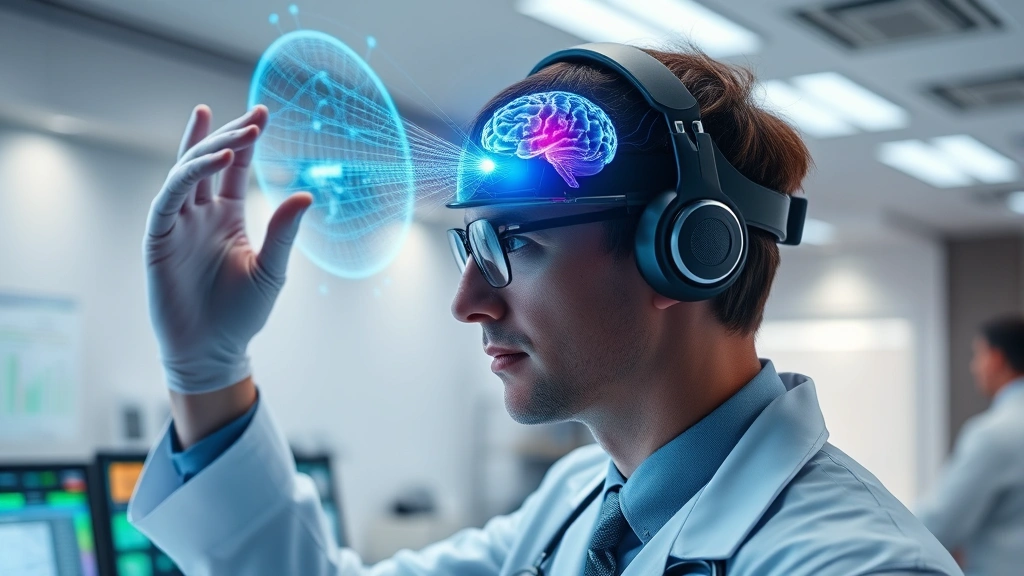
Brain-Computer Interfaces function by capturing electrical signals from the brain and translating them into commands that control external devices or software systems. These signals are typically recorded through electrodes placed on the scalp (non-invasive EEG) or surgically implanted directly into brain tissue (invasive microelectrodes). The captured neural data flows through signal processing systems, machine learning algorithms, and communication protocols to achieve real-time interaction between user intention and device response.
The architecture of most BCI systems involves multiple layers of technology: signal acquisition hardware, analog-to-digital conversion systems, signal processing algorithms, machine learning models for decoding neural intent, and wireless or wired communication protocols. Each layer presents distinct security challenges. When you visit the ScreenVibe Daily Blog for general technology updates, you’ll notice how rapidly neural interface discussions have evolved in tech circles. However, security aspects remain underexplored in mainstream coverage.
Invasive BCIs like those developed by leading neurotechnology companies pose different security profiles than non-invasive systems. Implanted devices maintain persistent neural connections, require surgical access for updates, and cannot be easily disconnected if compromised. Non-invasive EEG-based systems offer easier deployment but may require continuous authentication and face signal degradation issues that could create security vulnerabilities.

Primary BCI Security Threats and Vulnerabilities
Cybersecurity experts have identified several distinct threat categories specific to brain-computer interfaces. Understanding these threats requires recognizing that BCIs operate at the intersection of medical devices, personal computing, and neural monitoring—each domain bringing its own vulnerability landscape.
Signal Interception and Eavesdropping represents perhaps the most concerning vulnerability class. Neural signals transmitted from brain-sensing hardware to processing systems must travel through wireless or wired channels. Without proper encryption, attackers could intercept raw neural data, gaining insights into user thoughts, intentions, emotional states, and cognitive patterns. The Cybersecurity and Infrastructure Security Agency (CISA) has begun publishing guidance on medical device security that increasingly includes neural interfaces.
Firmware and Software Vulnerabilities in BCI systems create attack vectors similar to traditional medical device hacking. Outdated algorithms, unpatched signal processing software, or compromised machine learning models could allow attackers to inject false commands, misinterpret legitimate neural signals, or cause device malfunction. The complexity of neural decoding algorithms makes security auditing particularly challenging.
Man-in-the-Middle (MITM) Attacks could intercept communication between the BCI hardware and control systems, potentially allowing attackers to modify commands, inject false neural interpretations, or cause dangerous device behaviors. Someone controlling a wheelchair or prosthetic limb through a compromised BCI could experience sudden, uncontrolled movements.
Spoofing and Replay Attacks constitute another critical threat category. An attacker who captures legitimate neural signal sequences could potentially replay them to execute commands without user awareness or consent. This becomes particularly dangerous in medical contexts where BCI commands control life-critical functions.
Physical Tampering and Hardware Backdoors present risks during manufacturing or supply chain distribution. Implanted BCIs could theoretically contain hardware-level backdoors allowing remote access, signal manipulation, or device disabling. Supply chain security for neural interface components remains inadequately regulated.
Neural Data Privacy Concerns
Neural data represents the most sensitive personal information imaginable. Your brain activity patterns encode your thoughts, emotions, intentions, memories, and cognitive capabilities. Unlike traditional personal data, neural information cannot be changed or reset—it fundamentally reflects your neurological identity.
Privacy experts warn that neural data could be exploited for discriminatory purposes. Insurance companies, employers, or law enforcement agencies might seek access to neural patterns for risk assessment, job performance evaluation, or criminal investigations. Imagine insurers denying coverage based on neural signatures indicating predisposition to certain conditions, or employers screening candidates based on neural markers of creativity, loyalty, or stress resilience.
The permanence and immutability of neural data creates unique privacy challenges. While you can change passwords or cancel compromised credit cards, you cannot modify the neural patterns that define your cognitive identity. A BCI security breach could expose information that remains sensitive and exploitable for decades.
Data aggregation and correlation risks multiply when neural data combines with other personal information. Cross-referencing neural patterns with medical records, location data, financial transactions, and communication metadata could enable sophisticated behavioral manipulation, targeted advertising, or psychological profiling at unprecedented scales.
Regulatory frameworks like GDPR and HIPAA provide some protection, but neural data falls into regulatory gray areas. Most privacy laws were designed before brain-computer interfaces became practical, creating enforcement ambiguities. NIST cybersecurity guidelines are beginning to address neural interfaces, but comprehensive regulatory frameworks remain under development.
Authentication and Access Control Challenges
Traditional authentication methods—passwords, biometrics, security tokens—assume external user actions. Brain-computer interfaces operate on internal neural signals, creating novel authentication challenges. How do you verify that commands originated from the authorized user’s conscious intent rather than external manipulation, neural signal injection, or involuntary brain activity?
Biometric authentication using neural patterns seems promising initially. Your unique neural signature could theoretically serve as unforgeable identification. However, neural patterns change with fatigue, medication, emotional state, and cognitive load. A biometric system based on rigid neural thresholds might reject legitimate users during stress or illness, while remaining vulnerable to adaptive attacks that learn individual neural variations.
Intent verification represents a fundamentally new authentication challenge. Even if a BCI correctly identifies the user, how can systems confirm the user actually intends to execute a command versus experiencing involuntary neural activity, dreams, or externally-induced neural stimulation? Distinguishing genuine intent from neural noise or manipulation requires sophisticated signal analysis that remains imperfect.
Multi-factor authentication becomes more complex in BCI contexts. You cannot easily implement “something you have” (physical token) or “something you know” (password) alongside “something you are” (neural pattern) when the user interfaces through neural signals alone. Secondary authentication methods might require external devices, defeating the primary advantage of direct brain control.
Access control for BCI data presents additional complications. Medical professionals, technicians, and researchers may need legitimate access to neural signals for therapeutic purposes, calibration, or diagnostics. Implementing granular access controls that permit necessary legitimate access while preventing unauthorized monitoring requires sophisticated policy frameworks that cybersecurity and medical communities are still developing.
Regulatory and Ethical Frameworks
The regulatory landscape for BCI security remains fragmented and evolving. Medical device regulations like FDA approval processes address safety and efficacy but inadequately cover cybersecurity and neural privacy aspects. FDA guidance documents increasingly reference cybersecurity but rarely address neural-specific threats.
Informed consent becomes ethically complicated with BCIs. Users must understand not just medical risks but also cybersecurity vulnerabilities, data privacy implications, and potential for unauthorized neural access. Most current consent processes fail to adequately communicate these novel risks in comprehensible terms.
International regulatory divergence creates challenges for global BCI development. European regulations emphasize privacy and data protection, while American frameworks prioritize innovation and medical benefit. This regulatory fragmentation incentivizes companies to develop BCIs meeting the least stringent standards, potentially compromising security globally.
Ethical considerations extend beyond regulation. Neurorights—the fundamental rights to mental privacy, mental integrity, and psychological continuity—represent emerging ethical principles that should guide BCI development. These principles assert that individuals possess inherent rights to:
- Mental Privacy: Freedom from unauthorized access to neural data or thoughts
- Mental Integrity: Protection against non-consensual neural modification or manipulation
- Psychological Continuity: Assurance that neural interventions won’t alter personal identity or autonomy
Several countries and organizations have begun incorporating neurorights into policy frameworks, but enforcement mechanisms remain weak. Policy research institutions continue publishing recommendations for neurorights protection, though legislative implementation lags significantly behind technological advancement.
Best Practices for BCI Security
Organizations developing, deploying, or operating BCI systems should implement comprehensive security frameworks addressing the unique challenges neural interfaces present.
End-to-End Encryption must protect neural signals from acquisition through processing and storage. Encryption should apply to signals in transit (wireless transmission), at rest (stored neural data), and during computation (encrypted processing of neural information). However, encryption alone cannot address authentication or intent verification challenges.
Zero-Trust Architecture adapted for neural contexts means assuming all neural signals, commands, and communications require verification regardless of apparent source or context. Every signal interpretation should be validated against multiple criteria before executing critical commands. Systems should maintain detailed audit logs of all neural signal processing and command execution.
Secure Hardware Design requires implementing tamper-evident mechanisms, secure enclaves for sensitive computation, and hardware-based attestation proving system integrity. Supply chain security becomes critical—neural interface manufacturers must implement robust vendor assessment and component verification processes.
Regular Security Auditing and Penetration Testing specifically targeting BCI-unique vulnerabilities should occur throughout device lifecycle. Traditional medical device testing protocols often miss neural-specific attack vectors. Security researchers should receive responsible disclosure pathways and incentives to identify vulnerabilities before attackers exploit them.
User Education and Consent Processes must clearly communicate cybersecurity risks, data privacy implications, and mitigation measures in understandable language. Users deserve transparent information about:
- What neural data is collected and how it’s processed
- Who can access neural information and under what circumstances
- How long neural data is retained
- What security measures protect their neural privacy
- What happens if security is compromised
Threat Monitoring and Incident Response protocols specifically addressing neural interface compromises should be established before incidents occur. Organizations should maintain capabilities to detect anomalous neural patterns, identify potential signal injection attacks, and respond rapidly to suspected breaches.
The Future of Secure Neural Technology
The future of BCI security depends on integrating security considerations into neural interface development from inception rather than treating security as an afterthought. This requires unprecedented collaboration between neuroscientists, cybersecurity experts, ethicists, and policymakers.
Advanced authentication mechanisms currently in research phases show promise for neural contexts. Continuous authentication based on subtle neural patterns could verify user identity throughout BCI sessions without disruptive explicit authentication challenges. Biometric systems incorporating multiple neural features and adaptive thresholds might achieve both security and usability.
Quantum computing presents both opportunities and threats for BCI security. Current encryption methods protecting neural data will become vulnerable to sufficiently powerful quantum computers. Researchers are developing quantum-resistant encryption algorithms, but transitioning BCI systems to post-quantum cryptography requires significant infrastructure changes.
Blockchain and distributed ledger technologies offer potential for creating immutable audit trails of neural data access and BCI command execution, though scalability challenges remain significant. Decentralized identity systems might enable users to maintain control over neural data while selectively sharing access with healthcare providers, researchers, or other authorized parties.
Artificial intelligence and machine learning will likely play central roles in future BCI security. AI systems could detect subtle anomalies in neural patterns indicating potential security threats, malfunction, or unauthorized modification. However, adversarial machine learning attacks specifically targeting neural decoders represent emerging threats requiring defensive AI research.
International standards development for BCI security is accelerating. Organizations like ISO and IEEE are establishing baseline security requirements, though experts note that rapidly evolving neural technology often outpaces standards development cycles. Adaptive, principles-based standards may prove more effective than rigid specification-based approaches.
The emergence of government-funded research initiatives specifically addressing neural interface security signals increasing recognition of BCI security’s importance. These efforts focus on developing security architectures, threat modeling frameworks, and defensive technologies for next-generation neural interfaces.
FAQ
What makes BCI security different from traditional cybersecurity?
BCI security must protect the most intimate personal information—your thoughts and neural patterns—which cannot be changed or reset like passwords. Neural data remains sensitive indefinitely and could enable unprecedented behavioral manipulation and discrimination. Additionally, BCIs operate at the intersection of medical devices, personal computing, and neuroscience, requiring specialized expertise in all three domains.
Are current BCI systems secure enough for widespread use?
Most current BCI systems lack comprehensive security frameworks specifically addressing neural-interface threats. While medical device regulations require basic security measures, neural-specific vulnerabilities often receive inadequate attention. Widespread BCI deployment should await development of more robust security standards and threat-mitigation technologies.
How can users protect their neural privacy?
Users should thoroughly research BCI systems before adoption, understanding security measures, data retention policies, and access controls. Request detailed information about encryption, authentication mechanisms, and incident response procedures. Maintain awareness of firmware updates addressing security vulnerabilities and consider limiting BCI use to necessary medical or critical applications until security standards mature.
What regulatory protections exist for BCI users?
Regulatory protections remain limited and fragmented. GDPR provides privacy safeguards for European BCI users, while FDA medical device regulations apply in the United States. However, most regulations predate widespread BCI development and inadequately address neural-specific security and privacy concerns. Advocating for comprehensive neurorights legislation and security standards remains important.
Could attackers actually hack a brain-computer interface?
Yes. Security researchers have demonstrated proof-of-concept attacks against BCI systems, including signal interception, command injection, and device manipulation. As BCIs become more widespread and valuable targets, sophisticated attackers will increasingly target neural interfaces. Proper security implementation is essential, not theoretical.
What’s the timeline for secure BCI deployment?
Security experts estimate comprehensive BCI security frameworks will require 5-10 years of development, standardization, and regulatory implementation. Early-stage BCIs for critical medical applications may deploy with limited security, but widespread consumer BCI adoption should await more mature security technologies and regulatory frameworks.


