
Are Ball Bearing Hinges Secure? Expert Analysis of Hardware Vulnerabilities
Ball bearing hinges represent a critical yet often overlooked component in physical security infrastructure. These mechanical devices, commonly found in doors, cabinets, and access points across residential, commercial, and industrial facilities, have become increasingly relevant to cybersecurity professionals and security architects. While hinges may seem like simple mechanical hardware, their integrity directly impacts the security posture of any physical environment that houses sensitive data, equipment, or personnel.
The question of whether ball bearing hinges are truly secure extends beyond simple mechanical strength. It encompasses vulnerabilities related to manipulation, forced entry, maintenance access, and integration with modern security systems. Understanding these vulnerabilities is essential for security teams responsible for protecting critical infrastructure, data centers, and sensitive facilities.
Understanding Ball Bearing Hinge Architecture
Ball bearing hinges function through a precision mechanical design that allows doors and panels to rotate smoothly. The core mechanism consists of hardened steel balls positioned within grooved races, enabling low-friction rotation. This design offers significant advantages over traditional barrel hinges in terms of load capacity and smooth operation, making them popular in high-traffic environments.
The architecture typically includes several critical components: the hinge knuckle (the protruding cylindrical portion), the hinge pin (vertical rod), the ball bearing assembly, and the mounting flanges. Each component plays a role in both functionality and potential vulnerability. The precision engineering that makes these hinges effective also creates specific points where security can be compromised.
Modern ball bearing hinges are manufactured with tight tolerances, often measuring accuracy to within thousandths of an inch. This precision is necessary for smooth operation but also means that any deviation from specifications can significantly impact security properties. The material composition—typically steel rated at specific Rockwell hardness values—determines resistance to cutting, prying, and forced manipulation.
Physical Security Vulnerabilities
Ball bearing hinges present several documented physical security vulnerabilities that security professionals must understand. The most significant vulnerability stems from the hinge pin design. In many standard configurations, hinge pins can be removed from the outside of a door, particularly on doors that swing inward. This removal capability, while useful for maintenance purposes, creates a critical security weakness.
When a hinge pin is removed, the door remains structurally connected only by the remaining hinges. An attacker with access to the exterior side of the door can lift the door off its remaining hinges, completely bypassing the lock mechanism. This vulnerability is particularly acute in facilities where security awareness training has not adequately addressed physical security threats.
The ball bearing assembly itself presents another vulnerability vector. The precision grooves that guide the bearing balls can wear over time, creating micro-gaps that allow for minute movements. These movements, while imperceptible during normal operation, can be exploited through vibration or micro-manipulation techniques. Security researchers have documented methods to exploit these tolerances to create undetectable entry points.
Corrosion and material degradation represent additional concerns. Environmental exposure to moisture, salt spray, or chemical agents can compromise the structural integrity of hinge components. Stainless steel variants offer improved resistance but at significantly higher costs. Many facilities use standard steel hinges in environments where corrosion resistance is critical, creating hidden vulnerabilities that manifest over months or years.
Manipulation and Bypass Techniques
Security researchers and penetration testers have identified multiple techniques for manipulating ball bearing hinges to gain unauthorized access. These methods range from simple mechanical manipulation to sophisticated attacks requiring specialized tools and knowledge.
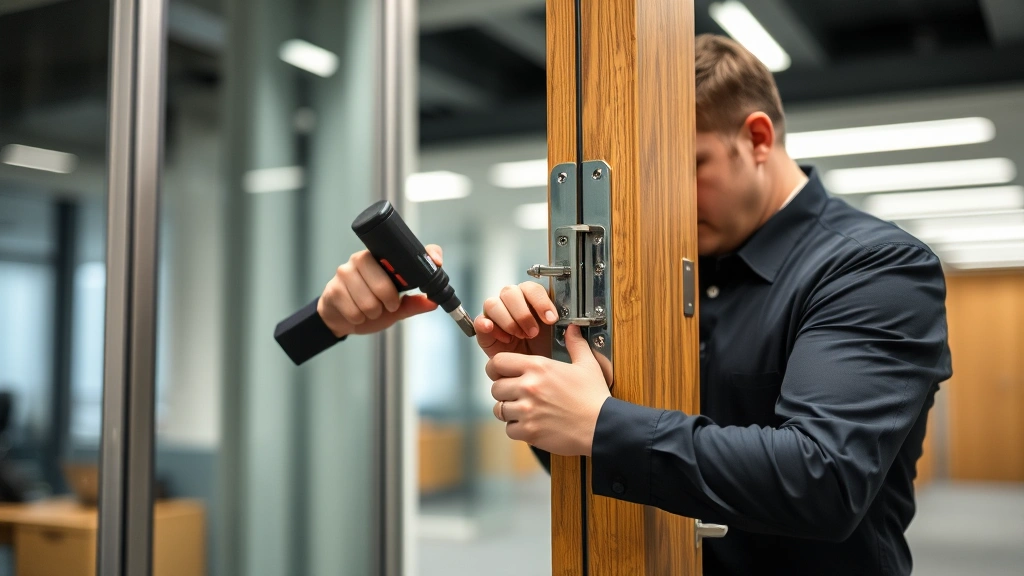
Pin Removal Attacks: The most straightforward attack involves removing the hinge pin entirely. If the hinge design allows exterior access to the pin, an attacker can use simple tools like a hammer and nail or specialized pin-removal tools to extract the pin. Once removed, the door can be lifted off remaining hinges. This attack requires minimal technical knowledge and can be completed in seconds.
Vibration-Based Exploitation: Precision ball bearing assemblies can be exploited through controlled vibration. Applying specific frequency vibrations to the hinge can cause the bearing balls to shift slightly within their races, creating microscopic gaps. These gaps can be leveraged to manipulate the hinge-pin relationship or create unexpected door movement.
Thermal Manipulation: Exposing hinges to rapid temperature changes can cause differential expansion between hinge components. The outer knuckle expands at a different rate than the inner pin assembly, creating temporary gaps. Skilled attackers can exploit these gaps to apply force that would normally be resisted by the precision fit.
Lubricant Exploitation: The lubricants used in ball bearing hinges can be manipulated. Applying solvents can dissolve or thin lubricants, reducing friction and allowing pins to shift. Conversely, applying adhesive compounds can gum up bearing assemblies, creating unexpected failure modes.
These manipulation techniques are not theoretical. Physical security auditors regularly discover hinges that have been compromised through these methods during facility assessments. The concerning aspect is that these attacks often leave minimal evidence, making detection difficult without specialized inspection equipment.
Integration with Access Control Systems
Modern security architectures increasingly integrate physical hinges with electronic access control systems. This integration creates both opportunities and vulnerabilities. Electronic door holders, electromechanical locks, and sensor-based monitoring systems depend partially on hinge integrity for proper function.
When a hinge fails or is compromised, electronic systems may not detect the compromise immediately. A door that has been lifted off its hinges might still appear closed to proximity sensors. The failure of hinge security can cascade through an entire access control system, rendering electronic locks and monitoring systems ineffective.
Integration failures often occur during system design phases. Security architects may specify high-security locks and access control systems while overlooking the physical integrity of hinges. This creates a false sense of security where sophisticated electronic systems protect doors hung on inadequate hardware.
Data center security, in particular, relies heavily on the assumption that doors will function as designed. If hinges are compromised, unauthorized personnel can access critical infrastructure without triggering any electronic security alerts. This vulnerability has been documented in several high-profile data center breaches where physical hinge compromise preceded unauthorized data access.
Security Standards and Compliance
Industry standards addressing hinge security vary significantly across different sectors. The Cybersecurity and Infrastructure Security Agency (CISA) provides guidelines for critical infrastructure protection that include physical security components, though specific hinge specifications are often delegated to facility managers.
NIST Special Publications address physical security in sensitive facilities, with particular emphasis on access control and barrier integrity. These publications recommend specifications for hinge security in high-security environments but leave implementation details to facility security teams.
The American National Standards Institute (ANSI) provides specifications for hinge construction and performance, though these standards primarily address functional performance rather than security vulnerabilities. Security-specific standards from the American Society of Industrial Security (ASIS) recommend additional controls beyond basic ANSI compliance.
Compliance requirements vary by industry. Financial institutions, healthcare facilities, and government installations often have specific requirements for hinge security that exceed standard commercial specifications. However, many facilities fail to implement these requirements consistently across all access points.
Certification programs for physical security professionals, such as the Certified Protection Professional (CPP) credential, include hinge security assessment in their curricula. However, many facilities lack personnel with this level of expertise, creating implementation gaps between recommended standards and actual security practices.
Best Practices for Hinge Security
Securing ball bearing hinges requires a multi-layered approach addressing design, installation, maintenance, and monitoring. Security professionals should implement the following best practices:
Hinge Pin Security: Install non-removable hinge pins or security pins that cannot be accessed from outside the door. These pins are mechanically keyed or welded to prevent removal. This single modification eliminates the most common attack vector against ball bearing hinges.
Material Selection: Specify hinges manufactured from hardened steel with specific Rockwell hardness ratings appropriate for the security environment. Stainless steel variants provide superior corrosion resistance in environmental exposure scenarios. Material selection should be documented in facility security specifications.
Installation Specifications: Require installation by certified professionals who understand security implications of hinge placement and orientation. Hinges should be installed on the interior side of doors whenever possible, preventing exterior access to pins. Fastener specifications should require security screws resistant to standard removal tools.
Regular Inspections: Implement quarterly hinge inspections as part of facility security audits. Inspections should assess pin integrity, bearing smoothness, corrosion, fastener security, and signs of manipulation attempts. Document all findings and remediate identified issues immediately.
Environmental Controls: In sensitive facilities, implement environmental controls limiting temperature and humidity fluctuations that could exploit thermal expansion vulnerabilities. Protect hinges from chemical exposure, salt spray, or other corrosive agents that degrade material integrity.
Redundant Security Measures: Never rely solely on hinges for door security. Implement secondary security measures including reinforced door frames, security bars, electronic locks, and surveillance monitoring. This approach ensures that hinge compromise does not result in complete security failure.
Staff Training: Educate facility staff and security personnel on hinge vulnerabilities and exploitation techniques. Include hinge security in physical security training programs and awareness initiatives. Security teams should understand why hinge security matters and how to identify compromised hinges.
Vendor Assessment: When selecting hinges for security-critical applications, assess vendor security practices, material sourcing, and quality control processes. Request documentation of hinge testing against known attack vectors. Establish long-term relationships with vendors who demonstrate commitment to security-focused manufacturing.
The comprehensive approach to hinge security requires coordination between facility management, physical security teams, and information security professionals. This cross-functional collaboration ensures that physical security measures align with overall security architecture. Many organizations discover hinge security gaps during penetration testing exercises, highlighting the importance of specialized security assessments.
Emerging technologies offer additional security possibilities. Smart hinges incorporating sensors can detect unauthorized manipulation or removal attempts. These devices integrate with building management systems, providing real-time alerts when hinge integrity is compromised. While currently expensive, smart hinge technology represents the future of physical security integration.
The cost of implementing comprehensive hinge security is minimal compared to potential losses from unauthorized access. A facility-wide hinge security upgrade typically costs less than a single day of downtime for critical systems. This cost-benefit analysis should inform security investment decisions at all facility types.
FAQ
Can ball bearing hinges be picked like locks?
Unlike traditional locks, ball bearing hinges cannot be picked using standard lock-picking techniques. However, they can be manipulated through physical exploitation of design tolerances and material properties. The manipulation techniques differ fundamentally from lock picking but achieve similar results—unauthorized access without damage to the lock mechanism.
Are stainless steel hinges more secure than standard steel?
Stainless steel hinges offer superior corrosion resistance but not necessarily enhanced security against manipulation attacks. Security properties depend more on design features like non-removable pins and material hardness than on material type. Stainless steel should be selected based on environmental exposure rather than as a primary security measure.
How often should hinges be inspected for security purposes?
Quarterly inspections represent a baseline for most facilities, though high-security environments should implement monthly or more frequent assessments. Inspections should be conducted by personnel trained in identifying hinge vulnerabilities and exploitation signs. Any signs of tampering should trigger immediate investigation and remediation.
Can electronic locks compensate for weak hinges?
Electronic locks cannot fully compensate for weak hinge security. If hinges are compromised, doors can be removed entirely, rendering electronic locks ineffective. Security architecture must address both locks and hinges as integrated components. Electronic systems should include sensors that detect hinge failure or unauthorized door removal.
What is the most critical hinge security upgrade?
Installing non-removable security pins represents the single most effective upgrade for most facilities. This modification eliminates the primary attack vector against ball bearing hinges and can be implemented at relatively low cost. This should be the first priority in any hinge security improvement initiative.
Are ball bearing hinges suitable for high-security applications?
Ball bearing hinges can be appropriate for high-security applications when specified correctly and installed with comprehensive security measures. Security depends on proper design selection, installation practices, and integration with redundant security controls. Standard commercial ball bearing hinges are not suitable for high-security use without significant modifications.


