
Is Your Apartment Gate Secure? Expert Insights on Entry Management
Apartment gate security represents one of the most critical yet frequently overlooked aspects of residential property protection. While many residents focus on individual unit security measures, the perimeter entry point—your apartment gate—serves as the first line of defense against unauthorized access, theft, and potential security breaches. In an era where smart home technology intersects with traditional security infrastructure, understanding gate vulnerabilities has become essential for both property managers and residents seeking comprehensive protection.
The security landscape for multi-unit residential properties has evolved dramatically over the past decade. Modern apartment complexes face unique challenges that single-family homes do not encounter: managing access for dozens or hundreds of residents, contractors, delivery personnel, and service providers while maintaining a secure perimeter. A compromised gate doesn’t just threaten individual units—it jeopardizes the safety of an entire community. From outdated mechanical locks to poorly maintained electronic systems, apartment gates often present exploitable vulnerabilities that security professionals regularly identify during property assessments.
This comprehensive guide examines the critical aspects of apartment gate security, explores common vulnerabilities, and provides actionable recommendations for improving entry management systems. Whether you’re a property manager evaluating your current security posture or a resident concerned about your building’s protection, understanding these expert insights will help you make informed decisions about gate security infrastructure.

Understanding Apartment Gate Vulnerabilities
Apartment gates encounter vulnerabilities that extend far beyond simple mechanical failures. Security researchers have identified numerous exploitation techniques that target the weakest points in residential entry systems. The most prevalent vulnerability involves tailgating—when unauthorized individuals follow legitimate residents through gates without using their own access credentials. This social engineering tactic remains devastatingly effective because it requires no technical skill and exploits human courtesy.
Another critical vulnerability stems from outdated access control technology. Many apartment complexes still rely on magnetic stripe cards or basic proximity readers installed decades ago. These systems lack encryption, audit trails, and cannot distinguish between legitimate and cloned credentials. According to security professionals, magnetic stripe technology can be duplicated using relatively inexpensive equipment, making it unsuitable for modern residential security requirements.
Physical deterioration of gate infrastructure creates additional security gaps. Corroded hinges, broken locks, and improperly maintained gates may appear functional but offer minimal actual protection. Residents often prop gates open for convenience, completely negating their security function. Additionally, many apartment complexes lack proper surveillance coverage at gate entry points, meaning unauthorized access goes undetected and undocumented.
Environmental factors also compromise gate security. Weather exposure degrades electronic components, salt air accelerates corrosion in coastal properties, and temperature fluctuations affect lock mechanisms. Without regular maintenance protocols, these environmental stressors transform secure gates into ineffective barriers within months or years.
Visitor management represents another vulnerability vector. When guests arrive without proper verification procedures, gates may be opened remotely without confirming visitor legitimacy. This creates opportunities for social engineers to gain access by posing as delivery personnel, contractors, or invited guests. The lack of centralized visitor tracking systems means property managers cannot accurately monitor who enters the community.
Electronic Access Control Systems
Modern apartment gate security increasingly relies on electronic access control systems that go far beyond traditional mechanical locks. These systems provide authentication, authorization, and audit capabilities that transform gate security from a passive barrier into an active monitoring tool. Understanding the different electronic access control technologies helps property managers and residents evaluate which solutions best fit their security requirements.
Multi-factor authentication gates represent the current security standard for high-security residential properties. These systems require residents to provide multiple credentials—such as a proximity card combined with PIN entry or biometric verification—before the gate opens. This multi-layered approach significantly reduces the risk of unauthorized access through credential theft or social engineering.
Cloud-based access control systems offer unprecedented flexibility and monitoring capabilities. Property managers can grant or revoke access remotely, generate detailed audit logs showing exactly who accessed the gate and when, and identify suspicious access patterns. These systems integrate with mobile applications, allowing residents to open gates using smartphones rather than physical cards—a particularly valuable feature for residents who frequently forget credentials.
RFID (Radio Frequency Identification) technology provides reliable, contactless access control suitable for high-traffic residential gates. Modern RFID systems employ encryption and rolling code technology to prevent credential cloning. However, proper implementation requires regular firmware updates and security audits to maintain protection against emerging threats.
Biometric access control—including fingerprint, facial recognition, and iris scanning—offers the highest authentication certainty. These systems cannot be stolen, shared, or forgotten, making them ideal for communities requiring maximum security. As technology costs continue declining, biometric gates are becoming increasingly viable for residential applications. Check your local CISA guidance on biometric security implementation for best practices.
Video intercom systems paired with electronic gates provide an additional verification layer. Before opening gates, security personnel can visually confirm visitor legitimacy through high-resolution video feeds. Integration with facial recognition technology can automatically flag individuals with security concerns or verify that arriving visitors match pre-approved visitor lists.
Physical Security Infrastructure
Electronic systems only function effectively when supported by robust physical infrastructure. The gate itself must withstand both accidental damage and deliberate tampering attempts. Property managers should evaluate gate construction materials, hinges, locks, and mounting systems with the same rigor applied to electronic components.
Gate material selection significantly impacts security durability. Steel gates provide superior protection compared to aluminum alternatives, though they require more maintenance to prevent corrosion. Aluminum gates work well in coastal environments where salt spray accelerates steel corrosion, but they offer less resistance to physical tampering. Modern composite materials offer balanced protection with reduced maintenance requirements.
Proper gate installation determines whether the physical structure actually provides security benefits. Gates must be securely anchored to reinforced posts set in concrete foundations. Inadequate installation allows determined individuals to pry gates open or lift them from hinges. Professional installation by security-certified contractors ensures gates meet established security standards.
Bollards and anti-ram barriers protect gates from vehicle-based attacks. These protective structures prevent vehicles from crashing through gates to force entry—a tactic increasingly employed in criminal operations. Properly designed bollard systems balance security with aesthetic considerations and emergency access requirements.
Lighting infrastructure surrounding gates prevents criminals from working in darkness. Motion-activated LED lighting deters unauthorized access attempts and provides clear video surveillance footage. Inadequately lit gates become prime targets because perpetrators work unobserved and unrecorded.
Surveillance camera placement around gate areas should provide comprehensive coverage without blind spots. Cameras should capture clear facial images of individuals approaching or attempting to access gates. Regular camera maintenance ensures lenses remain clean and image quality supports facial recognition and identification purposes. Integration with NIST cybersecurity guidelines helps ensure surveillance systems meet federal security standards.
Entry Management Best Practices
Effective apartment gate security requires comprehensive entry management protocols that address both technical and procedural aspects. These best practices, developed by security professionals and residential property experts, create layered protection that makes unauthorized access significantly more difficult.
Credential management programs prevent access system compromise through lost or stolen cards. Residents should be required to report lost credentials immediately, and property managers should disable those credentials within hours. Regular credential rotation—replacing all resident cards every 12-24 months—limits the window during which stolen credentials remain valid. Tracking which residents possess which credentials enables rapid response if security incidents occur.
Visitor management procedures should require advance notice and verification before granting gate access. Residents must pre-authorize visitors, providing names and expected arrival times. Security personnel verify visitor identity before opening gates, and visitor access automatically expires after scheduled departure times. This systematic approach prevents unauthorized individuals from exploiting verbal approvals or vague visitor authorizations.
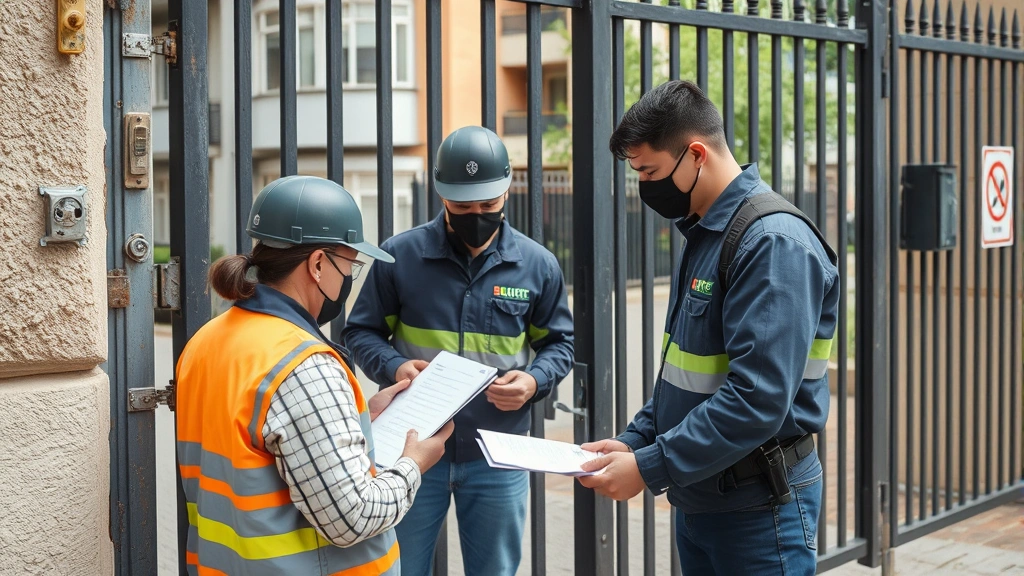
Contractor and service provider protocols must be equally rigorous. Delivery personnel, maintenance workers, and other service providers should present identification and have their arrival pre-confirmed before accessing gates. Many security incidents involve criminals posing as legitimate service providers, so verification procedures must validate both identity and business legitimacy.
Staff training programs ensure security personnel consistently apply entry procedures. Regular training updates address emerging social engineering tactics and credential fraud methods. Staff should understand that friendly residents may attempt to circumvent security procedures through charm or perceived inconvenience, and training must emphasize that maintaining security protocols protects everyone in the community.
Incident documentation and analysis identify patterns indicating systematic security threats. When unauthorized access attempts occur, detailed reports should document the time, method, individual descriptions, and response actions. Analyzing these incidents reveals whether security breaches result from procedure violations, credential theft, or system vulnerabilities requiring remediation.
Integration with Smart Security
Contemporary apartment gate security increasingly integrates with broader smart home and IoT security ecosystems. This integration creates comprehensive security networks where gate access data feeds into centralized monitoring systems, enabling faster threat detection and response.
Smart gate systems communicate with residential security networks, triggering alerts when access patterns deviate from normal behavior. If a resident’s credentials access the gate at unusual times or from unexpected locations, the system can flag potential credential compromise for investigation. Machine learning algorithms identify suspicious patterns that human monitoring might miss.
Integration with smart lock systems on individual units creates coherent security architecture. When residents gain access through the gate, their identity is authenticated and recorded. If that same resident then accesses their unit lock at an unusual time, the security system correlates these events and can alert security personnel to investigate potential security concerns.
Mobile applications provide residents with real-time gate access notifications. Residents can see exactly when their credentials accessed the gate and from which location. Unexpected access triggers alerts, enabling residents to report potential credential theft or unauthorized use immediately. This distributed monitoring leverages resident awareness to enhance community security.
Integration with emergency response systems ensures rapid first responder access during emergencies. Fire departments, police, and medical personnel require swift gate access to respond effectively to emergencies. Smart gate systems can provide emergency access codes that override normal procedures while maintaining audit trails documenting emergency access for post-incident review.
Weather monitoring integration prevents security failures during extreme conditions. Systems can adjust gate operation parameters during high winds or heavy rain, and maintenance alerts notify property managers when weather-related damage occurs. Predictive maintenance prevents weather-related gate failures before they compromise security.
Maintenance and Regular Audits
Even the most sophisticated apartment gate security system deteriorates without regular maintenance and periodic security audits. Proactive maintenance prevents failures that create security gaps, while security audits identify vulnerabilities before criminals exploit them.
Preventive maintenance schedules should address both mechanical and electronic components. Hinges require lubrication, locks need regular inspection for wear, and electronic systems require firmware updates addressing newly discovered vulnerabilities. Environmental factors specific to each property—coastal salt spray, extreme temperature ranges, heavy rainfall—require customized maintenance approaches.
Battery backup systems ensure gates remain operable during power failures. Regularly testing backup systems verifies they function when needed. Outdated backup systems may fail catastrophically during actual power outages, leaving gates inoperable and residents unable to access their homes.
Firmware and software updates address security vulnerabilities discovered in electronic access control systems. Manufacturers regularly release updates fixing newly identified security weaknesses. Property managers must implement update procedures that maintain security without disrupting resident access. Delaying updates leaves systems vulnerable to exploitation by criminals aware of specific vulnerabilities.
Professional security audits by independent third-party specialists identify vulnerabilities that routine maintenance might miss. Security auditors attempt to breach gate systems using current techniques, simulate social engineering attacks, and evaluate physical infrastructure integrity. Annual audits—or more frequent audits for high-security properties—provide objective assessments of actual security effectiveness rather than relying on self-assessments.
Access control system audits generate detailed reports showing who accessed gates, when access occurred, and which credentials were used. Analyzing these reports identifies suspicious patterns: credentials used from multiple locations simultaneously, access outside normal resident patterns, or failed access attempts suggesting social engineering attacks. Regular audit review enables early detection of security compromises.
Resident communication about security improvements increases compliance with access procedures. When residents understand why security protocols exist and how their cooperation enhances community safety, they become partners in maintaining security rather than viewing procedures as inconveniences. Regular newsletters highlighting security improvements and reminding residents of proper procedures maintain security awareness.
Documentation of all security improvements and maintenance creates comprehensive records supporting liability protection and insurance coverage. When security incidents occur, detailed documentation demonstrates that property management implemented reasonable security measures. This documentation also helps identify trends requiring systemic improvements rather than individual incident responses.
Consult Dark Reading’s residential security insights and Security Magazine’s property management resources for current best practices and emerging threat information. Additionally, review ISSA guidelines for information security professionals to understand comprehensive security frameworks applicable to residential properties.
FAQ
What is the most common apartment gate security vulnerability?
Tailgating—unauthorized individuals following legitimate residents through gates—remains the most prevalent vulnerability. This social engineering technique exploits human courtesy and requires no technical skill. Implementing tailgating prevention requires combination of technology (such as turnstiles or mantrap entry systems), staff training, and resident awareness.
How often should apartment gates receive security audits?
Annual security audits represent the minimum recommended frequency for residential properties. High-security communities, properties with previous security incidents, or facilities in high-crime areas should conduct audits semi-annually or quarterly. After implementing major security upgrades, audits should occur within 30 days to verify systems function as designed.
Are biometric gates worth the investment for residential properties?
Biometric gate systems provide superior security compared to card-based systems, though they require higher initial investment and regular maintenance. For communities prioritizing security, biometric systems justify their cost through eliminated credential theft vulnerabilities and enhanced audit capabilities. For budget-conscious properties, multi-factor authentication combining cards with PIN entry offers improved security at moderate cost.
What should residents do if they suspect their gate access credentials were compromised?
Residents should immediately report suspected credential compromise to property management, providing details about when they last used credentials and any suspicious access attempts. Property management should disable compromised credentials within hours and issue replacement credentials. Residents should monitor their unit for signs of unauthorized entry and report any suspicious activity to police and property management.
How do apartment gates integrate with smart home security systems?
Modern smart gate systems communicate with residential security networks, triggering alerts for unusual access patterns. Integration with smart locks on individual units creates coherent security where access events are correlated and analyzed for suspicious behavior. Mobile applications notify residents of gate access in real-time, enabling rapid response to potential credential compromise.
What maintenance prevents apartment gate security failures?
Regular preventive maintenance addressing mechanical components (lubrication, wear inspection), electronic systems (firmware updates, battery testing), and environmental factors (corrosion prevention, weatherproofing) prevents security failures. Maintenance schedules should be customized based on local environmental conditions and gate usage patterns. Professional maintenance by certified technicians ensures proper procedures and documentation.


