Are AOSU Security Cameras Reliable? Expert Review
Security camera systems have become essential components of modern home and business protection strategies. AOSU, a brand that has gained visibility in the surveillance market, offers various camera models with features designed to appeal to both residential and commercial users. However, reliability in security cameras extends far beyond basic functionality—it encompasses data protection, encryption standards, firmware stability, and adherence to cybersecurity best practices that safeguard your premises and personal information.
In this comprehensive expert review, we evaluate AOSU security cameras across multiple dimensions including technical performance, security vulnerabilities, user experience, and long-term reliability. Whether you’re considering AOSU for home surveillance or business deployment, understanding the strengths and limitations of these devices is crucial for making an informed purchasing decision that aligns with your specific security requirements.
AOSU Security Camera Overview and Product Range
AOSU operates within the competitive smart home security market, offering multiple camera models designed for different surveillance scenarios. The brand’s product lineup includes indoor cameras, outdoor weatherproof models, doorbell cameras, and pan-tilt-zoom variants. Each model targets specific use cases, from monitoring entry points to providing comprehensive property coverage. Understanding what AOSU offers helps contextualize their position within the broader security camera ecosystem.
The company emphasizes features like high-resolution imaging, night vision capabilities, motion detection, and cloud connectivity. However, reliability encompasses more than feature lists—it includes consistent performance over extended periods, resistance to environmental factors, and most critically, robust security protocols that protect against unauthorized access. AOSU’s marketing materials highlight convenience and ease of use, but independent analysis reveals important considerations regarding security architecture that potential buyers should evaluate carefully.
AOSU cameras typically connect to your home network via WiFi, store footage in cloud services, and integrate with popular smart home ecosystems. This connectivity model provides accessibility and convenience but introduces potential attack surfaces that must be properly secured. The reliability of any networked camera system depends heavily on how well manufacturers implement security measures throughout the device lifecycle.

Technical Specifications and Hardware Quality
AOSU security cameras feature specifications competitive with mid-range surveillance equipment. Most models offer 2K or 4K resolution, which provides adequate detail for facial recognition and license plate identification in optimal conditions. The sensors employed generally perform adequately during daylight hours, though low-light performance varies by model. Hardware construction quality appears consistent across the product line, with weather-resistant casings for outdoor variants meeting standard IP65 or IP67 ratings.
The processing power embedded in AOSU devices affects real-time performance and local processing capabilities. Some models include edge processing features that analyze video locally before transmitting data, reducing bandwidth requirements and improving privacy. However, the extent to which AOSU implements local processing varies significantly between product tiers. Entry-level models may rely more heavily on cloud-based analysis, which has implications for data transmission and storage.
Thermal management and component longevity present important considerations for long-term reliability. Cameras exposed to extreme temperatures, moisture, or direct sunlight experience accelerated degradation of internal components. AOSU’s engineering appears adequate for typical residential deployments, though professional installations in challenging environments may benefit from more rugged alternatives. The power supply design and voltage regulation circuits determine how well cameras tolerate electrical fluctuations common in some regions.
Security and Encryption Standards
Security reliability represents the most critical evaluation dimension for surveillance cameras. AOSU implements encryption protocols for data transmission, though the specific standards and implementation details vary by model and firmware version. Current best practices, as outlined by CISA guidance on infrastructure security, recommend TLS 1.2 or higher for all network communications. Verification of AOSU’s compliance with these standards requires technical testing rather than relying on marketing claims.
Firmware security updates represent a crucial reliability factor often overlooked by casual consumers. Cameras receiving regular security patches can address newly discovered vulnerabilities, while devices with infrequent or abandoned update schedules accumulate exploitable weaknesses. AOSU’s update frequency and support duration for different models should be evaluated carefully. Devices receiving updates for only 2-3 years create long-term security risks in installations intended for 5-10 year lifespans.
Authentication mechanisms for accessing camera feeds determine whether unauthorized parties can view your surveillance data. AOSU typically employs username/password authentication with optional two-factor authentication on some models. The strength of these authentication systems directly impacts whether someone could gain illicit access to your camera feeds. Additionally, the security of the mobile app represents a potential vulnerability point that affects overall system reliability.
Encryption key management practices significantly influence security reliability. If AOSU stores encryption keys improperly or uses weak key derivation functions, attackers might decrypt intercepted video data. Independent security researchers have occasionally identified vulnerabilities in consumer camera systems related to inadequate key management, making this an important consideration for AOSU products specifically.
Cloud Storage and Data Privacy Concerns
Most AOSU camera models integrate with cloud storage services, either proprietary AOSU servers or third-party platforms. Cloud storage provides convenient access to footage from anywhere, but introduces data privacy considerations that affect overall system reliability. Your surveillance footage—potentially showing family members, guests, and daily routines—resides on servers beyond your direct control. Understanding where this data is stored, who can access it, and under what circumstances companies share it is essential for informed decision-making.
AOSU’s privacy policy should explicitly detail data retention periods, deletion procedures, and circumstances under which footage might be accessed by company personnel or law enforcement. Many consumer camera manufacturers retain video longer than users expect, creating unnecessary privacy exposure. Additionally, the encryption status of stored footage matters significantly—if AOSU stores encrypted video, they cannot access it without user authorization; if unencrypted, potential security risks increase substantially.
Data residency and geographic considerations affect reliability and privacy. If your footage transits through or stores in jurisdictions with different data protection standards than your location, you may have reduced legal protections. European users under GDPR protections may require different camera configurations than US-based installations. AOSU’s infrastructure documentation should clarify these geographic considerations transparently.
Third-party integrations can compromise data security if AOSU shares information with external services without proper safeguards. Any integrations with analytics platforms, smart home services, or advertising networks should be reviewed carefully. Some manufacturers have faced criticism for sharing more data than users expected with third parties, undermining the privacy reliability of their systems.
Mobile App Functionality and User Interface
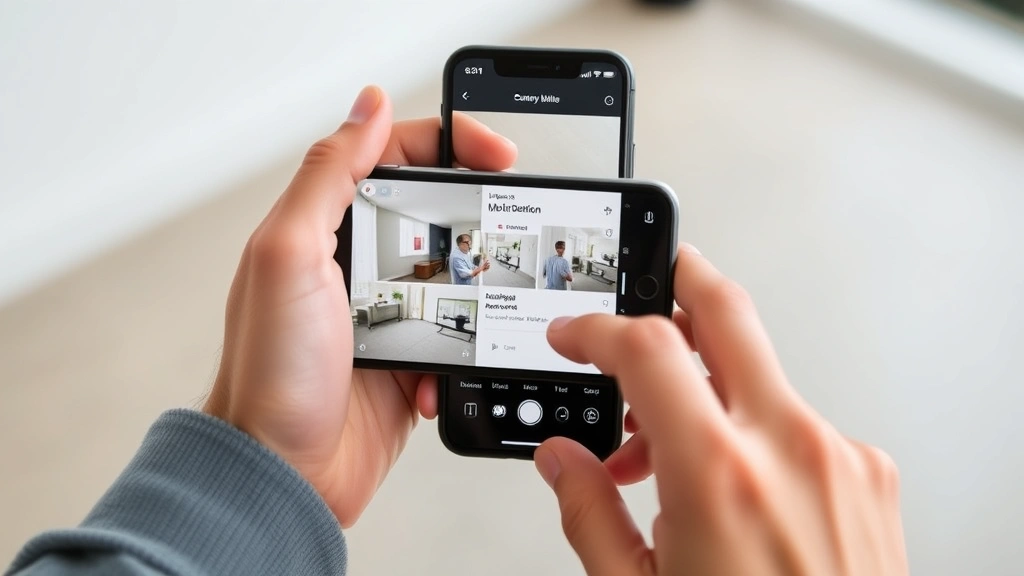
The AOSU mobile application serves as the primary interface for most users accessing their security cameras remotely. App reliability directly correlates with overall system reliability, as a malfunctioning app makes cameras essentially inaccessible outside your local network. AOSU’s app receives mixed reviews regarding stability, with some users reporting frequent crashes, login issues, or delayed video loading. These problems may stem from server capacity issues, inefficient code, or network optimization challenges.
User interface design affects both usability and security. A confusing app might lead users to misconfigure security settings, inadvertently exposing camera feeds. AOSU’s app interface appears relatively intuitive for basic operations, though advanced features and security settings may not be immediately obvious to average users. This accessibility-versus-security tradeoff is common in consumer electronics but should be recognized when evaluating reliability.
Notification systems and alert configuration determine whether users receive timely information about motion detection events or security incidents. Reliable notifications require proper server-side implementation and push notification service integration. Some users report delayed or missing notifications from AOSU cameras, suggesting potential reliability issues in the alert infrastructure. Testing alert responsiveness before full deployment helps identify these problems.
The app’s ability to handle multiple cameras and manage complex automation rules affects practical reliability in larger installations. Users with numerous AOSU cameras may experience performance degradation or difficulty managing the system efficiently. Additionally, the app’s compatibility with different smartphone operating systems and versions impacts accessibility and security, as older OS versions may not receive security patches.
Installation Process and Setup Complexity
Installation reliability encompasses both the physical mounting process and the network configuration required for cameras to function properly. AOSU provides detailed installation guides and video tutorials that generally make the process accessible to non-technical users. However, network setup complexity varies based on your WiFi configuration, router capabilities, and internet speed. Users with weak WiFi signals may experience reliability issues that stem from connectivity problems rather than camera defects.
The initial setup process involves creating an account, connecting cameras to your network, and configuring basic settings. AOSU’s app-based setup streamlines this process compared to web-based configuration interfaces, though it requires users to download the app before setup begins. Network security considerations during setup include ensuring your WiFi network uses WPA2 or WPA3 encryption and strong passwords to prevent unauthorized camera access.
Camera firmware installation during setup establishes the initial security posture of your devices. Ensuring cameras receive the latest firmware version during setup is important, though AOSU’s process may not automatically update to the newest available version. Manual firmware verification after initial setup provides additional security assurance. This additional step, while simple, is often overlooked by users, creating a reliability gap.
Backup camera systems or redundant connections improve reliability in critical applications. Some AOSU models support connection through both WiFi and cellular networks (via USB dongles), providing failover capability. However, most residential installations rely solely on WiFi, making network disruptions a potential reliability weak point. Understanding your specific network reliability requirements helps determine whether AOSU’s standard connectivity options suffice.
Video Quality and Night Vision Performance
Video quality reliability depends on consistent performance across varying lighting conditions and weather scenarios. AOSU cameras typically deliver adequate daytime video quality, with 2K or 4K resolution providing sufficient detail for most surveillance purposes. However, video quality degrades in low-light conditions, and night vision performance varies significantly between models. Infrared LED-based night vision produces monochrome footage with limited range, typically effective to 20-30 feet depending on model.
Compression algorithms affect video quality and storage requirements. AOSU uses H.264 or H.265 video codecs, which provide different tradeoffs between quality and file size. H.265 offers improved efficiency, reducing bandwidth and storage demands, but requires more processing power for encoding and decoding. Understanding your storage and bandwidth limitations helps determine which codec performs more reliably for your specific situation.
Frame rate consistency affects motion tracking and event recording reliability. AOSU cameras typically record at 20-30 frames per second, though actual frame rate may vary based on network conditions and server load. Lower frame rates in challenging conditions can result in missed details during fast-moving events. Testing frame rate consistency under your actual network conditions helps verify reliability before relying on the system for critical surveillance.
Image stabilization and noise reduction features improve perceived quality but introduce processing latency. While these features enhance viewing experience, they can delay video transmission slightly, affecting real-time monitoring reliability. Users prioritizing live monitoring for security incidents may prefer disabling these features to reduce latency, while those focused on recorded footage review may prefer enhanced quality.
Customer Support and Warranty Coverage
Customer support quality significantly affects reliability in practice, particularly when technical issues arise. AOSU provides support through email, chat, and phone channels, though response times and resolution quality vary. Some users report difficulty reaching support during non-business hours or experiencing lengthy resolution times for technical issues. The availability of comprehensive documentation and troubleshooting guides helps users resolve common problems independently.
Warranty coverage typically extends 12-24 months from purchase, covering hardware defects but generally excluding software issues or user-caused damage. Understanding warranty terms before purchase helps set appropriate expectations about long-term support. Extended warranty options may be available for additional cost, though their value depends on failure rates and repair costs specific to AOSU products.
Community forums and user-generated content can supplement official support, providing peer-to-peer troubleshooting assistance. AOSU maintains community forums where users share experiences and solutions, though official company participation in these communities is limited. This peer support can be valuable but doesn’t replace manufacturer support for warranty claims or serious technical issues.
Return policies and satisfaction guarantees affect the risk of purchasing AOSU cameras. Many retailers offer 30-day return windows allowing users to evaluate reliability before committing to the purchase. Utilizing these trial periods to test camera performance under your specific conditions before making final commitments reduces deployment risks.
Comparison with Competing Brands
Evaluating AOSU reliability requires contextualizing their offerings against established competitors. Brands like Ring, Wyze, Logitech Circle, and Reolink offer comparable features at similar price points. Ring benefits from Amazon’s infrastructure and support resources but carries privacy concerns related to law enforcement data access. Wyze offers aggressive pricing with decent reliability but has experienced security vulnerabilities in past iterations. Logitech Circle provides enterprise-grade reliability with higher pricing. Reolink emphasizes local storage and privacy with less cloud dependency.
AOSU’s positioning as a mid-market option provides reasonable feature density without premium pricing. However, this market segment is highly competitive, with many alternatives offering comparable specifications. The differentiating factors often come down to software reliability, security practices, and customer support rather than hardware specifications alone.
Integration capabilities with popular smart home ecosystems affect practical reliability. AOSU supports integration with Amazon Alexa and Google Home, enabling voice control and automation. However, the reliability of these integrations depends on both AOSU’s implementation and the third-party platforms’ stability. Users prioritizing smart home integration should verify compatibility before purchase.
Long-term brand viability affects reliability in the extended sense. Established brands with larger market share and greater financial resources typically provide longer support periods and more frequent updates. Smaller brands like AOSU may face sustainability challenges that affect long-term support availability. This consideration matters particularly if you’re designing a system intended to operate reliably for 5-10 years.
FAQ
Do AOSU security cameras encrypt video footage?
AOSU implements encryption for video transmission between cameras and cloud servers, using TLS protocols. However, the specific encryption standards and implementation details vary by model and firmware version. Users should verify current encryption capabilities for their specific model by consulting technical documentation or contacting AOSU support directly.
How often does AOSU release security updates for their cameras?
Update frequency varies by model, with some receiving updates quarterly while others may go months between releases. AOSU should provide information about expected update schedules during purchase, though this information isn’t always readily available. Checking user reviews and community forums can reveal actual update patterns for specific models.
Can AOSU cameras be hacked or accessed without authorization?
Like all internet-connected devices, AOSU cameras face potential security risks. Proper configuration—including strong passwords, two-factor authentication, and updated firmware—significantly reduces vulnerability. However, no system is completely immune to attack. Users should follow NIST cybersecurity framework recommendations when deploying connected surveillance systems.
What happens to my video footage if AOSU goes out of business?
This represents a legitimate concern with smaller manufacturers. If AOSU ceased operations, cloud storage services might become unavailable, potentially resulting in loss of stored footage. Using cameras with local storage options or backup to external systems provides insurance against this scenario.
Are AOSU cameras suitable for commercial security applications?
While AOSU cameras can be used commercially, they’re primarily designed for residential applications. Commercial security typically requires more robust systems with professional installation, enterprise-grade reliability guarantees, and 24/7 monitoring integration capabilities. Consulting with professional security integrators helps determine whether AOSU meets specific commercial requirements, or if alternatives like Hikvision enterprise systems would be more appropriate.
How much bandwidth do AOSU cameras consume?
Bandwidth consumption depends on resolution, frame rate, and compression settings. Typical AOSU cameras consume 1-4 Mbps during active recording, though this varies significantly. Users with limited internet bandwidth should test consumption under their actual configuration before full deployment to ensure reliability won’t be compromised by bandwidth constraints.
Can I use AOSU cameras without cloud storage?
Some AOSU models support local storage via microSD cards, allowing footage retention without cloud services. However, remote access requires cloud connectivity. Hybrid approaches—using local storage as primary with cloud as backup—provide optimal privacy and reliability balance for many users.
What is AOSU’s track record regarding security vulnerabilities?
AOSU has experienced relatively few publicly disclosed vulnerabilities compared to some competitors, though comprehensive security audit results aren’t publicly available. Independent security researchers occasionally identify issues in consumer camera systems; users should monitor CISA vulnerability alerts for any AOSU-specific disclosures.


