AI Security Cameras: Are They Truly Reliable?
Artificial intelligence has revolutionized the security camera landscape, promising smarter surveillance with real-time threat detection, facial recognition, and autonomous monitoring capabilities. However, as organizations increasingly deploy AI security cameras across their facilities, critical questions emerge about their actual reliability, security vulnerabilities, and potential failure points. Are these intelligent systems the game-changer they claim to be, or do they introduce new risks that traditional cameras don’t?
The answer is complex. While AI security cameras offer substantial benefits in threat detection and operational efficiency, they also present unique cybersecurity challenges that organizations must carefully evaluate. From model manipulation attacks to adversarial examples that fool detection algorithms, the reliability of AI-powered surveillance depends heavily on implementation quality, threat awareness, and ongoing security maintenance. Understanding both the capabilities and limitations of these systems is essential for making informed security decisions.
How AI Security Cameras Work
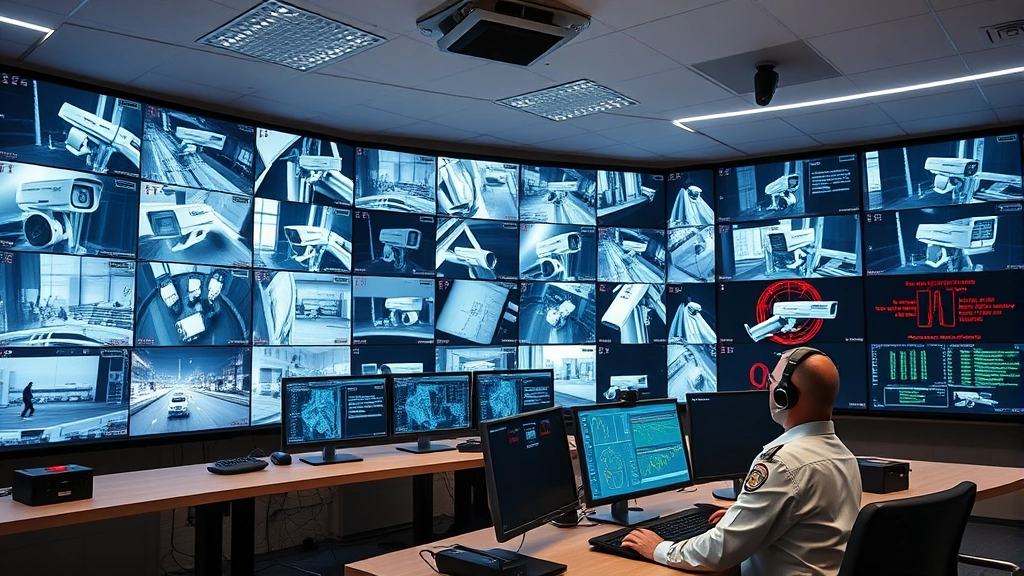
Modern AI security cameras operate through sophisticated machine learning models that process video streams in real-time. These systems typically employ deep neural networks trained on thousands of hours of surveillance footage to recognize patterns, identify objects, detect anomalies, and classify threats. The core technology involves several interconnected components working simultaneously.
At the foundation, computer vision algorithms analyze pixel data to extract meaningful information. Object detection models identify people, vehicles, weapons, or other relevant entities within camera feeds. Classification networks then categorize these objects and assess threat levels. Facial recognition systems create biometric profiles for identification and authentication purposes. Behavior analysis algorithms track movement patterns and flag unusual activity that deviates from established baselines.
The processing occurs through two primary architectures: edge processing, where AI runs directly on the camera hardware, and cloud-based processing, where footage transmits to remote servers for analysis. Edge processing reduces latency and bandwidth consumption but requires more powerful camera hardware. Cloud processing enables more sophisticated analysis but introduces network dependencies and data transmission risks. Understanding this infrastructure is crucial because each approach presents distinct reliability challenges. When exploring security technology advancements, organizations must consider their specific operational requirements.
The AI models powering these systems require continuous training and refinement. Initial training uses labeled datasets to teach the network to recognize specific threats. Ongoing learning processes adapt models to environmental changes, seasonal variations, and new threat patterns. However, this continuous evolution also introduces instability—models updated with new training data sometimes perform worse on existing scenarios, a phenomenon known as catastrophic forgetting.
[IMAGE_1]
Reliability Challenges and Failure Points
Despite impressive marketing claims, AI security cameras demonstrate significant reliability limitations that security professionals must acknowledge. False positive and false negative rates remain problematically high in real-world deployments, even with advanced systems. Studies show detection accuracy varies dramatically based on environmental conditions, lighting quality, camera angles, and object characteristics.
Environmental factors severely impact AI camera performance. Poor lighting conditions degrade facial recognition accuracy exponentially—systems trained on daylight footage often fail catastrophically in low-light scenarios. Weather conditions like rain, snow, or fog obscure visual information that algorithms depend upon. Shadows, reflections, and complex backgrounds confuse object detection models. Crowded scenes with overlapping individuals challenge tracking systems. These aren’t minor issues; they represent fundamental limitations that affect the reliability of threat detection in unpredictable real-world environments.
Hardware limitations create additional reliability problems. Camera sensors have fixed resolution and dynamic range capabilities. Thermal drift in electronics causes sensor degradation over time. Network connectivity issues interrupt data transmission and analysis. Storage failures can result in lost footage or corrupted recordings. Power supply instability affects consistent operation. These physical constraints fundamentally limit what AI algorithms can achieve, regardless of software sophistication. Implementing comprehensive monitoring strategies requires acknowledging these hardware realities.
Model drift represents another critical reliability challenge. AI models trained on historical data gradually become less accurate as environmental conditions change. Seasonal variations introduce new scenarios the model hasn’t encountered. New threat types emerge that the training data didn’t represent. Security threats specifically evolve to evade detection systems. Without continuous retraining and validation, AI camera accuracy degrades silently—systems may report high confidence while making increasingly incorrect decisions.
Integration failures plague many deployments. AI cameras must connect with alarm systems, access control, incident response platforms, and security operations centers. These integrations frequently experience synchronization errors, data format mismatches, and communication delays. A single integration failure can render the entire system unreliable, creating false sense of security while detection actually fails.
Adversarial Attacks and Detection Evasion
A particularly concerning reliability issue stems from adversarial attacks—deliberate attempts to fool AI systems into making incorrect decisions. Security researchers have demonstrated that AI security cameras can be reliably deceived through relatively simple techniques, raising serious questions about their trustworthiness against determined adversaries.
Adversarial examples represent the most direct threat to camera reliability. By adding carefully crafted perturbations to an image—imperceptible to human vision—researchers can cause AI models to completely misclassify objects. A person wearing a specially designed patterned jacket can become invisible to person detection algorithms. Printed adversarial patches placed strategically in a scene can cause object detectors to hallucinate threats that don’t exist or ignore genuine threats. These attacks exploit fundamental vulnerabilities in how deep neural networks process visual information.
Physical adversarial attacks prove particularly troubling because they work in real-world conditions without requiring digital access. Researchers have created physical objects that reliably fool object detectors from various angles. Adversarial camouflage patterns defeat facial recognition systems while maintaining normal appearance to human observers. These attacks demonstrate that AI camera reliability cannot be assumed even against unsophisticated adversaries—any motivated threat actor can research published attack techniques and implement them.
Poisoning attacks target the reliability of AI models by corrupting training data. If attackers compromise the dataset used to train or retrain camera AI, they can systematically degrade detection accuracy for specific threat types. Backdoor attacks embed hidden triggers in models that cause failures only when specific conditions occur, making the compromise extremely difficult to detect. These supply chain attacks represent an existential threat to system reliability because compromised models may function normally for months before activation.
Evasion attacks attempt to manipulate the AI system’s decision-making process in real-time. By understanding how a particular AI model processes information, attackers can craft inputs designed to trigger false negatives for genuine threats. Security researchers have shown that face recognition systems can be reliably fooled using makeup, facial accessories, or simple printed masks. These evasion techniques often work across multiple systems because they exploit fundamental weaknesses in the underlying AI architecture.
For comprehensive understanding of how threats evolve, organizations should consult CISA AI Security 101 guidelines, which provide authoritative information about artificial intelligence security vulnerabilities and mitigation strategies.
Data Privacy and Cybersecurity Risks
AI security cameras introduce significant cybersecurity and privacy risks that impact overall system reliability. These cameras don’t exist in isolation—they connect to networks, store data, process sensitive biometric information, and integrate with other security systems. Each connection point represents a potential vulnerability.
Network security represents the first critical concern. AI cameras transmit video streams over networks where attackers can intercept, modify, or redirect data. Unencrypted connections expose footage to passive surveillance. Weak authentication allows unauthorized access to camera feeds and configuration interfaces. Vulnerable network protocols enable man-in-the-middle attacks where attackers intercept and alter video data before it reaches storage or analysis systems. Many deployed cameras use default credentials or outdated encryption standards, making compromise trivial for competent attackers.
Biometric data collected by AI cameras raises profound privacy and security concerns. Facial recognition systems create permanent digital records of individuals’ appearances, gait patterns, and behavioral characteristics. If attackers compromise camera systems, they gain access to extensive biometric databases that can enable identity theft, tracking, or targeted attacks. Unlike passwords that can be changed, compromised biometric data cannot be revoked—individuals are permanently exposed.
Cloud storage and processing introduce additional reliability risks. Video data transmitted to cloud providers travels across the internet where it may be intercepted. Cloud storage introduces dependence on third-party infrastructure that may experience outages. Cloud providers may experience security breaches that expose stored footage. Terms of service often grant providers broad rights to use collected data. Geographic data residency becomes impossible to guarantee, creating compliance risks for regulated industries. The reliability of cloud-dependent camera systems depends entirely on external providers’ security posture.
Firmware vulnerabilities represent a persistent threat to camera reliability. Manufacturers frequently discover security flaws in camera firmware after deployment. Patching requires administrative access and often causes system downtime. Many organizations fail to implement security updates promptly, leaving systems vulnerable for extended periods. Attackers exploit these known vulnerabilities to gain control of cameras, disable them, or manipulate their output. Firmware backdoors inserted during manufacturing can provide permanent compromise that survives updates.
Integration with other security systems creates attack surface expansion. AI cameras connecting to access control systems, alarm panels, and security operations centers provide attackers with network pathways to compromise entire security infrastructure. A compromised camera becomes a beachhead for lateral movement to more critical systems. Many integrations use unencrypted protocols or weak authentication, enabling attackers to move between systems easily.

Best Practices for Deployment
Organizations deploying AI security cameras must implement comprehensive strategies to maximize reliability while minimizing security risks. Treating these systems as critical infrastructure requires rigorous planning and ongoing management.
Network Segmentation and Isolation represents the foundational security practice. AI cameras should operate on isolated network segments separated from corporate networks and critical systems through firewalls and access controls. This limits damage if cameras become compromised. Cameras should never directly access systems containing sensitive data or controlling physical security. Monitoring network traffic for unusual patterns helps detect compromised cameras attempting unauthorized communications.
Authentication and Access Control must be strengthened beyond default settings. All cameras require strong, unique credentials changed from factory defaults. Multi-factor authentication should protect administrative access. Role-based access control limits which personnel can modify camera settings or access footage. Regular audits verify that access controls function correctly and unauthorized users cannot access systems.
Encryption Implementation protects data in transit and at rest. All video streams should transmit over encrypted connections using modern protocols. Stored footage requires encryption at rest, with encryption keys managed separately from storage systems. End-to-end encryption prevents even administrators from accessing unencrypted video content. Key rotation ensures that compromised keys have limited utility.
Firmware Management requires disciplined processes. Organizations must maintain inventory of all deployed cameras and their firmware versions. Security advisories should be monitored continuously for vulnerabilities affecting deployed models. Patches should be tested in isolated environments before production deployment. Update schedules should balance security needs against operational disruption. Rollback procedures should be documented for updates that introduce problems.
Redundancy and Failover improve reliability for critical applications. Primary and backup systems should operate independently so single points of failure don’t eliminate surveillance capability. Failover mechanisms should activate automatically when primary systems fail. Regular testing verifies that failover procedures work correctly. For the most critical areas, organizations should consider multiple independent surveillance approaches rather than depending entirely on AI systems.
Performance Monitoring establishes baselines and detects degradation. Organizations should track detection accuracy, false positive rates, and system responsiveness. Comparing performance against established baselines identifies when accuracy declines, potentially indicating model drift or compromise. Automated alerts notify administrators of significant performance changes requiring investigation.
Privacy by Design minimizes unnecessary data collection. Organizations should implement technical controls that delete video data when no longer needed. Biometric data should be encrypted and access-restricted. Retention policies should balance security needs against privacy principles. Organizations should be transparent with stakeholders about surveillance practices and data usage.
Evaluating AI Camera Solutions
When selecting AI security camera systems, organizations must evaluate reliability claims critically rather than accepting marketing narratives. Technical evaluation requires examining multiple factors that determine real-world performance.
Detection Accuracy Metrics should be verified through independent testing. Manufacturers often report accuracy on pristine laboratory datasets that don’t represent real-world conditions. Organizations should demand accuracy figures for their specific use cases, environmental conditions, and threat types. Sensitivity and specificity metrics matter more than overall accuracy—a system with 95% accuracy but 50% false negative rate for critical threats is dangerously unreliable. Request accuracy data across different lighting conditions, weather scenarios, and crowd densities relevant to your environment.
Adversarial Robustness should be assessed through security testing. Reputable vendors should provide information about how their systems resist adversarial attacks. Organizations can conduct their own testing with adversarial examples to evaluate robustness. Systems that claim immunity to adversarial attacks are likely misrepresenting their capabilities—all AI systems have adversarial vulnerabilities. The question is whether those vulnerabilities can be exploited by realistic threats in your environment.
Security Architecture Review should examine how the system handles sensitive data and integrates with other systems. Request detailed documentation of encryption implementation, authentication mechanisms, and network communication protocols. Verify that the system uses current security standards rather than deprecated approaches. Evaluate the vendor’s security update frequency and track record of responding to disclosed vulnerabilities.
Operational Resilience should be demonstrated through testing. How does the system behave when network connectivity fails? What happens when storage becomes full? How does the system respond to extreme environmental conditions? Can the system recover from crashes without manual intervention? Request documentation of mean time between failures and mean time to recovery for critical components.
Vendor Security Posture matters significantly. Evaluate the vendor’s security practices, incident response procedures, and track record managing vulnerabilities. Organizations should request security audit reports, penetration testing results, and information about the vendor’s development practices. A vendor that takes security seriously will have documentation available and transparent communication about risks.
For authoritative guidance on evaluating AI security, consult NIST AI Risk Management Framework, which provides comprehensive evaluation methodologies for AI systems in critical applications.
Implementation and Testing should precede full deployment. Pilot programs with limited scope allow evaluation of actual performance before enterprise-wide rollout. Organizations should establish baseline metrics during pilots and verify that performance meets requirements. Testing should include failure scenarios and recovery procedures. Only after successful pilot programs should organizations expand deployment to critical areas.
FAQ
Are AI security cameras more reliable than traditional cameras?
AI security cameras offer better threat detection capabilities than traditional cameras, but they introduce new failure modes. Traditional cameras simply record footage; humans must review it to identify threats. AI cameras automate threat detection, improving response speed. However, AI systems can be fooled, experience model drift, and suffer from environmental limitations that traditional cameras don’t face. Reliability depends on specific use cases—AI excels at pattern recognition but struggles with novel threats or unusual circumstances.
Can AI security cameras be hacked?
Yes, AI security cameras can be hacked through multiple attack vectors. Attackers can exploit network vulnerabilities, compromise firmware, manipulate video feeds, or poison training data. The complexity of AI systems creates additional attack surfaces beyond traditional camera vulnerabilities. Organizations must implement rigorous security practices including network segmentation, encryption, authentication controls, and firmware management to minimize compromise risk.
What’s the accuracy of facial recognition in AI cameras?
Facial recognition accuracy varies significantly based on image quality, lighting conditions, and demographic factors. Under optimal conditions, leading systems achieve 95%+ accuracy. However, in real-world conditions with poor lighting, partial occlusion, or unusual angles, accuracy drops substantially. Research shows accuracy varies across demographic groups, with some systems performing significantly worse on certain populations. Organizations should test facial recognition with their specific environmental conditions and understand accuracy limitations before deploying for critical applications.
How should organizations handle biometric data collected by AI cameras?
Organizations should minimize biometric data collection to what’s necessary for security purposes. Collected data requires strong encryption, access restrictions, and secure storage. Data retention policies should delete biometric information when no longer needed. Organizations should be transparent with stakeholders about biometric collection and provide mechanisms for individuals to understand what data is collected. Compliance with relevant privacy regulations (GDPR, CCPA, etc.) is essential.
What’s the difference between edge and cloud-based AI camera processing?
Edge processing runs AI algorithms directly on camera hardware, reducing latency and bandwidth consumption but requiring powerful hardware. Cloud processing transmits video to remote servers for analysis, enabling more sophisticated algorithms but introducing network dependencies and data transmission risks. Edge processing offers better privacy since footage doesn’t leave the premises. Cloud processing provides more flexibility and easier updates. The optimal choice depends on security requirements, network infrastructure, and acceptable latency for threat response.
How often should AI camera systems be updated?
Security updates should be applied promptly when released, typically within days or weeks depending on severity. Firmware updates should be tested in non-critical environments before production deployment. Model updates for AI algorithms should be evaluated carefully since they may degrade performance on existing scenarios. Organizations should establish update schedules that balance security needs against operational disruption, but security should take priority over convenience.
Can adversarial attacks defeat AI security cameras?
Yes, adversarial attacks can defeat AI security cameras through carefully crafted visual perturbations or physical objects designed to fool detection algorithms. Research has demonstrated attacks that work in real-world conditions against commercial systems. However, implementing these attacks requires understanding the specific AI model being targeted. Deploying multiple independent AI systems or combining AI with traditional surveillance approaches reduces the impact of successful adversarial attacks.
What regulations apply to AI security cameras?
Regulations vary by jurisdiction but increasingly include requirements for biometric data protection (GDPR, CCPA), workplace privacy laws, and security breach notification requirements. Organizations should consult legal experts about applicable regulations in their operating regions. Regulatory compliance should be considered during system selection and deployment planning. Privacy impact assessments should be conducted before deploying systems that collect sensitive biometric information.


