
Advanced Threat Protection: Expert Strategies Unveiled
In today’s hyperconnected digital landscape, organizations face an unprecedented barrage of sophisticated cyber threats that evolve faster than traditional security measures can defend against. Advanced threat protection has become not merely a compliance checkbox but a critical operational necessity for enterprises of all sizes. Threat actors employ increasingly complex attack vectors—from zero-day exploits and polymorphic malware to advanced persistent threats (APTs)—that bypass conventional perimeter defenses with alarming regularity.
Understanding and implementing advanced threat protection requires a fundamental shift in security philosophy. Rather than relying solely on signature-based detection, modern organizations must adopt layered, intelligence-driven approaches that anticipate threats before they materialize. This comprehensive guide unveils expert strategies that security leaders leverage to fortify their infrastructure against today’s most formidable cyber adversaries.
Understanding Advanced Threat Landscapes
Advanced threats represent a fundamental departure from traditional cybersecurity challenges. Unlike commodity malware distributed indiscriminately, advanced threats are typically weaponized by well-resourced threat actors—state-sponsored groups, sophisticated cybercriminal syndicates, and nation-states—targeting specific organizations for maximum impact. These adversaries possess extensive reconnaissance capabilities, employ custom-developed tools, and demonstrate patience across extended campaigns.
The threat landscape encompasses several critical categories. Advanced Persistent Threats (APTs) maintain long-term presence within networks, exfiltrating data while remaining undetected. Zero-day exploits leverage previously unknown vulnerabilities before vendors can release patches, making them particularly dangerous. Supply chain attacks compromise trusted software providers to inject malicious code into widely-deployed applications. Ransomware-as-a-Service (RaaS) platforms democratize attack capabilities, enabling even moderately-skilled criminals to execute enterprise-grade extortion campaigns.
Understanding your threat model requires comprehensive organization analysis and industry-specific risk assessment. Financial institutions face different threat profiles than healthcare providers or critical infrastructure operators. Effective advanced threat protection begins with acknowledging that your organization likely faces targeted, persistent adversaries who will exploit any detectable weakness.
Behavioral Analysis and Anomaly Detection
Traditional signature-based detection—matching known malware hashes against threat databases—has become largely ineffective against advanced threats. Attackers employ polymorphic engines that mutate malware binaries constantly, rendering static signatures obsolete within hours. Modern advanced threat protection pivots toward behavioral analysis, monitoring system activities for patterns indicative of malicious intent regardless of file signatures.
Behavioral analysis examines network traffic patterns, process execution chains, file system modifications, and registry changes to identify suspicious activities. Machine learning algorithms establish baseline patterns of normal system behavior, then flag deviations that suggest compromise. This approach detects both known threats and novel attacks by identifying behaviors consistent with exploitation, lateral movement, or data exfiltration.
Effective anomaly detection requires instrumentation across your entire infrastructure. Endpoint Detection and Response (EDR) solutions provide granular visibility into process execution, network connections, and file operations on workstations and servers. Network Detection and Response (NDR) systems analyze traffic flows, identifying suspicious command-and-control communications, data exfiltration attempts, and lateral movement patterns. User and Entity Behavior Analytics (UEBA) establish baselines for user activities, detecting when accounts exhibit abnormal access patterns or privilege escalations.
Integration of these detection mechanisms creates comprehensive visibility across your attack surface. When EDR detects suspicious process execution, NDR can correlate that activity with unusual network flows, while UEBA identifies whether the associated user account is behaving abnormally. This multi-layered approach significantly increases detection accuracy while reducing false positives that plague less sophisticated systems.
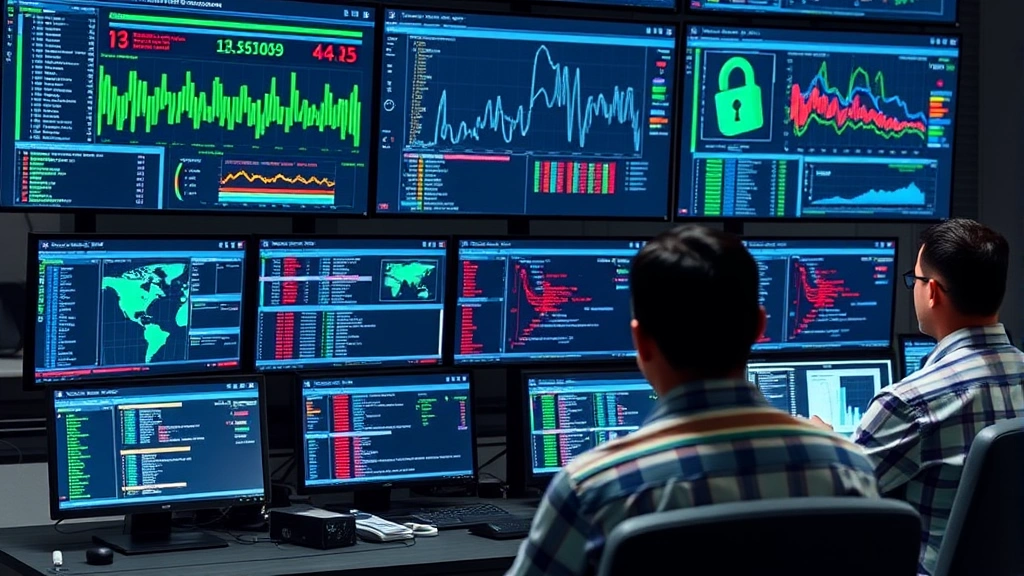
” alt=”Security operations center team monitoring advanced threat detection dashboards displaying real-time alerts and network traffic analysis across multiple screens”>
Zero Trust Architecture Implementation
Traditional network security operated on the assumption that threats originated externally while internal networks remained trustworthy. This perimeter-based approach has catastrophically failed in modern threat environments where sophisticated attackers routinely penetrate networks and establish persistent presence. Zero Trust architecture fundamentally rejects this assumption, treating every access request—whether originating internally or externally—as potentially hostile until verified.
Zero Trust implementation requires several foundational components. Identity verification ensures users and devices are authenticated through multi-factor mechanisms before accessing resources. Device posture assessment confirms that endpoints meet security requirements—current patches, enabled firewalls, antivirus definitions—before granting access. Microsegmentation divides networks into granular security zones, limiting lateral movement even if attackers compromise individual systems.
Implementing Zero Trust demands organizational transformation beyond purely technical measures. Network architects must redesign infrastructure to eliminate implicit trust relationships. Identity and access management teams must deploy sophisticated credential management systems supporting passwordless authentication. Security operations teams require tools providing continuous verification and enforcement of access policies.
The benefits justify the complexity. Zero Trust architectures dramatically constrain attacker movement following initial compromise. Even if threat actors successfully exploit a vulnerable application to gain foothold on a network, Zero Trust controls prevent them from seamlessly accessing sensitive databases, file shares, or administrative systems. This forced containment significantly increases attacker effort and detection probability.
Threat Intelligence Integration
Advanced threat protection cannot succeed in isolation. Organizations must integrate threat intelligence—information about current threat actors, their capabilities, tactics, and targeting patterns—into security operations. Threat intelligence transforms reactive incident response into proactive threat hunting, enabling security teams to search for evidence of compromise before attackers achieve their objectives.
Multiple threat intelligence sources provide complementary perspectives. Tactical intelligence details malware samples, exploit code, and attack tools used by threat actors. Operational intelligence describes how threat actors conduct campaigns—attack timing, targeting patterns, persistence mechanisms. Strategic intelligence contextualizes threats within broader geopolitical and business landscapes, informing executive decision-making about risk tolerance and resource allocation.
The Cybersecurity and Infrastructure Security Agency (CISA) provides authoritative threat intelligence through alerts, advisories, and the Known Exploited Vulnerabilities Catalog. Commercial threat intelligence providers like CrowdStrike, Mandiant, and Recorded Future deliver detailed threat actor profiles and targeting intelligence. National Institute of Standards and Technology (NIST) publishes frameworks for threat assessment and cybersecurity governance. Industry-specific information sharing organizations provide peer intelligence about threats targeting your sector.
Effective threat intelligence integration requires operationalizing data within your security infrastructure. Intelligence about known attacker infrastructure should automatically block communications from your networks. Threat actor malware samples should be analyzed to extract indicators of compromise (IOCs) that your detection systems search for continuously. Tactical threat reports should inform vulnerability prioritization, ensuring your patching programs target exploits actively weaponized by threat actors.
Incident Response and Containment
Despite comprehensive preventive measures, advanced threats will periodically breach your defenses. Organizations cannot achieve perfect prevention; instead, they must prepare to detect, contain, and remediate advanced threats quickly. Incident response capabilities determine whether a successful intrusion becomes a minor incident or a catastrophic breach.
Effective incident response begins before threats are detected. Organizations must establish incident response plans documenting decision chains, communication protocols, and containment procedures. Playbooks provide step-by-step procedures for responding to common attack scenarios—ransomware, data exfiltration, supply chain compromise. Tabletop exercises test response procedures, identifying gaps before real incidents occur.
When advanced threats are detected, containment must occur rapidly. Isolation procedures disconnect compromised systems from networks, preventing lateral movement or data exfiltration. Credential rotation invalidates potentially-compromised passwords and authentication tokens. Evidence preservation captures forensic data essential for understanding attacker objectives and techniques. Organizations often engage external incident response specialists like Mandiant to provide expertise and preserve neutrality in investigations.
Post-incident activities prove equally critical. Root cause analysis determines how attackers achieved initial compromise, identifying security gaps requiring remediation. Threat actor profiling assesses whether the attack bore hallmarks of known adversaries, informing future defensive prioritization. Lessons learned sessions capture insights enabling defensive improvements before the next attack.

” alt=”Cybersecurity professional analyzing forensic evidence on dual monitors while documenting incident response procedures in secure operations center”>
Continuous Monitoring and Adaptation
Advanced threat protection requires relentless vigilance. Threat actors constantly develop new techniques, exploit newly-discovered vulnerabilities, and adapt to defensive measures. Static security postures inevitably degrade as threats evolve. Organizations must implement continuous monitoring and adaptation cycles, ensuring defensive capabilities remain relevant against emerging threats.
Continuous monitoring encompasses multiple dimensions. Vulnerability scanning identifies newly-discovered flaws requiring patching. Configuration auditing ensures systems maintain hardened baselines resistant to exploitation. Security testing through penetration testing and red team exercises validates that controls function as intended. Log analysis examines security events for patterns indicating compromise.
Modern security operations leverage Security Information and Event Management (SIEM) systems aggregating logs from thousands of sources, enabling analysts to correlate events across your infrastructure. Advanced SIEM implementations employ machine learning to identify suspicious patterns automatically, reducing reliance on manual analysis. However, SIEM effectiveness depends entirely on comprehensive log collection and proper configuration—many organizations deploy SIEM without capturing adequate data or tuning detection rules appropriately.
Adaptation requires organizational commitment to continuous improvement. Security teams must regularly review threat intelligence, adjusting detection rules to address emerging threats. Vulnerability management programs must prioritize patches addressing exploits actively weaponized by threat actors. Security architecture must evolve to address new attack vectors and threat actor capabilities. This continuous cycle of monitoring, analysis, and adaptation represents the only sustainable approach to advanced threat protection.
FAQ
What distinguishes advanced threats from standard cybersecurity risks?
Advanced threats are characterized by sophisticated threat actors (nation-states, advanced criminal syndicates), custom tools and exploits, extended operational timelines, and targeting of specific high-value organizations. Standard threats typically involve commodity malware, script kiddies, and indiscriminate attacks. Advanced threats require advanced threat protection strategies beyond standard antivirus and firewalls.
How do organizations detect advanced threats before significant damage occurs?
Detection relies on behavioral analysis identifying suspicious activities, threat intelligence enabling proactive threat hunting, network segmentation limiting lateral movement, and continuous monitoring across infrastructure. Early detection depends on implementing detection capabilities across endpoints, networks, and user activities rather than relying on perimeter defenses alone.
What role does threat intelligence play in advanced threat protection?
Threat intelligence enables organizations to understand current threat actors, their capabilities, and targeting patterns. This information informs defensive prioritization, enabling organizations to focus resources against threats most likely to target their specific organization. Intelligence also enables proactive threat hunting—searching for evidence of compromise before attackers achieve objectives.
Can organizations achieve perfect protection against advanced threats?
No. Perfect prevention is impossible against well-resourced, persistent adversaries. Instead, organizations must assume breach, implementing detection and response capabilities enabling rapid containment when advanced threats succeed in penetrating defenses. The goal shifts from preventing all compromise to minimizing dwell time—the period between initial compromise and detection.
How should organizations prioritize investments in advanced threat protection?
Prioritization should follow threat modeling identifying threats most likely to target your organization, considering industry-specific threats, organizational assets, and threat actor motivations. Investments should address the most critical gaps in your current capabilities, focusing initially on detection and response before investing in advanced prevention mechanisms.


