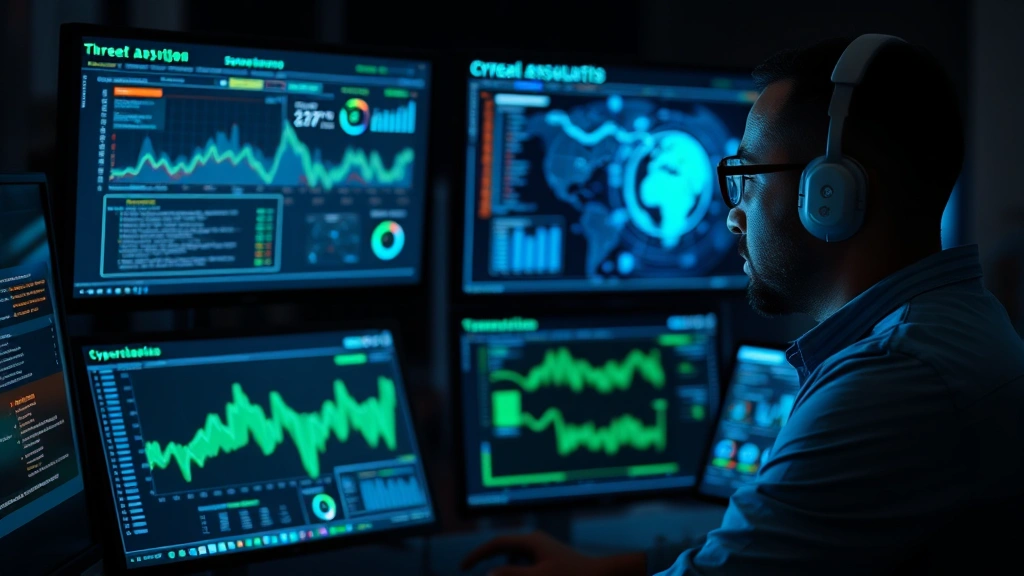
AI in Cybersecurity: Expert Insights & Trends
Artificial intelligence has fundamentally transformed how organizations defend against cyber threats. What once required teams of security analysts working around the clock can now be accomplished through actually intelligent security systems that learn, adapt, and respond in real-time. The convergence of AI and cybersecurity represents one of the most significant technological shifts in digital defense, creating both unprecedented opportunities and novel challenges that security professionals must understand.
The cybersecurity landscape has evolved dramatically over the past five years. Traditional signature-based detection methods, while still valuable, can no longer keep pace with the sophistication and speed of modern attacks. Artificial intelligence and machine learning algorithms now form the backbone of next-generation security infrastructure, enabling organizations to identify threats that human analysts might miss and respond to incidents faster than ever before. This article explores the current state of AI in cybersecurity, examining expert perspectives, emerging trends, and practical implications for organizations of all sizes.
Understanding how AI enhances security requires looking beyond marketing hype to examine real-world deployments, proven use cases, and the limitations that still exist. As cyber threats grow increasingly intelligent and automated, the security industry has responded by developing AI systems capable of matching and exceeding attacker sophistication. The question is no longer whether AI should play a role in cybersecurity, but how organizations can best leverage these technologies while maintaining human oversight and ethical standards.
How AI Transforms Threat Detection
Traditional threat detection relies on pattern matching against known signatures and rule-based systems that security teams manually configure. While effective against known threats, this approach fails dramatically when facing novel attacks or sophisticated variants that attackers deliberately craft to evade detection. Artificial intelligence changes this equation entirely by enabling systems to identify threats based on behavioral patterns, statistical anomalies, and contextual analysis rather than exact signature matches.
Machine learning models trained on massive datasets of both benign and malicious activity can detect subtle indicators of compromise that rule-based systems would overlook. These models learn to recognize the characteristics that distinguish legitimate network traffic from attack traffic, normal user behavior from compromised accounts, and safe files from malware variants. According to CISA guidance on AI security applications, properly implemented AI detection systems can reduce false negatives significantly while maintaining acceptable false positive rates.
The advantage becomes clear when considering zero-day exploits—attacks that exploit previously unknown vulnerabilities. A signature-based system has no defense against zero-days because no signature exists. An AI system trained on general malware characteristics and attack patterns, however, can often identify zero-day attacks by recognizing suspicious behavioral traits and exploitation techniques, even without prior knowledge of the specific vulnerability.
Organizations implementing AI-driven detection report detection times measured in seconds rather than hours or days. This acceleration in threat identification directly translates to reduced dwell time—the period attackers remain undetected within a network. Industry research shows that organizations with AI-enhanced detection capabilities identify breaches an average of 200 days faster than those relying on traditional methods.

Machine Learning in Incident Response
Once a threat is detected, the response must be swift and effective. Machine learning accelerates incident response by automating routine tasks, prioritizing alerts based on severity and business context, and providing analysts with actionable intelligence. Actually intelligent security systems don’t just identify threats—they orchestrate appropriate responses automatically while keeping human operators informed and in control.
Automated response capabilities include isolating compromised systems, blocking malicious IP addresses, disabling compromised user accounts, and triggering forensic data collection. These actions occur within milliseconds of threat confirmation, far faster than any human team could respond. The system learns from each incident, improving its response accuracy and speed over time as it encounters new threat patterns and learns how specific attacks typically progress.
Machine learning also excels at alert prioritization and enrichment. Security teams face alert fatigue from thousands of daily notifications, most of which are false positives. AI systems analyze the context surrounding each alert—the source, destination, user behavior, time patterns, and relationship to other alerts—to assign risk scores and suppress low-priority notifications. Analysts receive a curated list of genuinely concerning alerts with detailed context, dramatically improving their effectiveness.
Threat intelligence feeds integrated with machine learning models enable predictive response capabilities. The system can recognize attack patterns that historically precede specific breach types and recommend defensive actions before the full attack sequence completes. For example, if a system recognizes the initial stages of a ransomware attack based on file encryption patterns and network reconnaissance activity, it can immediately isolate systems and block command-and-control communications before encryption spreads to critical assets.
Behavioral Analytics and Anomaly Detection
User and entity behavior analytics (UEBA) represents one of AI’s most powerful applications in cybersecurity. These systems establish baselines for normal behavior—how users typically access systems, what data they interact with, when they work, and what applications they use—then flag deviations from these baselines as potential security incidents.
Behavioral analytics proves particularly effective at detecting insider threats, compromised credentials, and lateral movement by attackers. When a user’s account suddenly accesses sensitive data at 3 AM from an unusual location using different applications than normal, the system immediately flags this as anomalous. This approach catches threats that signature-based systems would miss entirely because the attacker hasn’t executed any known malware or exploited any known vulnerability—they’re simply using legitimate credentials and tools in suspicious ways.
The sophistication of behavioral analytics continues advancing as AI models become more nuanced. Modern systems understand that behavior varies by role, department, and individual. They recognize seasonal patterns, accommodate legitimate business changes, and distinguish between gradual behavior shifts (which might indicate a compromise developing over time) and sudden dramatic changes (which might indicate credential theft). The systems also understand that not all anomalies are malicious—a user working unusual hours during a crisis is anomalous but legitimate.
Anomaly detection powered by machine learning identifies security issues that wouldn’t trigger any specific rule. Network traffic analysis can detect data exfiltration by identifying unusual patterns in outbound communications—high volumes of data to unknown external IP addresses, communications to known C2 infrastructure, or data transfers using non-standard protocols. These detections work regardless of what data is being exfiltrated or what tools are being used.
AI-Powered Vulnerability Management
Vulnerability management has traditionally been a labor-intensive process: discover vulnerabilities, assess their severity, prioritize patching based on criticality and exploitability, and execute remediation. Organizations face overwhelming numbers of vulnerabilities—the average organization has thousands of vulnerable systems—making manual prioritization impossible.
AI transforms vulnerability management by intelligently assessing which vulnerabilities pose the greatest risk in a specific organizational context. A vulnerability that’s critical in one environment might be negligible in another. A vulnerability affecting a system exposed to the internet requires different priority than the same vulnerability in an isolated internal system. A vulnerability for which active exploits exist in the wild demands immediate attention, while a theoretical vulnerability with no known exploits can wait.
Machine learning models analyze vulnerability characteristics, threat intelligence about active exploitation, organizational asset inventory, network topology, and historical patch data to predict which vulnerabilities will likely be exploited and which remediation efforts will have the greatest impact. This context-aware prioritization ensures that security teams focus resources on the vulnerabilities that matter most for their specific situation.
AI also enhances the vulnerability discovery process itself. Traditional vulnerability scanners perform static checks against known vulnerability databases. AI-powered scanning can identify potential vulnerabilities based on code analysis, configuration review, and behavioral monitoring, potentially catching zero-day vulnerabilities or misconfigurations before they’re discovered by attackers. Integration with threat intelligence feeds ensures that scanning priorities shift immediately when new exploits appear in the wild.
Current Limitations and Challenges
Despite remarkable progress, AI in cybersecurity faces significant limitations that practitioners must understand. No security system, regardless of its intelligence, provides absolute protection. AI systems work best as part of a layered defense strategy, not as standalone solutions.
One critical limitation is the data quality problem. Machine learning models are only as good as the data they train on. If training data contains biases, errors, or unrepresentative samples, the resulting models will inherit those flaws. Adversaries increasingly understand how AI systems work and deliberately craft attacks designed to evade machine learning detection. This adversarial machine learning challenge means that AI security systems face a constant arms race with sophisticated attackers.
Explainability presents another challenge. Many machine learning models operate as “black boxes”—they produce predictions but cannot easily explain their reasoning. When a system flags a user as suspicious or blocks a transaction, security teams and users want to understand why. This lack of transparency can reduce trust and create compliance issues in regulated industries. Researchers are developing more explainable AI models, but this often requires trading some accuracy for interpretability.
The false positive problem persists despite AI improvements. Systems that are too sensitive generate overwhelming numbers of false alerts, causing alert fatigue and reducing analyst effectiveness. Systems that are too conservative miss actual threats. Finding the right balance requires careful tuning and often involves accepting some level of false positives to ensure threats aren’t missed.
Integration challenges also limit AI effectiveness. Organizations typically deploy security tools from multiple vendors, and these systems often don’t share data or coordinate responses effectively. AI systems work better with access to comprehensive data across the entire security infrastructure, but achieving this integration requires significant effort and standardization work.
Finally, the skills gap represents a practical limitation. Deploying and maintaining AI-powered security systems requires expertise in both cybersecurity and machine learning—a rare combination. Many organizations lack the internal expertise to effectively implement and tune these systems, creating dependency on vendors and consultants.
The Future of Intelligent Security
The trajectory of AI in cybersecurity points toward increasingly autonomous systems capable of managing routine security operations with minimal human intervention. However, the future will not be fully autonomous—human expertise, judgment, and oversight remain essential, particularly for complex decisions and novel threats.
Emerging trends include federated learning approaches that enable organizations to train AI models collaboratively without sharing sensitive data, explainable AI techniques that make model decisions transparent and trustworthy, and automated red teaming where AI systems continuously probe defenses to identify weaknesses before attackers do.
Integration with NIST cybersecurity frameworks ensures that AI implementations align with established security standards and best practices. Organizations increasingly use AI to manage compliance requirements more effectively, automating evidence collection and control verification.
The convergence of AI with other emerging technologies—quantum computing, blockchain, extended detection and response (XDR) platforms—will create security capabilities that are difficult to predict but potentially transformative. Quantum computing, for example, will render current encryption obsolete, requiring AI systems to identify and protect against quantum-powered attacks while helping organizations transition to quantum-resistant cryptography.
Threat actors are also advancing their AI capabilities, developing AI-powered attacks that can adapt to defenses in real-time. This escalating sophistication means that the future of cybersecurity will be fundamentally shaped by AI on both sides of the conflict—defenders and attackers will both leverage increasingly intelligent systems, making the security landscape more dynamic and challenging than ever.
FAQ
What is the primary advantage of AI in cybersecurity?
The primary advantage is speed and accuracy in threat detection and response. AI systems can analyze vast amounts of data instantly, identify patterns humans would miss, and respond to threats within milliseconds. This acceleration dramatically reduces the time attackers can operate undetected within networks, limiting damage and enabling faster recovery.
Can AI completely replace human security analysts?
No. AI excels at processing data, identifying patterns, and automating routine tasks, but human judgment remains essential. Security professionals are needed to interpret AI findings, investigate complex incidents, make strategic decisions, and handle novel situations that fall outside the AI system’s training data. The most effective security teams use AI to augment human capabilities, not replace them.
How does AI handle new and unknown threats?
AI systems trained on behavioral patterns and general malware characteristics can identify zero-day and novel threats by recognizing suspicious behaviors, exploitation techniques, and attack patterns even without specific signatures. However, truly novel attack types that don’t match learned patterns may evade detection. This is why AI works best as part of a layered defense with multiple detection mechanisms.
What are the main challenges in implementing AI security systems?
Key challenges include data quality and availability, model explainability, integration with existing security tools, skills gaps, and adversarial attacks designed to evade AI detection. Organizations must also address privacy concerns and ensure that AI systems comply with relevant regulations in their industry.
How do organizations measure the effectiveness of AI security systems?
Effectiveness metrics include detection rate (percentage of actual threats detected), false positive rate (incorrect alerts), mean time to detect (MTTD), mean time to respond (MTTR), and reduction in security incidents. Organizations should also track business impact metrics like reduction in breach costs and improved compliance posture.
Are AI security systems vulnerable to adversarial attacks?
Yes. Adversaries can craft attacks specifically designed to evade AI detection by exploiting weaknesses in model training or using techniques like adversarial examples. This ongoing arms race between defenders and attackers is why continuous model improvement and human oversight remain critical.


