
Protect Your Data: 88 Security Must-Knows
In an increasingly digital world, data protection has become non-negotiable. Every day, organizations and individuals face sophisticated cyber threats that can compromise sensitive information, disrupt operations, and damage reputations. Understanding the fundamental principles of cybersecurity isn’t just for IT professionals anymore—it’s essential knowledge for anyone who uses the internet. This comprehensive guide covers 88 critical security concepts that will help you fortify your digital defenses and protect what matters most.
The landscape of cyber threats evolves constantly, with attackers developing new methods to exploit vulnerabilities and human weaknesses. From ransomware attacks targeting enterprises to phishing schemes designed to steal personal credentials, the risks are real and pervasive. By mastering these 88 security essentials, you’ll gain the knowledge needed to recognize threats, implement protective measures, and respond effectively when incidents occur.
Foundational Security Principles
Every robust security strategy begins with understanding core principles that form the foundation of data protection. The CIA triad—Confidentiality, Integrity, and Availability—represents the three pillars of information security. Confidentiality ensures that sensitive data remains private and accessible only to authorized individuals. Integrity guarantees that information hasn’t been altered or corrupted by unauthorized parties. Availability ensures that systems and data remain accessible to legitimate users when needed.
Beyond the CIA triad, organizations must embrace the principle of Zero Trust Architecture, which assumes that no user or system should be automatically trusted, even within internal networks. This approach requires continuous verification of every access request, regardless of origin. Additionally, the concept of Defense in Depth emphasizes layering multiple security controls so that if one fails, others remain effective. This strategy prevents a single point of failure from compromising your entire security posture.
Understanding risk management is crucial for prioritizing security efforts. Risk equals threat multiplied by vulnerability multiplied by impact. Organizations must identify potential threats, assess their likelihood, evaluate the impact of successful attacks, and implement controls proportional to the risk level. The ScreenVibe Daily Blog maintains resources on various topics, but cybersecurity requires specialized guidance from authoritative sources.
- Threat modeling: Systematically identifying potential attacks and vulnerabilities
- Asset classification: Categorizing data and systems by sensitivity level
- Security awareness: Educating users about threats and best practices
- Incident response planning: Preparing procedures for security breaches
- Continuous monitoring: Detecting suspicious activities in real-time
The principle of least privilege dictates that users should have only the minimum access necessary to perform their job functions. This dramatically reduces the potential damage if credentials are compromised. Organizations should regularly audit permissions and remove unnecessary access rights. Implementing role-based access control (RBAC) makes this process more manageable and scalable across large enterprises.
Authentication and Access Control
Authentication—verifying that users are who they claim to be—forms the critical first line of defense against unauthorized access. Multi-factor authentication (MFA) requires users to provide multiple forms of verification, such as something they know (password), something they have (security token or phone), or something they are (biometric data). MFA significantly reduces the risk of account compromise, even if passwords are stolen.
Password security remains fundamental despite the emergence of newer authentication methods. Strong passwords should be at least 12-16 characters long, combining uppercase and lowercase letters, numbers, and special characters. Organizations should enforce password policies that prevent reuse of previous passwords and require periodic changes. However, the most important practice is using unique passwords for each account—password managers like Bitwarden, 1Password, or KeePass can help manage complex credentials securely.
Single Sign-On (SSO) and Identity and Access Management (IAM) systems centralize user authentication and authorization across multiple applications. These solutions provide administrators with comprehensive control over who can access what resources. Implementing SSO with MFA creates a powerful security combination that balances user convenience with strong protection. Organizations should review the NIST guidelines for authentication standards and best practices.
Session management is equally important—sessions should have appropriate timeout periods, and users should be able to view active sessions and terminate them remotely. Credential stuffing attacks, where attackers use leaked username-password combinations from other breaches, remain a significant threat. Organizations must implement rate limiting and account lockout mechanisms to prevent automated attacks.
- Passwordless authentication: Using biometrics, security keys, or app-based approvals
- Conditional access: Requiring additional verification for unusual login locations or times
- Account recovery procedures: Secure methods for regaining access to compromised accounts
- Privileged account management: Extra controls for administrative accounts
- API authentication: Securing programmatic access with tokens and certificates
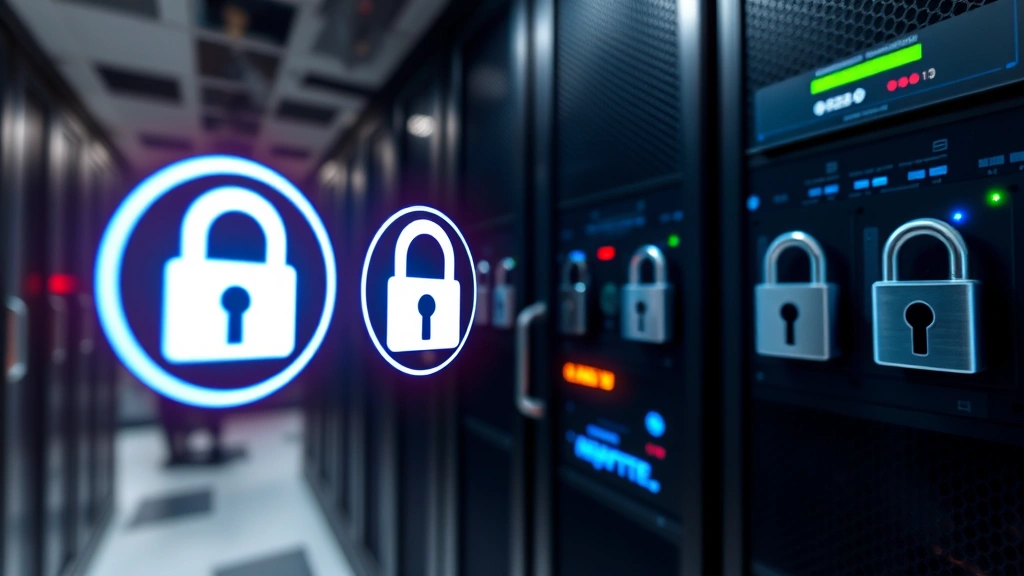
Data Encryption Essentials
Encryption transforms readable data into unintelligible ciphertext using mathematical algorithms, rendering it useless to unauthorized parties. End-to-end encryption (E2EE) ensures that only the sender and intended recipient can read messages, even if they’re intercepted. Applications like Signal and WhatsApp use E2EE to protect message privacy. Organizations handling sensitive data should implement encryption for all communications and stored information.
Data encryption falls into two primary categories: encryption in transit and encryption at rest. Encryption in transit protects data moving across networks using protocols like HTTPS, TLS, and VPN connections. Encryption at rest protects stored data in databases, cloud services, and physical storage devices. Both are essential—data is vulnerable during both storage and transmission.
The most widely used encryption standard is AES (Advanced Encryption Standard), which uses 128, 192, or 256-bit keys. The 256-bit variant provides military-grade security and is recommended for highly sensitive data. Public-key cryptography, which uses paired keys (one public, one private), enables secure communication between parties without sharing secret keys. RSA and Elliptic Curve Cryptography (ECC) are common implementations.
Key management is critical—encryption is only as strong as the protection of the keys themselves. Organizations must implement Key Management Services (KMS) that securely generate, store, rotate, and retire encryption keys. Cloud providers like AWS, Azure, and Google Cloud offer managed KMS solutions. Keys should never be hardcoded in applications or stored in version control systems.
- TLS/SSL certificates: Establishing encrypted connections to websites and services
- File encryption: Using tools like VeraCrypt or BitLocker for local data
- Database encryption: Protecting data at rest in database systems
- Tokenization: Replacing sensitive data with non-sensitive tokens
- Hashing: Creating irreversible fingerprints of data for integrity verification
Network Security Fundamentals
Networks form the backbone of modern business operations, making their security paramount. Firewalls act as barriers between trusted internal networks and untrusted external networks, filtering traffic based on predetermined rules. Next-generation firewalls (NGFWs) provide advanced capabilities like intrusion prevention, application awareness, and threat intelligence integration.
Virtual Private Networks (VPNs) create encrypted tunnels through public networks, protecting data from interception. VPNs are essential for remote workers accessing corporate resources and for individuals protecting their privacy on public Wi-Fi networks. Site-to-site VPNs connect entire office networks securely. Organizations should verify VPN providers’ security practices and audit logs, as some VPN services have been compromised or sold to malicious actors.
Network segmentation divides networks into isolated zones, limiting lateral movement if one segment is compromised. Microsegmentation takes this further by creating individual security perimeters around specific applications or workloads. Zero-trust network access (also called zero-trust network architecture) verifies every access attempt regardless of network location, eliminating the concept of a trusted internal network.
Intrusion Detection Systems (IDS) and Intrusion Prevention Systems (IPS) monitor network traffic for suspicious patterns and malicious signatures. IDS alerts administrators to potential threats, while IPS actively blocks detected attacks. These systems require regular updates to recognize emerging threats. The CISA (Cybersecurity and Infrastructure Security Agency) provides threat alerts and security guidance for network defense.
- DMZ deployment: Creating buffer zones for public-facing servers
- DNS security: Protecting domain name resolution from hijacking
- DDoS protection: Mitigating distributed denial-of-service attacks
- Web Application Firewalls (WAF): Protecting applications from web-based attacks
- Zero-trust implementation: Verifying every access request continuously
Threat Detection and Response
Detecting threats quickly is essential for minimizing damage. Security Information and Event Management (SIEM) systems collect, analyze, and correlate logs from across an organization’s infrastructure, identifying suspicious patterns that indicate compromise. Tools like Splunk, IBM QRadar, and open-source alternatives like ELK Stack help security teams detect incidents that individual systems might miss.
Endpoint Detection and Response (EDR) solutions monitor individual computers and devices for malicious activities, providing real-time threat detection and automated response capabilities. EDR tools can isolate compromised endpoints, kill malicious processes, and collect forensic evidence. Modern EDR platforms use behavioral analysis and machine learning to detect novel attacks that traditional signature-based detection might miss.
Vulnerability management involves systematically identifying, prioritizing, and remediating security weaknesses. Regular vulnerability scanning using tools like Nessus, Qualys, or OpenVAS reveals configuration errors, missing patches, and outdated software. Penetration testing goes further by simulating real attacks to identify exploitable vulnerabilities. Organizations should conduct penetration tests at least annually and after major system changes.
When incidents occur, having a well-defined response plan is critical. The incident response process includes preparation, detection, analysis, containment, eradication, recovery, and post-incident review. Organizations should document procedures, assign clear responsibilities, and conduct regular drills to ensure readiness. The SANS Institute provides widely-recognized incident response frameworks and training.

- Threat intelligence: Gathering information about adversaries and attack methods
- Malware analysis: Understanding how malicious software functions and spreads
- Forensic investigation: Collecting evidence after security incidents
- Breach notification: Properly communicating incidents to affected parties
- Recovery procedures: Restoring systems and data after attacks
Compliance and Best Practices
Regulatory frameworks establish minimum security requirements for different industries. GDPR (General Data Protection Regulation) governs data handling for EU residents, imposing strict requirements on consent, data minimization, and privacy rights. HIPAA (Health Insurance Portability and Accountability Act) protects health information in the United States. PCI-DSS (Payment Card Industry Data Security Standard) requires security controls for organizations handling credit card data.
Compliance with these frameworks isn’t just about avoiding fines—it establishes a structured approach to security. Many compliance requirements align with security best practices, such as data encryption, access controls, and incident response procedures. Organizations should map their security programs to relevant compliance frameworks and regularly audit their compliance status.
Security awareness training is one of the most cost-effective security investments. Regular training helps employees recognize phishing attempts, avoid social engineering, and follow security policies. Simulated phishing campaigns can identify vulnerable users for targeted training. The human element remains the weakest link in many security chains, making education essential.
Patch management is critical—software vulnerabilities are regularly discovered and fixed through security patches. Unpatched systems remain vulnerable to known exploits. Organizations should establish patch management policies that balance security with operational stability, testing patches before deployment while prioritizing critical security updates. Automated patch management tools like WSUS, Kandji, or Jamf simplify this process.
Supply chain security has become increasingly important as organizations depend on third-party vendors and software components. Software composition analysis (SCA) tools identify known vulnerabilities in open-source libraries and dependencies. Vendor security assessments should evaluate third parties’ security practices before granting access to sensitive data. The OWASP (Open Worldwide Application Security Project) provides guidance on secure development practices and common vulnerabilities.
- Security policies: Documenting requirements and procedures for data protection
- Access reviews: Regularly auditing who has access to what resources
- Data classification: Categorizing information by sensitivity level
- Backup and recovery: Protecting against data loss from various causes
- Third-party risk management: Assessing and monitoring vendor security practices
- Secure development: Integrating security into software development processes
FAQ
What are the most critical security practices for individuals?
For personal security, focus on strong, unique passwords with MFA, keeping software updated, using reputable antivirus tools, avoiding phishing attempts, and being cautious about sharing personal information online. Regular backups protect against ransomware, and using a VPN on public Wi-Fi adds important privacy protection.
How often should organizations conduct security audits?
Security audits should occur at least annually, but more frequently is better—quarterly or even monthly for critical systems. Audits should also be triggered by significant system changes, after security incidents, or when new threats emerge. Continuous monitoring provides real-time visibility into security posture.
What’s the difference between a firewall and an antivirus?
Firewalls control network traffic between networks, while antivirus software detects and removes malicious programs on individual devices. Both are essential—firewalls protect at the network level, while antivirus protects at the device level. Modern endpoint protection platforms combine multiple capabilities into unified solutions.
How can small organizations with limited budgets improve security?
Prioritize foundational controls: strong authentication with MFA, regular patching, user security training, and incident response planning. Many security tools offer free or affordable options—open-source solutions, cloud-provided security features, and managed security services can reduce costs while improving protection.
What should I do if I suspect my account has been compromised?
Change your password immediately from a secure device, enable MFA if not already active, review account activity and connected devices, and consider running antivirus scans. Check Have I Been Pwned to see if your credentials appeared in known breaches. For important accounts like email, consider using a password recovery service.
Is cloud storage secure?
Reputable cloud providers implement strong security controls, but you should verify their security practices and use encryption for sensitive data. End-to-end encrypted cloud storage services like Tresorit or Sync.com provide additional protection, though at the cost of some functionality. Always understand your provider’s data handling practices and compliance certifications.


