International Cybersecurity: Expert Insights on Absolute International Security
The digital landscape transcends borders, yet cybersecurity threats operate without geographical constraints. Organizations worldwide face unprecedented challenges as nation-states, cybercriminals, and hacktivists coordinate sophisticated attacks across continents. Achieving absolute international security requires understanding how global threats evolve, how different countries approach defense strategies, and what frameworks enable cross-border collaboration in cyber defense.
International cybersecurity has become a critical pillar of national security, economic stability, and public safety. From ransomware campaigns targeting hospitals in Europe to supply chain compromises affecting manufacturers globally, the interconnected nature of our digital infrastructure means that vulnerabilities in one country can cascade into catastrophic consequences elsewhere. This comprehensive guide explores expert perspectives on international cybersecurity, emerging threats, and actionable strategies for organizations operating in a globally connected world.
The Global Threat Landscape
Understanding the current threat environment requires examining how cybercriminals and state-sponsored actors operate internationally. According to recent CISA threat assessments, sophisticated actors leverage distributed networks across multiple countries to evade detection and attribution. The sophistication of international cyber operations has increased dramatically, with attackers employing polymorphic malware, zero-day exploits, and supply chain compromises that affect thousands of organizations simultaneously.
Nation-state actors conduct espionage campaigns targeting government agencies, defense contractors, and critical infrastructure operators. These operations often involve lengthy reconnaissance phases spanning months or years, during which attackers establish persistent access across international networks. Meanwhile, financially motivated criminal syndicates operate ransomware-as-a-service (RaaS) platforms that facilitate attacks regardless of victim location or industry sector.
The proliferation of ransomware gangs with international operations represents one of the most pressing threats to global security. Groups like LockBit, BlackCat, and Play operate across multiple countries, targeting organizations in healthcare, finance, manufacturing, and government sectors. These organizations often demand ransom payments in cryptocurrency, making international law enforcement coordination essential for disrupting their operations.
Developing nations face particular challenges in defending against international threats due to limited cybersecurity budgets, fewer trained professionals, and legacy systems that lack modern security controls. This creates vulnerability gaps that sophisticated attackers exploit, sometimes using compromised systems in developing regions as launching points for attacks against more developed nations.
National Cybersecurity Frameworks
Different countries have adopted varying approaches to cybersecurity governance, ranging from centralized government control to distributed responsibility models. The United States emphasizes public-private partnerships through frameworks like the NIST Cybersecurity Framework, which provides voluntary guidelines for organizations across critical infrastructure sectors. The European Union implemented the Network and Information Systems (NIS) Directive, mandating security requirements for essential service providers and digital service operators.
The United Kingdom’s National Cyber Security Centre (NCSC) operates under a government-backed structure, providing threat intelligence and guidance to both public and private sectors. China has established strict data localization requirements and government oversight mechanisms, reflecting a more centralized approach to cybersecurity governance. Russia and North Korea maintain dedicated state-sponsored cyber units that conduct offensive operations alongside defensive measures.
These divergent approaches create challenges for multinational organizations that must comply with multiple regulatory frameworks simultaneously. A company operating across North America, Europe, and Asia-Pacific must navigate different encryption standards, data residency requirements, incident reporting timelines, and government access provisions. Understanding these nuances is critical for maintaining absolute international security postures across jurisdictions.
Emerging economies increasingly recognize cybersecurity as a strategic priority, with countries like India, Brazil, and South Africa developing national cybersecurity strategies. However, implementation gaps and resource constraints often limit effectiveness. International organizations like the United Nations and International Telecommunication Union (ITU) provide guidance and capacity-building programs to help developing nations strengthen their cyber defenses.

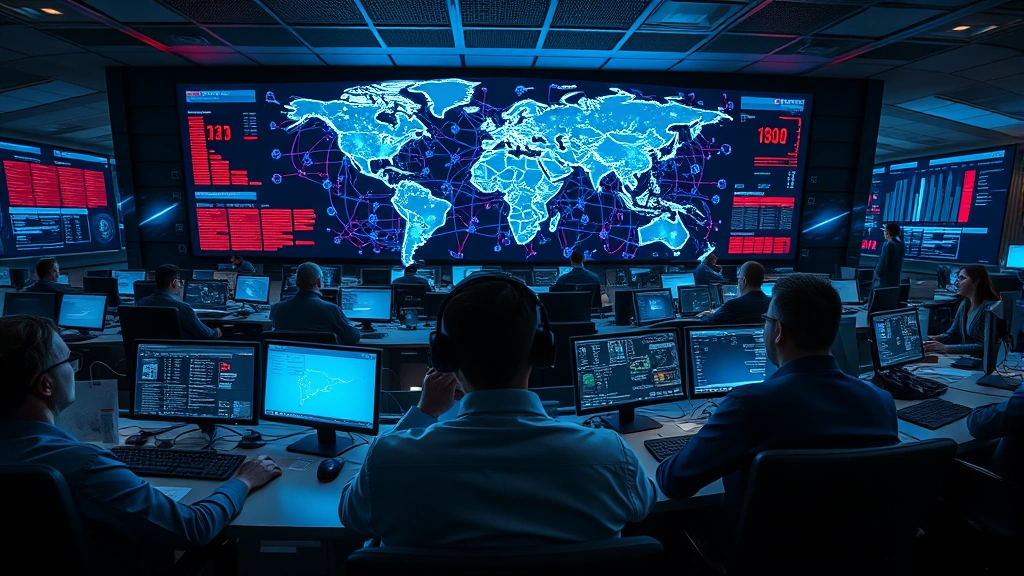
” alt=”Global cybersecurity operations center with analysts monitoring international threats across multiple screens and dashboards”>
Cross-Border Threat Intelligence Sharing
Effective international cybersecurity requires robust mechanisms for sharing threat intelligence across borders. Organizations like the Five Eyes alliance (United States, United Kingdom, Canada, Australia, and New Zealand) maintain formal agreements for intelligence sharing, but many other nations lack comparable frameworks. This asymmetry creates blind spots in global threat detection and response capabilities.
Private sector threat intelligence platforms have emerged as critical bridges for international information sharing. Companies like Mandiant and CrowdStrike publish detailed threat reports attributing attacks to specific threat actors and providing indicators of compromise that organizations worldwide can use to improve defenses. However, geopolitical tensions sometimes limit the effectiveness of these initiatives, as some nations restrict information sharing with perceived adversaries.
The MITRE ATT&CK framework provides a common taxonomy for describing attacker techniques and tactics, enabling standardized threat intelligence sharing across international boundaries. Organizations using this framework can communicate about threats more effectively, regardless of language or regional differences. Implementing threat intelligence sharing requires addressing several challenges including data classification standards, attribution confidence levels, and operational security concerns.
Information Sharing and Analysis Centers (ISACs) operate in many countries, facilitating threat intelligence exchange within specific sectors like energy, finance, and healthcare. International coordination between ISACs remains limited, however, representing an opportunity for enhanced global collaboration. The European Union’s directive to establish sectoral ISACs aims to improve threat intelligence sharing across member states.
International Regulations and Compliance
Organizations operating internationally must navigate an increasingly complex regulatory landscape. The General Data Protection Regulation (GDPR) in Europe imposes strict requirements on data handling, privacy protections, and breach notification timelines. The California Consumer Privacy Act (CCPA) and similar state-level regulations in the United States create additional compliance obligations. China’s Personal Information Protection Law (PIPL) and similar regulations in other countries add further complexity.
Compliance with multiple regulatory frameworks requires comprehensive security programs that exceed minimum requirements in any single jurisdiction. Organizations must implement encryption standards, access controls, and incident response procedures that satisfy the most stringent requirements across all operating regions. This approach to regulatory harmonization through security excellence often proves more efficient than attempting to maintain separate compliance programs for each jurisdiction.
International agreements like the Budapest Convention on Cybercrime provide legal frameworks for investigating and prosecuting cyber offenses across borders. However, varying legal definitions of cybercrime and different evidentiary standards complicate international law enforcement cooperation. Some countries lack cybercrime legislation entirely, creating safe havens for attackers who operate from jurisdictions with limited legal consequences.
Export control regulations in many countries restrict the distribution of advanced cybersecurity technologies, encryption algorithms, and threat intelligence to certain nations. These restrictions, while intended to protect national security, sometimes fragment the global cybersecurity community and limit information sharing that could benefit all nations. Organizations must carefully manage technology exports and international partnerships to maintain compliance with these complex regulations.
Critical Infrastructure Protection Globally
Critical infrastructure sectors including energy, water systems, transportation, and healthcare operate increasingly through networked digital systems vulnerable to international cyber threats. The 2015 Ukraine power grid attack demonstrated that coordinated international cyber operations could cause physical damage to infrastructure and impact civilian populations. Subsequent attacks on industrial control systems worldwide have reinforced the critical importance of defending essential services against international adversaries.
Different countries have adopted varying approaches to critical infrastructure protection. The United States relies primarily on voluntary compliance frameworks and public-private partnerships, while European nations increasingly mandate specific security requirements through regulatory directives. Some countries maintain strict government control over critical infrastructure security, limiting private sector involvement in defense operations.
Supply chain security represents a particular challenge for international critical infrastructure protection. Adversaries target manufacturers of industrial control systems, networking equipment, and software components used globally, enabling them to compromise multiple countries simultaneously through a single supply chain compromise. The SolarWinds incident demonstrated how a single compromised software update could affect thousands of organizations across government and private sectors internationally.
International standards like IEC 62443 provide guidance for securing industrial control systems, enabling organizations across countries to implement consistent security practices. However, adoption remains inconsistent, with some nations and organizations maintaining legacy systems that lack modern security controls. Modernizing critical infrastructure security globally requires sustained investment and international cooperation.
Emerging Technologies and International Security
Artificial intelligence and machine learning technologies are transforming cybersecurity capabilities internationally, enabling faster threat detection and response. However, these same technologies create new risks, as adversaries leverage AI for automating attacks, evading detection systems, and conducting sophisticated social engineering campaigns. International coordination on AI governance in cybersecurity remains limited, creating potential for misuse and escalation.
Quantum computing represents a future threat to current encryption standards used globally. Organizations worldwide must prepare for the transition to quantum-resistant cryptography, a process that will require international coordination and standardization efforts. The NIST has led efforts to develop and standardize quantum-resistant algorithms, but implementation across global systems will require years of coordinated effort.
5G and Internet of Things (IoT) technologies create expanded attack surfaces that criminals and nation-states are actively exploiting. Devices manufactured in one country often operate in networks across multiple nations, creating complex security challenges. International standards for IoT device security remain underdeveloped, allowing vulnerable devices to proliferate globally.
Cloud computing has fundamentally changed how organizations approach international data storage and processing. Multi-cloud and hybrid cloud environments span multiple countries and jurisdictions, creating challenges for maintaining consistent security policies and regulatory compliance. Organizations must implement robust cloud security practices that account for data residency requirements, encryption standards, and government access provisions that vary by jurisdiction.
” alt=”International cybersecurity team members collaborating across continents with video conference displays and secure communication networks”>
Expert Recommendations
Cybersecurity experts emphasize that achieving absolute international security requires a multi-layered approach combining technical controls, organizational practices, and international cooperation. Organizations should implement comprehensive security programs aligned with the NIST Cybersecurity Framework or equivalent international standards, ensuring consistent practices across all operating regions.
Threat intelligence should be integrated into security operations centers globally, enabling rapid detection and response to international threats. Organizations should establish formal relationships with threat intelligence providers, ISACs, and government agencies in countries where they operate. These relationships facilitate information sharing that improves collective defense against sophisticated international adversaries.
Supply chain security requires rigorous vendor assessment and monitoring, particularly for critical components and software used across international operations. Organizations should implement software composition analysis, vendor security assessments, and continuous monitoring of third-party systems. Supply chain compromises often represent the most effective vectors for international attacks, making this area a critical focus for security programs.
Incident response planning must account for international dimensions including cross-border data flows, multiple regulatory jurisdictions, and coordination with law enforcement agencies in different countries. Organizations should conduct regular tabletop exercises simulating international incidents, testing coordination with international partners and response procedures across jurisdictions.
Investment in cybersecurity workforce development represents a critical long-term strategy for improving international security postures. Organizations should support training programs, certifications, and knowledge-sharing initiatives that strengthen the global cybersecurity community. International cooperation on cybersecurity education helps build consistent baseline security practices across countries and organizations.
Organizations should regularly audit their international security programs against emerging threats and evolving best practices. This includes reviewing access controls for international systems, validating encryption implementations across jurisdictions, and assessing compliance with current regulatory requirements. Security programs must evolve continuously to address new threats and changing international threat landscapes.
FAQ
What is absolute international security in cybersecurity?
Absolute international security refers to comprehensive protection strategies that address cyber threats across multiple countries and jurisdictions. This encompasses implementing consistent security practices globally, maintaining compliance with varied international regulations, and coordinating threat intelligence and incident response across borders. However, perfect security remains impossible; absolute international security represents the highest achievable level of protection given current threats and resources.
How do different countries approach cybersecurity governance differently?
Countries employ varying governance models ranging from centralized government control to distributed public-private partnerships. The United States emphasizes voluntary frameworks and private sector leadership, while European nations implement more prescriptive regulatory requirements. Developing nations often lack resources for comprehensive cybersecurity programs, while authoritarian regimes maintain strict government oversight. These differences create challenges for multinational organizations navigating multiple regulatory environments simultaneously.
What role does threat intelligence sharing play in international cybersecurity?
Threat intelligence sharing enables organizations across countries to identify and respond to international threats more effectively. Shared indicators of compromise, attribution information, and tactical details about attack methods help organizations worldwide improve defenses. However, geopolitical tensions, classification restrictions, and concerns about operational security sometimes limit information sharing effectiveness.
How should organizations manage compliance with multiple international cybersecurity regulations?
Organizations should implement security programs that exceed minimum requirements in any single jurisdiction, effectively satisfying requirements across all operating regions through a unified approach. This typically proves more efficient than maintaining separate compliance programs for each location. Regular audits and assessments ensure ongoing compliance as regulations evolve.
What emerging technologies pose the greatest international cybersecurity challenges?
Artificial intelligence, quantum computing, 5G networks, and IoT devices all create new international security challenges. AI enables sophisticated automated attacks, quantum computing threatens current encryption, 5G expands attack surfaces, and IoT devices often lack adequate security controls. International coordination on governing these technologies remains limited, creating risks for accelerated threats.
How can organizations improve their international incident response capabilities?
Organizations should develop incident response plans accounting for international dimensions including cross-border data flows, multiple regulatory jurisdictions, and coordination with international partners. Regular tabletop exercises simulating international incidents test these capabilities and identify gaps. Establishing formal relationships with law enforcement agencies and incident response teams across operating regions improves coordination during actual incidents.


