
Top Secure Cloud Databases? Expert Insights on Best Solutions for Security and Scalability
Cloud databases have become the backbone of modern enterprise infrastructure, yet security remains the paramount concern for organizations handling sensitive data. As cyber threats evolve at an unprecedented pace, selecting a cloud database platform that balances robust security measures with seamless scalability has never been more critical. The stakes are extraordinarily high—a single breach can compromise millions of records, damage organizational reputation, and result in catastrophic financial losses.
This comprehensive guide examines the leading secure cloud database solutions available today, analyzing their security architectures, compliance certifications, encryption capabilities, and scalability features. Whether you’re a startup scaling rapidly or an enterprise managing petabytes of sensitive information, understanding the security posture of your cloud database provider is essential for maintaining data integrity and meeting regulatory obligations.
Understanding Cloud Database Security Fundamentals
Cloud database security operates on a shared responsibility model where both the provider and the organization maintain specific security obligations. The provider typically secures the underlying infrastructure, hypervisor, and physical data centers, while organizations must implement proper access controls, encryption key management, and application-level security measures.
The foundation of cloud database security rests on several critical pillars: encryption at rest and in transit, network isolation, identity and access management (IAM), audit logging, and intrusion detection systems. Organizations must understand that no cloud database is inherently secure without proper configuration. Default settings often prioritize accessibility over security, requiring deliberate hardening and configuration to achieve enterprise-grade protection.
When evaluating cloud databases, consider the NIST Cybersecurity Framework as a reference point for security capabilities. This framework provides comprehensive guidelines for identifying, protecting against, detecting, responding to, and recovering from cyber threats. Your chosen database platform should support the core functions outlined in this framework.
Data classification is another fundamental aspect often overlooked during database selection. Organizations should categorize data based on sensitivity levels and regulatory requirements, then ensure their cloud database can enforce appropriate security controls for each classification level. A single database solution may not be optimal for all data types—some organizations benefit from using multiple cloud database services, each optimized for specific security and performance requirements.
Leading Secure Cloud Database Platforms
Amazon RDS and Aurora represent market-leading solutions offering comprehensive security features including encryption with AWS KMS, VPC isolation, IAM database authentication, and automated backups with point-in-time recovery. Aurora’s multi-region capabilities provide both disaster recovery and geographic data redundancy, critical for organizations requiring high availability. The platform supports extensive compliance certifications including SOC 2, HIPAA, and PCI DSS.
Google Cloud SQL delivers enterprise-grade security through Cloud KMS integration, automatic encryption of data at rest, SSL/TLS connections for data in transit, and comprehensive audit logging via Cloud Audit Logs. The platform’s automated backup and replication capabilities ensure data availability while maintaining security posture across multiple regions.
Microsoft Azure Database Services (including Azure SQL Database and Azure Database for PostgreSQL) integrate seamlessly with Azure’s security ecosystem, offering Advanced Threat Protection, vulnerability assessments, and encryption with customer-managed keys. The platform’s tight integration with Azure Active Directory enables sophisticated identity governance and access control.
MongoDB Atlas provides a fully managed cloud database with built-in security features including encryption at rest and in transit, role-based access control, network access controls through IP whitelisting and VPC peering, and automated backups. The platform’s encryption uses industry-standard algorithms and supports bring-your-own-key (BYOK) scenarios for enhanced control.
Supabase offers PostgreSQL-based cloud database with security-first approach, including row-level security (RLS), real-time capabilities, and JWT authentication. The open-source foundation provides transparency regarding security implementation, appealing to organizations requiring code auditability.
CockroachDB Cloud emphasizes distributed security with encryption at rest and in transit, fine-grained access control, and compliance with major regulatory frameworks. The database’s distributed nature inherently provides resilience against single-point-of-failure scenarios while maintaining consistent security across nodes.
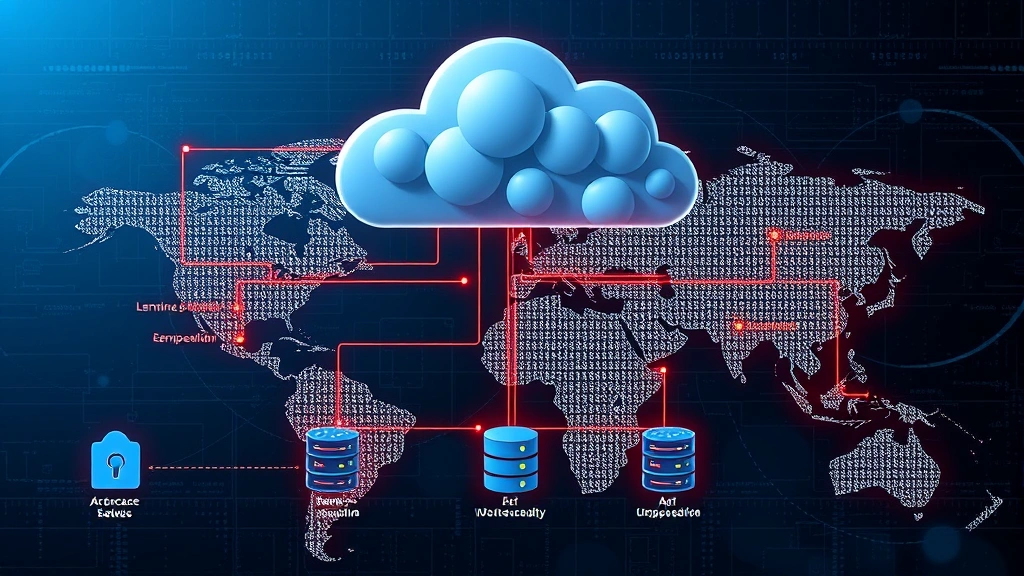
” alt=”Secure cloud database infrastructure with encrypted data transmission, multiple redundancy layers, and monitoring dashboards displaying security metrics and compliance status” style=”max-width: 100%; height: auto;”>
Encryption and Data Protection Mechanisms
Encryption serves as the cornerstone of cloud database security, protecting data from unauthorized access both at rest and during transmission. Encryption at rest ensures that data stored on physical disks remains unreadable without proper decryption keys, protecting against theft or unauthorized access to physical infrastructure.
Modern cloud databases employ AES-256 encryption, the current standard for sensitive government and financial data. However, encryption strength depends equally on key management practices. Organizations must implement robust key rotation policies, secure key storage, and principle of least privilege for key access. Consider leveraging Hardware Security Modules (HSMs) or cloud provider key management services for enhanced key protection.
Encryption in transit protects data as it travels between client applications and database servers, typically using TLS 1.2 or higher. Ensure your cloud database provider enforces minimum TLS versions and disables legacy protocols that may contain known vulnerabilities. Certificate pinning and mutual TLS (mTLS) authentication add additional layers of protection for sensitive environments.
Transparent Data Encryption (TDE) automatically encrypts database files without requiring application changes, simplifying deployment while ensuring comprehensive data protection. This approach proves particularly valuable for legacy applications where modifying code to implement encryption proves impractical.
Field-level encryption provides granular protection for highly sensitive data elements within records. While more computationally expensive than full database encryption, this approach enables organizations to protect specific columns (credit card numbers, social security numbers, health information) with stronger encryption or different key management schemes.
Organizations should also implement data masking and tokenization strategies to minimize exposure of sensitive information in non-production environments. These techniques allow developers and analysts to work with realistic data while protecting actual sensitive values from unauthorized viewing.
Compliance Standards and Certifications
Regulatory compliance requirements vary significantly based on industry, geographic location, and data types handled. Cloud database providers maintain certifications demonstrating compliance with major frameworks and standards, though achieving compliance remains a shared responsibility.
SOC 2 Type II certification indicates the provider has undergone rigorous audits of security, availability, processing integrity, confidentiality, and privacy controls. This certification requires continuous monitoring over extended audit periods, providing assurance that security measures remain consistently implemented.
HIPAA compliance is mandatory for healthcare organizations and those handling protected health information (PHI). Compliant cloud databases implement specific controls including access logging, encryption, and audit trails required by HIPAA regulations. Organizations must execute Business Associate Agreements (BAAs) with compliant providers.
PCI DSS compliance applies to organizations processing, storing, or transmitting payment card data. The standard requires specific encryption, access control, and monitoring capabilities that major cloud database providers support through dedicated compliance programs.
GDPR compliance affects any organization processing data of European Union residents. Key requirements include data subject rights implementation, data protection impact assessments, breach notification capabilities, and data residency controls. Cloud databases supporting GDPR typically offer regional data storage, data deletion capabilities, and consent management features.
ISO 27001 certification demonstrates comprehensive information security management system implementation, covering risk assessment, asset management, access control, and incident response capabilities. This certification applies across cloud database providers globally and indicates mature security operations.
When evaluating compliance certifications, verify current validity dates and scope coverage. Certification scope should explicitly include the specific services and regions you plan to utilize. Request current audit reports and attestations directly from providers to confirm ongoing compliance status.
Scalability Without Compromising Security
Scalability and security often present conflicting requirements—rapid scaling can introduce security gaps if not carefully managed. Leading cloud databases implement architectural patterns that maintain security consistency as systems expand.
Horizontal scaling through sharding or partitioning distributes data across multiple database instances, enabling linear performance improvements. Security must extend consistently across all instances, requiring centralized key management, unified access control policies, and coordinated audit logging across the distributed system.
Vertical scaling adds computational resources to existing database instances, typically simpler to manage from a security perspective but limited by hardware constraints. Organizations combining vertical and horizontal scaling approaches benefit from flexibility to optimize both performance and security posture.
Read replicas enhance scalability by distributing read traffic across multiple database copies while maintaining a single write source. Security configurations must extend to all replicas—encryption keys, access controls, and audit logging must remain consistent across the replica set.
Auto-scaling capabilities enable databases to automatically adjust resources based on demand, but security monitoring must scale proportionally. Ensure your cloud database platform provides metrics and alerts that scale with your infrastructure, preventing security blind spots during traffic spikes.
Organizations should implement database activity monitoring (DAM) solutions that maintain visibility across scaled deployments. DAM tools capture and analyze all database activities, enabling detection of suspicious patterns regardless of scale. This becomes increasingly critical as organizations scale to handle millions of transactions daily.

” alt=”Multi-region cloud database deployment with geographic distribution, load balancing across availability zones, encryption keys in transit, and security monitoring dashboards showing real-time threat detection” style=”max-width: 100%; height: auto;”>
Evaluating Provider Security Credentials
Selecting a cloud database provider requires thorough evaluation of their security infrastructure, organizational practices, and transparency regarding security incidents. Begin by examining the provider’s security documentation, white papers, and architecture diagrams detailing how they implement foundational security controls.
Request detailed information about the provider’s data center security measures, including physical access controls, environmental monitoring, and redundancy mechanisms. Leading providers operate multiple geographically distributed data centers with independent security operations, enabling failover capabilities while reducing single-point-of-failure risks.
Evaluate the provider’s incident response capabilities and historical track record. How quickly did they respond to past security incidents? How transparently did they communicate with affected customers? Review CISA security advisories and vulnerability databases to identify any history of security issues affecting your prospective provider.
Vulnerability disclosure programs demonstrate provider commitment to security research engagement. Providers maintaining active bug bounty programs and responsible disclosure policies tend to identify and remediate issues more rapidly than those without such programs.
Request information about the provider’s security team composition and expertise. Do they maintain dedicated security research teams? Have they published security research or contributed to industry standards? Provider expertise directly correlates with the robustness of their security implementations.
Examine the provider’s data breach history and public disclosures. While all organizations face security challenges, transparency regarding incidents and remediation efforts indicates maturity and accountability. Providers who proactively disclose incidents tend to manage security more responsibly than those with undisclosed breaches later revealed through third parties.
Conduct thorough penetration testing and security assessments of your database configuration within the cloud provider’s environment. Many providers permit or provide tools for authorized security testing. These assessments reveal configuration weaknesses specific to your deployment that generic provider documentation may not address.
Establish clear Service Level Agreements (SLAs) that include security-specific commitments. Standard SLAs address availability and performance; enhanced agreements should specify encryption standards, key rotation frequencies, audit log retention periods, and incident response timelines. Define exactly what constitutes a security incident and what notifications and remediation you can expect.
Best Practices for Cloud Database Security Implementation
Beyond provider selection, organizational practices determine actual security outcomes. Implement these critical best practices regardless of which cloud database platform you select:
Implement principle of least privilege for all database access. Users and applications should receive only the minimum permissions required for their specific functions. Regular access reviews should identify and revoke unnecessary permissions that accumulate over time.
Enable comprehensive audit logging capturing all database activities including failed authentication attempts, privilege changes, and data modifications. Configure log retention periods that satisfy regulatory requirements and organizational investigation needs. Integrate database logs with centralized SIEM (Security Information and Event Management) systems for real-time threat detection.
Establish regular backup and disaster recovery procedures with documented recovery time objectives (RTO) and recovery point objectives (RPO). Test backup restoration procedures regularly to ensure you can actually recover data when needed. Verify that backup encryption and access controls match production database security levels.
Implement network isolation through Virtual Private Clouds (VPCs) and security groups that restrict database access to authorized network segments only. Disable public internet accessibility unless absolutely necessary, and if required, protect it with strong authentication and encryption.
Establish secrets management for database credentials, API keys, and encryption keys. Never hardcode credentials in application source code or configuration files. Use dedicated secrets management services that provide encryption, access controls, and audit logging for sensitive credentials.
Maintain updated database software through regular patching and version upgrades. Cloud providers typically handle infrastructure patching, but application-level database software updates remain organizational responsibilities. Establish patch management procedures that balance security currency with operational stability.
Organizations should establish database security monitoring and alerting that notifies security teams of suspicious activities. Configure alerts for failed authentication attempts, unusual access patterns, large data exports, privilege escalations, and other anomalous behaviors that may indicate compromise.
Cost Considerations and Security Trade-offs
Security implementations introduce costs that organizations must budget appropriately. Enhanced encryption, advanced monitoring, compliance certifications, and security personnel all require financial investment. However, the cost of security breaches—financial penalties, reputational damage, incident response, and customer notification—vastly exceeds proactive security investments.
Organizations should evaluate total cost of ownership (TCO) including both direct cloud database costs and security infrastructure expenses. Some providers charge premium rates for enhanced security features like advanced threat protection or dedicated security monitoring. These investments often prove worthwhile when handling high-value or sensitive data.
Consider the organizational cost of security misconfiguration and data exposure. A single misconfigured S3 bucket or database access control has exposed millions of records at zero cost to attackers. The resulting breach costs typically exceed years of security investments by orders of magnitude.
Balance security investments with operational efficiency. Over-aggressive security controls can impede legitimate business operations and create workarounds that ultimately reduce security effectiveness. Security implementations should enable business operations while protecting against realistic threats.
FAQ
What encryption standard should my cloud database use?
AES-256 encryption represents the current standard for protecting sensitive data in cloud databases. This encryption strength satisfies requirements for government, financial, and healthcare data protection. Ensure your provider implements AES-256 for both at-rest and in-transit encryption. Verify that encryption uses properly managed keys rather than default provider keys without customer control options.
How often should encryption keys be rotated?
Industry best practices recommend annual encryption key rotation at minimum, with more frequent rotation (quarterly or monthly) for highly sensitive data. Automated key rotation mechanisms provided by cloud key management services reduce operational burden while ensuring consistent rotation practices. Establish key rotation policies that balance security benefits with operational complexity.
Which compliance certification matters most for my organization?
Compliance requirements depend on your industry and data types. Healthcare organizations require HIPAA compliance, payment processors require PCI DSS, European data handlers require GDPR compliance, and organizations handling government data may require FedRAMP certification. Evaluate your specific regulatory obligations and select cloud databases with certifications matching those requirements.
Can I use the same cloud database for all data types?
While major cloud databases support diverse data types, specialized databases often provide better security and performance for specific use cases. Organizations may benefit from different databases for transactional data, analytics, document storage, and time-series data. Evaluate your data types and security requirements to determine whether a single database or multiple specialized solutions better serve your needs.
How do I verify my cloud database is actually secure?
Conduct regular security assessments including penetration testing, vulnerability scanning, and configuration reviews. Enable detailed audit logging and review logs regularly for suspicious activities. Implement database activity monitoring to detect anomalous access patterns. Request and review your provider’s security audit reports and certifications. Engage third-party security firms for independent assessments of your database security posture.
What should I do if my cloud database is breached?
Activate your incident response plan immediately, including notification of affected parties, forensic investigation, and remediation of the vulnerability that enabled the breach. Document all breach details, response actions, and timeline for regulatory compliance purposes. Review and update security controls to prevent similar breaches. Consider engaging external cybersecurity firms for independent incident investigation and response guidance.


