
How to Secure Military Data? Army Officer Insights
Military data security represents one of the most critical challenges facing defense organizations worldwide. Army security officers operate at the frontline of protecting classified information, operational plans, and personnel records from sophisticated cyber threats. The stakes are extraordinarily high—compromised military data can endanger lives, undermine national security, and compromise strategic advantages. This comprehensive guide draws on established security protocols and expert insights to illuminate the essential practices that safeguard sensitive military information.
The threat landscape targeting military networks has evolved dramatically over the past decade. Adversaries employ advanced persistent threats, zero-day exploits, and social engineering tactics specifically designed to penetrate defense systems. Army security officers must understand both the technical and human dimensions of cybersecurity to implement effective protective measures. Whether you’re responsible for a small unit network or enterprise-level infrastructure, the principles outlined here provide a foundation for robust military data protection.
Understanding Military Data Classification
Military data classification forms the foundation of any effective security program. The U.S. Department of Defense categorizes information into distinct levels: Unclassified, Confidential, Secret, and Top Secret, with additional compartmented access requirements for highly sensitive intelligence. Army security officers must understand these classifications intimately, as improper handling of classified data constitutes a serious breach with legal consequences.
Classification levels determine protective measures required:
- Unclassified: Information that poses minimal risk if disclosed, yet still requires protection from unauthorized modification
- Confidential: Information whose unauthorized disclosure could cause identifiable damage to national security
- Secret: Information whose unauthorized disclosure could cause serious damage to national security
- Top Secret: Information whose unauthorized disclosure could cause exceptionally grave damage to national security
Beyond these standard levels, compartmented access programs (CAPs) restrict information to personnel with specific need-to-know requirements. Sensitive Compartmented Information (SCI) demands additional security protocols, including special facility requirements and enhanced personnel vetting. Army officers must implement classification guides specific to their organization, ensuring consistent application across all information systems and physical documents.
Proper data classification enables efficient resource allocation—you protect information commensurate with its sensitivity rather than applying uniform restrictions to all data. This approach balances security with operational efficiency, allowing personnel to work effectively while maintaining necessary safeguards.
Access Control and Authentication Protocols
Controlling who accesses military data represents perhaps the most critical security function. The principle of least privilege dictates that personnel receive access only to information necessary for their assigned duties. Army security officers implement multi-layered access control mechanisms that verify identity, confirm authorization, and maintain audit trails of all data access.
Modern military authentication employs multiple factors:
- Something you know: Passwords or personal identification numbers (PINs) meeting complexity requirements and rotation schedules
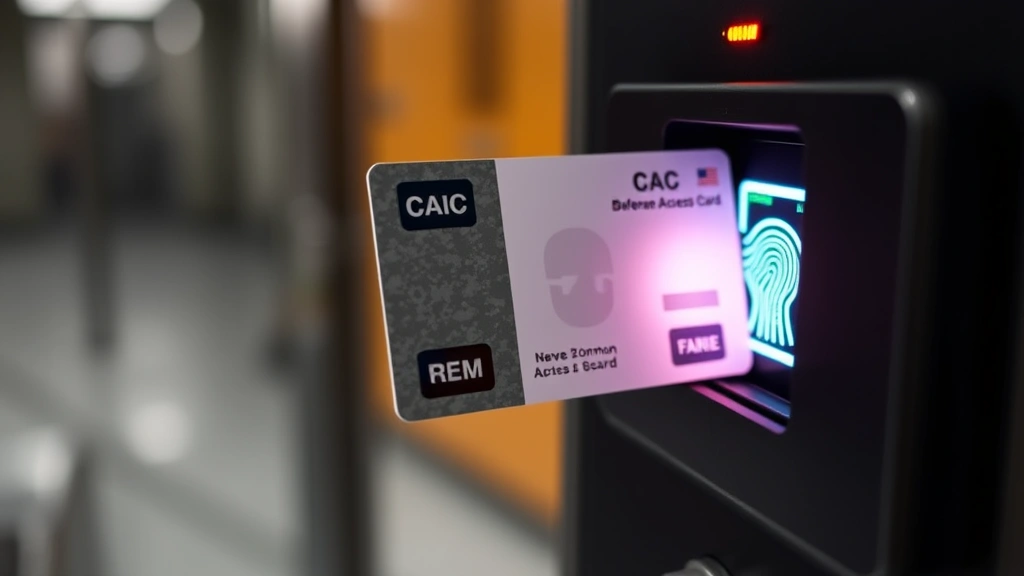
- Something you have: Physical security tokens, smart cards (Common Access Card/CAC), or hardware authentication devices
- Something you are: Biometric data including fingerprints, iris recognition, or facial verification
The Common Access Card (CAC) represents the Department of Defense’s standard for military personnel authentication. This smart card contains cryptographic credentials enabling secure access to military networks and facilities. Army security officers ensure CAC infrastructure remains current, that card readers function properly, and that personnel understand proper card handling procedures.
Role-based access control (RBAC) systems assign permissions based on job functions rather than individual characteristics. A communications specialist receives different access rights than a supply officer, despite both holding the same rank. This approach scales efficiently across large organizations while maintaining granular control. Administrative accounts with elevated privileges require additional protections, including separate authentication credentials and enhanced monitoring.
Privileged Access Management (PAM) solutions track and control administrative access to critical systems. These tools record all actions performed by privileged users, implement session recording for audit purposes, and enforce approval workflows before sensitive operations. Army security officers leverage PAM to prevent insider threats while maintaining the operational flexibility that system administrators require.
Network Segmentation and Encryption Standards
Military networks employ sophisticated segmentation strategies to prevent lateral movement if an attacker gains initial access. Rather than treating the entire network as a trusted environment, defense-in-depth approaches assume compromise and implement multiple security boundaries. Army security officers design network architectures that isolate critical systems, limit communication pathways, and enable rapid response to detected intrusions.
Effective network segmentation includes:
- Demilitarized zones (DMZs) separating internet-facing systems from internal networks
- Data diodes and one-way security gateways preventing unauthorized reverse connections
- Air-gapped networks physically isolated from internet connectivity for maximum-sensitivity information
- Microsegmentation creating security zones within internal networks based on data sensitivity and system function
Encryption transforms readable data into unintelligible ciphertext, protecting information confidentiality even if systems are compromised. Military standards mandate specific encryption algorithms—primarily NIST-approved cryptographic algorithms including AES (Advanced Encryption Standard) for data at rest and TLS 1.2 or higher for data in transit. Army security officers ensure all encryption implementations follow NIST cryptographic guidelines and employ key management practices preventing unauthorized decryption.
The Department of Defense employs Suite B and Commercial National Security Algorithm (CNSA) cryptography standards. Suite B provided approved algorithms for unclassified and classified information, while CNSA represents the current standard for protecting classified national security information. Army security officers maintain current knowledge of these evolving standards, as the cryptographic landscape continuously advances in response to emerging threats.
Virtual Private Networks (VPNs) and secure communication protocols enable remote access to military networks while maintaining encryption and authentication. Army personnel working from deployed locations or temporary duty assignments rely on VPN infrastructure to access necessary information securely. Security officers implement VPN solutions with multi-factor authentication, device compliance checking, and real-time threat detection capabilities.
Incident Response and Threat Detection
Despite comprehensive preventive measures, security incidents occur. Army security officers must establish robust incident response capabilities enabling rapid detection, containment, and remediation of compromises. The difference between a minor intrusion and a catastrophic breach often depends on detection speed and response effectiveness.
Security Information and Event Management (SIEM) systems aggregate logs from across military networks, analyzing events for indicators of compromise. These platforms correlate suspicious activities—failed login attempts, unusual file access patterns, abnormal network traffic—to identify potential intrusions. Army security officers configure SIEM systems to alert on priority events while tuning detection rules to minimize false positives that waste investigative resources.
Effective incident response requires:
- Pre-established incident response teams with clear roles and responsibilities
- Communication plans enabling rapid notification of affected parties and leadership
- Forensic preservation procedures maintaining evidence integrity for investigation and potential legal action
- Recovery procedures restoring systems to operational status while maintaining security controls
- Post-incident analysis identifying root causes and implementing preventive measures
Threat intelligence integration enhances incident response by providing context about attacker tactics, techniques, and procedures (TTPs). Army security officers subscribe to threat intelligence feeds from CISA (Cybersecurity and Infrastructure Security Agency) and Department of Defense sources, enabling rapid correlation of detected activities with known threat patterns. This intelligence-driven approach accelerates threat identification and enables proactive defense against emerging attack vectors.
Tabletop exercises simulating security incidents prepare response teams for real-world crises. Army security officers conduct regular exercises testing incident detection, escalation procedures, and recovery capabilities. These simulations identify gaps in planning, training deficiencies, and communication failures before actual incidents occur, significantly improving organizational resilience.
Personnel Security and Clearance Management
Technical security controls represent only part of the solution—personnel security proves equally critical. Army security officers understand that insider threats, whether malicious or negligent, represent significant risks. Comprehensive personnel security programs include background investigations, continuous monitoring, and security awareness training.
Security clearances require extensive background investigations verifying trustworthiness, reliability, and loyalty. The investigation process examines financial history, criminal records, drug use, foreign contacts, and other factors potentially indicating vulnerability to coercion or compromise. Army security officers ensure clearance investigations occur before personnel access classified information and maintain awareness of changes affecting clearance status.
Continuous monitoring enhances personnel security:
- Periodic reinvestigations for clearance maintenance, typically every 5-10 years depending on classification level
- Financial monitoring identifying concerning changes suggesting potential vulnerability to bribery
- Criminal record checks identifying new offenses or security-relevant activities
- Foreign travel reporting and counterintelligence awareness for personnel with foreign contacts
Security awareness training represents a critical investment in personnel security. Army officers and enlisted personnel must understand classification requirements, proper handling procedures, and threat recognition. Regular training sessions covering phishing attacks, social engineering tactics, and operational security principles significantly reduce the likelihood of inadvertent information disclosure. Army security officers ensure training remains relevant and engaging, updating content to address emerging threats and lessons from recent incidents.
Need-to-know validation ensures personnel access only information necessary for their duties. Supervisors and security officers periodically review access rights, removing unnecessary permissions. This practice prevents both accidental information exposure and reduces the attack surface available to compromised accounts.
Compliance with Defense Standards
Military data security operates within a comprehensive regulatory framework established by the Department of Defense, National Institute of Standards and Technology, and other government agencies. Army security officers must maintain compliance with numerous standards and directives, ensuring organizational security posture meets government requirements.
The National Industrial Security Program Operating Manual (NISPOM) establishes security requirements for contractors handling classified information. Army security officers working with defense contractors ensure their partners implement equivalent security controls, conducting regular security assessments and audits. The Cybersecurity Maturity Model Certification (CMMC) provides a framework for assessing and improving contractor security practices, with increasing emphasis on cybersecurity capabilities.
Key compliance frameworks include:
- NIST Cybersecurity Framework: Provides standards for identifying, protecting, detecting, responding to, and recovering from cyber threats
- DoD Risk Management Framework (RMF): Establishes processes for assessing and authorizing information systems for military use
- DISA Security Technical Implementation Guides (STIGs): Provide detailed configuration standards for specific systems and applications
- Federal Information Processing Standards (FIPS): Establish cryptographic and security requirements for federal systems
Regular security assessments and audits verify compliance with established standards. Army security officers conduct vulnerability assessments identifying weaknesses in technical controls, configuration reviews ensuring systems meet security baselines, and penetration testing simulating adversary actions. Independent auditors from DISA or contracted assessment organizations periodically evaluate security programs, providing external validation of compliance status.
Documentation and evidence maintenance prove essential for demonstrating compliance. Army security officers maintain records of security training completion, system authorization decisions, vulnerability remediation, and incident investigations. This documentation supports compliance audits and provides evidence of due diligence if security incidents occur.
FAQ
What makes military data security different from commercial cybersecurity?
Military data security operates under higher threat levels from sophisticated nation-state adversaries with significant resources and advanced capabilities. Classification systems, clearance requirements, and compartmented access controls exceed commercial standards. Additionally, military networks often operate in contested environments where adversaries actively attempt penetration, requiring more aggressive threat hunting and response capabilities than typical commercial organizations.
How frequently should Army security officers update security policies?
Security policies require review at minimum annually, with more frequent updates when significant threats emerge, technology changes, or incidents reveal policy gaps. Army security officers monitor threat intelligence and government directives, updating policies proactively rather than reactively. Personnel should receive notification of policy changes with training on new requirements.
What should Army officers do if they suspect a security breach?
Immediately report suspicions to the security officer and incident response team without discussing details with unauthorized personnel. Preserve evidence by avoiding system shutdown or manipulation. Cooperate fully with investigations while maintaining operational security. Do not attempt personal investigation, as improper handling can compromise evidence and obstruct official investigations.
How can Army security officers balance security with operational efficiency?
Effective security programs enhance rather than hinder operations by protecting information integrity and system availability. Risk-based approaches apply stronger controls to high-value information while streamlining processes for lower-sensitivity data. Consulting with operational personnel ensures security implementations account for workflow requirements, and regular feedback loops identify processes requiring refinement.
What training do Army security officers require?
Comprehensive training covering classification systems, access control principles, incident response procedures, and applicable regulations proves essential. Many Army security officers pursue certifications including Certified Information Systems Security Professional (CISSP), Certified Information Security Manager (CISM), or DoD-specific credentials. Continuous education through conferences, certifications, and professional development maintains current expertise as threats and technologies evolve.


