Army Cyber Security: Expert Insights & Strategies
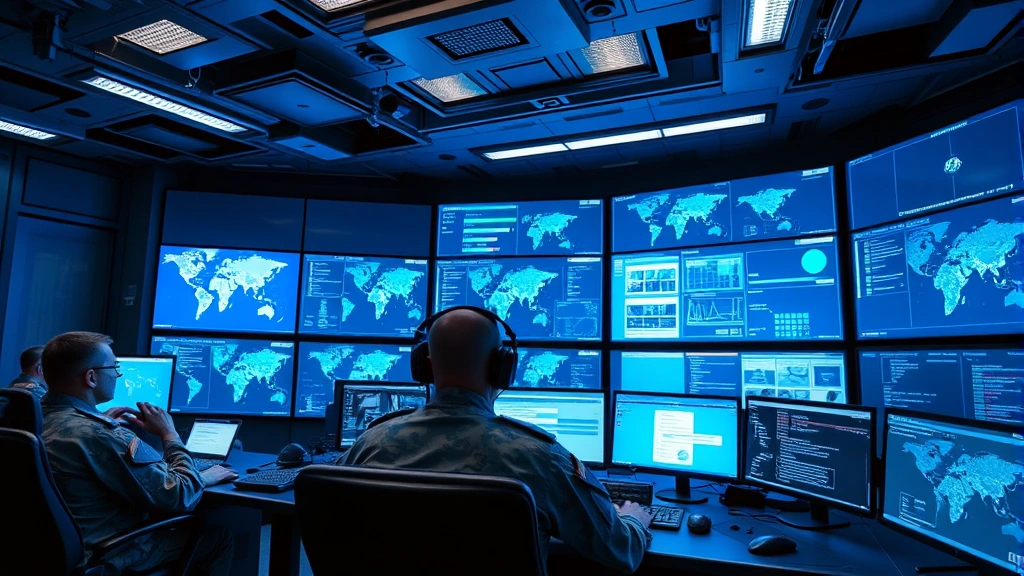
The United States Army operates in an increasingly complex digital landscape where cyber threats pose as significant a risk as traditional military adversaries. As military operations become more dependent on interconnected systems, networks, and digital infrastructure, the Army’s cybersecurity posture has evolved from a peripheral concern to a critical national security imperative. The Army Security Agency and related military cybersecurity entities work tirelessly to protect sensitive military data, communications systems, and operational networks from sophisticated state-sponsored actors, cybercriminals, and other malicious threats.
Understanding Army cyber security requires examining both the strategic frameworks that guide military cyber operations and the tactical implementations that protect soldiers, equipment, and intelligence in the field. This comprehensive guide explores expert insights into how the Army approaches cybersecurity, the threats it faces, and the innovative strategies being deployed to maintain superiority in cyberspace.
Military cybersecurity differs fundamentally from commercial sector approaches due to the unique operational environment, classified information handling requirements, and the existential stakes involved. The Army must balance security with operational flexibility, ensuring that defensive measures don’t compromise mission effectiveness while maintaining the highest standards of data protection and system integrity.

Understanding Army Cyber Threats and Vulnerabilities
The Army faces an unprecedented array of cyber threats emanating from multiple adversaries with varying capabilities and motivations. Nation-state actors from Russia, China, Iran, and North Korea conduct sophisticated cyber espionage campaigns targeting military intellectual property, operational planning documents, and personnel information. These threats have escalated dramatically in recent years, with adversaries developing advanced persistent threat (APT) capabilities that can remain undetected within military networks for extended periods.
One of the most significant vulnerability categories involves legacy systems still in use throughout military infrastructure. Many older platforms were designed without modern security considerations and remain operational due to mission criticality and budgetary constraints. The Army must balance the need to retire these systems with the operational reality that replacing complex, integrated military systems requires years of planning and substantial financial investment.
Supply chain vulnerabilities represent another critical threat vector. As the military increasingly relies on commercial technology vendors and software providers, each integration point becomes a potential entry vector for adversaries. A compromised software update, malicious hardware component, or infiltrated vendor could provide attackers with direct access to sensitive military networks and classified information systems.
Insider threats pose particular challenges because they combine technical access with malicious intent or negligence. Whether motivated by financial gain, ideological conviction, or foreign intelligence recruitment, insiders with legitimate access can cause devastating damage that external security measures cannot prevent. The Army’s security protocols attempt to mitigate these risks through background investigations, continuous monitoring, and compartmentalization of sensitive information.
The human element remains a critical vulnerability despite technological advances. Social engineering attacks, phishing campaigns, and pretexting techniques continue to succeed against military personnel because they exploit fundamental human psychology. Adversaries conduct extensive reconnaissance on soldiers and civilian employees, crafting highly targeted messages that appear to originate from trusted sources within the chain of command or from legitimate military organizations.
Military Cybersecurity Infrastructure and Command Structure
The Army’s cybersecurity operations are coordinated through multiple command structures, with U.S. Cyber Command (USCYBERCOM) serving as the primary unified combatant command responsible for military cyber operations. Established in 2009, USCYBERCOM has grown exponentially in capability, personnel, and mission scope as cyber threats have intensified. The command operates under the Department of Defense and coordinates with other military branches to develop cohesive cyber defense strategies.
Army Cyber Command (ACC), established in 2010, serves as the Army’s service component to USCYBERCOM and operates the Army’s cyber forces. ACC manages multiple cyber teams, defensive operations centers, and intelligence analysis units that work continuously to monitor, detect, and respond to cyber threats targeting Army networks and systems. The command structure includes specialized units focused on offensive cyber operations, defensive measures, and intelligence collection.
The Army’s network infrastructure is segmented into multiple domains with varying security classifications and access controls. The unclassified network, known as the Non-Secure Internet Protocol Router (NIPRNet), handles unclassified information and connects to the broader military network. The Secret Internet Protocol Router (SIPRNet) processes classified information at the secret level, while the Joint Worldwide Intelligence Communications System (JWICS) handles top-secret and sensitive compartmented information. Each network requires distinct security approaches and threat mitigation strategies.
Regional cyber defense centers operate throughout Army installations worldwide, providing localized threat monitoring, incident response, and security operations. These centers maintain situational awareness of regional threats, coordinate with local commanders, and implement defensive measures tailored to specific installation vulnerabilities and operational requirements. Integration between regional centers and the Army-level command structure ensures that threats detected at installations are rapidly escalated and addressed through appropriate channels.
Advanced Threat Detection and Response Capabilities
The Army has invested substantially in advanced threat detection technologies that employ artificial intelligence, machine learning, and behavioral analytics to identify anomalous activity within military networks. These systems analyze vast quantities of network traffic, system logs, and user behavior patterns to detect indicators of compromise that might escape human analysts. CISA (Cybersecurity and Infrastructure Security Agency) provides frameworks and guidance that the Army incorporates into its detection methodologies.
Threat intelligence fusion centers aggregate information from multiple sources, including signals intelligence, human intelligence, open-source reporting, and threat feeds from partner organizations. Analysts correlate this information to identify emerging threats, track adversary tactics and techniques, and predict potential targeting of Army systems and personnel. Intelligence sharing with NIST (National Institute of Standards and Technology) and other government agencies enhances the Army’s understanding of the broader threat landscape.
Incident response teams maintain readiness to respond to cyber incidents 24/7/365, with trained personnel capable of containing threats, preserving evidence, and restoring system functionality. Response procedures follow established protocols that balance the need for rapid remediation with requirements for forensic investigation and attribution. The Army’s incident response capabilities have been refined through numerous exercises and real-world incidents, creating a mature response posture.
Vulnerability management programs conduct regular assessments of Army systems to identify security weaknesses before adversaries can exploit them. Penetration testing teams simulate adversary tactics and techniques, attempting to breach defenses to identify vulnerabilities that might otherwise remain undiscovered. Vulnerability remediation processes prioritize patching and mitigation based on risk assessment, with critical vulnerabilities receiving immediate attention.
Personnel Training and Security Awareness Programs
The Army recognizes that technical controls alone cannot ensure cybersecurity; personnel training and security awareness represent essential components of a comprehensive defense strategy. All soldiers and civilian employees receive mandatory cyber security training covering topics such as password hygiene, phishing recognition, classified information handling, and incident reporting procedures. This foundational training establishes baseline security knowledge across the force.
Specialized training programs prepare personnel for advanced cybersecurity roles, including cyber operations, network defense, and threat analysis. The Army’s cyber education pipeline includes accredited degree programs, professional certifications, and hands-on training in operational environments. The National Security Agency’s National Centers of Academic Excellence in Cybersecurity program partners with universities to develop the next generation of military cyber professionals.
Simulation-based training exercises expose personnel to realistic cyber attack scenarios without risking actual military networks. These exercises, conducted regularly across all Army commands, improve response capabilities, identify process gaps, and build muscle memory for incident response procedures. Red team exercises pit defenders against experienced adversaries playing the attacker role, creating pressure-tested learning environments that prepare personnel for actual incidents.
Phishing simulation campaigns test personnel susceptibility to social engineering attacks and provide immediate feedback and remedial training to those who fall victim. These programs have demonstrated measurable improvements in user behavior, with click-through rates declining as personnel become more adept at identifying malicious emails. The Army tracks these metrics to identify organizations requiring additional training and to measure overall security awareness improvements.
Emerging Technologies in Military Cyber Defense
Artificial intelligence and machine learning technologies are revolutionizing military cyber defense by enabling automated threat detection, predictive analytics, and autonomous response capabilities. AI systems can analyze network traffic patterns in real-time, identifying anomalies that might indicate compromise or intrusion attempts. Machine learning models trained on historical threat data can predict attack patterns and recommend defensive adjustments before threats materialize.
Zero-trust security architectures represent a fundamental shift in military cybersecurity philosophy, moving away from perimeter-based defenses toward continuous verification of all users, devices, and applications. Rather than trusting anything within the network boundary, zero-trust assumes breach and implements controls that require authentication and authorization for every access request. The Army is implementing zero-trust principles across critical systems and networks.
Blockchain technology is being explored for applications including secure communications, identity verification, and supply chain integrity. The immutable nature of blockchain records could provide tamper-proof audit trails for sensitive military transactions and communications. However, challenges including performance requirements, integration complexity, and regulatory considerations remain before widespread military adoption.
Quantum computing presents both opportunities and threats for military cybersecurity. While quantum computers could break current encryption standards, they could also enable new cryptographic approaches offering superior security. The Army is monitoring quantum computing development and preparing transition strategies for post-quantum cryptography to ensure continued protection of classified information.
Cloud computing capabilities are being integrated into Army networks to improve scalability, flexibility, and operational efficiency. The Army’s cloud strategy emphasizes security-first design, with cloud services undergoing rigorous assessment and accreditation before operational deployment. Cloud providers must meet stringent security requirements and undergo continuous monitoring to maintain authorization.
Interagency Collaboration and Information Sharing
The Army’s cybersecurity effectiveness depends substantially on collaboration with other government agencies, international partners, and private sector organizations. Information sharing agreements enable rapid dissemination of threat intelligence, allowing the Army to benefit from threat discoveries made by other organizations and to contribute its own threat observations to the broader defensive community.
Partnerships with the FBI’s Cyber Division enhance coordination on investigations involving threats to military systems and personnel. The FBI’s law enforcement authorities complement military cyber operations, enabling prosecution of cybercriminals and coordination with international law enforcement partners. Joint task forces combine military and law enforcement capabilities to address complex cyber threats.
NATO alliance partnerships involve sharing threat intelligence, coordinating defensive operations, and developing collective response strategies to cyber attacks affecting alliance members. NATO’s cyber defense policies establish that cyber attacks could trigger collective defense provisions, elevating cyber threats to the same strategic level as conventional military attacks. The Army coordinates with allied militaries to maintain interoperability and coordinated defense postures.
Private sector partnerships provide access to cutting-edge security technologies and threat intelligence from commercial organizations monitoring global cyber threats. Defense contractors, technology companies, and cybersecurity firms provide insights into emerging threats and vulnerabilities affecting both military and civilian infrastructure. These partnerships must balance operational security requirements with the need for meaningful information exchange.
Academic partnerships leverage university research capabilities to advance military cybersecurity capabilities. Universities conduct foundational research on cryptography, network security, and emerging threats that informs military strategy and technology development. The Army funds cybersecurity research initiatives and provides internship opportunities for students pursuing careers in military cyber operations.
Future Challenges and Strategic Priorities
The rapid evolution of technology creates persistent challenges for military cybersecurity planning and strategy. Emerging technologies including artificial intelligence, Internet of Things, and autonomous systems introduce new attack surfaces and vulnerability categories that security frameworks must continuously adapt to address. The Army must maintain a forward-looking perspective, anticipating threats that will emerge from technology developments currently in early stages.
Budget constraints limit the Army’s ability to simultaneously modernize legacy systems, implement advanced security technologies, and maintain a trained workforce. Prioritization decisions involve difficult trade-offs between operational needs and security investments. The Army advocates for sustained funding for cybersecurity initiatives, emphasizing that cyber capabilities represent essential military capabilities equivalent to traditional force structure.
Recruitment and retention of cyber talent remains challenging as private sector opportunities offer higher compensation and less restrictive work environments. The Army competes for limited pools of individuals with advanced cybersecurity skills, requiring competitive compensation, career development opportunities, and meaningful work assignments. Military service appeals to some individuals despite financial trade-offs, but competition with private sector employers remains intense.
International norms regarding military cyber operations remain underdeveloped, creating ambiguity regarding acceptable conduct in cyberspace. The Army must develop and execute cyber operations within an evolving legal and diplomatic framework, balancing operational effectiveness with compliance with emerging international standards. Strategic patience and restraint sometimes conflict with tactical cyber advantages.
Maintaining operational security while sharing threat intelligence creates inherent tensions. Revealing too much detail about threats or defensive capabilities could compromise sources and methods, yet insufficient information sharing limits the defensive community’s ability to collectively defend against threats. The Army carefully calibrates information sharing to maximize defensive benefits while protecting sensitive intelligence sources.
FAQ
What is the Army Security Agency and what role does it play in cyber defense?
The Army Security Agency (ASA) historically served as the Army’s signals intelligence and information security organization. While the organizational structure has evolved, its functions are now distributed across multiple Army commands, with Army Cyber Command and related organizations assuming primary responsibility for cyber operations and defense. The legacy ASA represented a foundational element of military cybersecurity capabilities.
How does the Army protect classified information from cyber attacks?
The Army employs multiple layers of protection including network segmentation, encryption, access controls, and continuous monitoring. Classified information systems are physically and logically separated from unclassified networks, with strict authentication requirements and audit logging. Personnel handling classified information undergo background investigations and security training, and must follow established protocols for handling, storing, and transmitting sensitive information.
What training do Army personnel receive regarding cybersecurity?
All Army personnel receive mandatory annual cyber security awareness training covering password security, phishing recognition, and incident reporting. Specialized personnel receive advanced training in their specific roles, while cyber professionals complete accredited degree and certification programs. The Army also conducts regular tabletop exercises and simulations to test incident response capabilities and improve personnel readiness.
How does the Army respond to cyber incidents?
Cyber incidents trigger established response procedures coordinated through Army Cyber Command and regional cyber defense centers. Response teams contain threats, preserve evidence for forensic investigation, restore system functionality, and conduct root cause analysis to prevent recurrence. Incident response follows defined protocols balancing rapid remediation with investigation requirements and chain of custody procedures.
What is zero-trust security and how is the Army implementing it?
Zero-trust security assumes that all access requests require verification regardless of source, eliminating implicit trust based on network location. The Army implements zero-trust through continuous authentication, authorization, and encryption of all communications. Implementation involves transitioning from perimeter-based defenses to systems that verify every user, device, and application before granting access to resources.
How does the Army collaborate with other agencies on cybersecurity?
The Army shares threat intelligence with CISA, the FBI, NSA, and international partners through established information sharing mechanisms. Joint operations centers coordinate defensive efforts, and formal partnerships enable rapid response to threats affecting multiple organizations. Interagency collaboration amplifies defensive capabilities by aggregating threat intelligence and coordinating defensive operations across organizational boundaries.


