Armed Security Guards: Cyber Protection Insights
Physical security and cybersecurity have become inseparable in today’s threat landscape. Armed security guards traditionally protect assets through visible deterrence and rapid response capabilities, but their role has evolved dramatically as digital threats intersect with physical security operations. Organizations deploying armed security guard services must now understand how cyber threats compromise physical security infrastructure, from access control systems to surveillance networks and communication platforms.
The convergence of operational technology and information technology means that a single cyber breach can disable alarm systems, lock down facilities, or prevent guards from accessing critical threat intelligence in real-time. This comprehensive guide explores how armed security professionals can leverage cyber protection strategies to enhance their effectiveness and how organizations can integrate cybersecurity awareness into their physical security protocols.
Understanding this relationship is critical for any enterprise relying on armed security services. Whether you manage a corporate facility, data center, government installation, or critical infrastructure, recognizing cyber vulnerabilities in your security ecosystem prevents catastrophic failures that could expose personnel, assets, and sensitive information to sophisticated threat actors.

The Intersection of Physical and Cyber Security
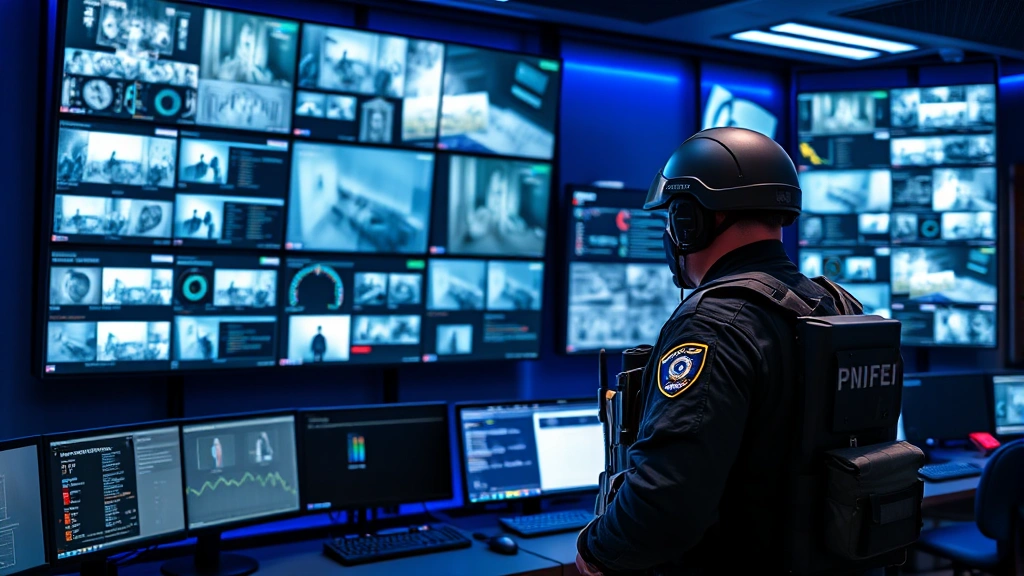
Armed security guard services operate within increasingly digitized environments where traditional perimeter defense meets sophisticated cyber threats. Modern security operations centers combine badge readers, biometric scanners, video analytics, and alarm systems—all connected to networked infrastructure vulnerable to digital attacks. When a cybercriminal gains access to these systems, they can bypass physical security measures that armed guards depend upon for situational awareness.
Consider a scenario where attackers compromise the access control system managing a facility’s entry points. Guards may not immediately recognize the breach because the system appears to function normally. Meanwhile, unauthorized individuals enter the building undetected. The guards’ ability to respond effectively diminishes when they lack awareness of cyber incidents affecting their operational environment.
This intersection creates what security experts call the cyber-physical attack surface. Every connected device—from door locks to security cameras to guard communication radios—represents a potential vulnerability. Organizations must ensure their armed security guard services include personnel trained to recognize signs of cyber compromise and respond appropriately.
The Cybersecurity and Infrastructure Security Agency (CISA) emphasizes that physical and cyber security programs must align strategically. Siloed approaches leave critical gaps that sophisticated adversaries exploit. Armed security professionals need baseline cybersecurity literacy to function effectively in modern threat environments.
Cyber Threats Targeting Security Infrastructure
Attackers specifically target security systems because compromising them provides unfettered access to protected assets. Ransomware operators have increasingly focused on access control systems, surveillance networks, and security operations centers as initial compromise vectors. Once inside these systems, they establish persistence and move laterally toward more valuable targets like financial systems or intellectual property repositories.
Distributed Denial of Service (DDoS) attacks can overwhelm security system communications, preventing guards from receiving alerts or accessing real-time video feeds. Man-in-the-middle attacks intercept communications between access control readers and central servers, potentially allowing attackers to spoof authorization credentials. Supply chain attacks have compromised security equipment manufacturers, inserting vulnerabilities into devices before installation.
Advanced persistent threat (APT) groups targeting critical infrastructure have demonstrated sophisticated understanding of physical security operations. They map guard patrol patterns, identify shift changes, locate camera blind spots, and time their physical intrusions to coincide with cyber disruptions that distract security personnel. This coordinated approach—blending cyber and physical attacks—represents the cutting edge of threat sophistication.
Organizations relying on armed security must understand these threat vectors. When reviewing armed security guard services proposals, inquire about vendor cybersecurity practices, system architecture, and incident response capabilities. Weak cybersecurity in your security provider cascades directly into your operational risk.
Access Control Systems and Digital Vulnerabilities
Access control systems form the backbone of facility perimeter security. These networked platforms manage badge credentials, biometric data, visitor management, and access logs. Armed security guards rely on these systems to verify that only authorized personnel occupy secure areas. However, legacy and modern access control systems contain numerous cybersecurity weaknesses.
Common vulnerabilities include:
- Default credentials: Many systems ship with unchanging default usernames and passwords that attackers easily discover
- Unencrypted communications: Older systems transmit access data in plaintext, vulnerable to network sniffing attacks
- Insufficient authentication: Single-factor authentication on administrative interfaces allows credential compromise to grant complete system control
- Lack of audit logging: Systems failing to log access attempts prevent detection of unauthorized activity
- No air-gapping: Direct internet connectivity to access control systems eliminates network isolation protections
- Outdated firmware: Systems running unpatched software contain known exploitable vulnerabilities
Armed security guards should understand their access control system’s basic architecture. Can they identify which devices are networked? Do they know how to recognize signs of system compromise—unexpected access denials, missing audit logs, or system slowness? Training programs should include scenarios where guards must operate under degraded conditions when cyber attacks disable access control systems.
Organizations should implement multi-factor authentication for all access control administrative functions, encrypt all network communications, segment access control systems onto isolated networks, and maintain comprehensive audit logs with alerting for suspicious activities. NIST’s Cybersecurity Framework provides detailed guidance on securing industrial control systems applicable to access control infrastructure.
Surveillance Networks Under Attack
Video surveillance systems provide armed security guards with critical situational awareness. However, IP-based surveillance networks present extensive cyber vulnerabilities. Cameras connect to network video recorders, which connect to monitoring stations and cloud storage services. Each connection point represents a potential attack vector.
Attackers have deployed malware specifically targeting surveillance systems to disable recording during heists, frame innocent parties with deepfake video, or establish persistent network footholds. Surveillance systems often receive minimal security attention during initial deployment because they’re perceived as lower-value targets compared to financial or operational technology systems. This misconception creates dangerous blind spots.
Surveillance system compromises manifest in subtle ways guards might miss:
- Video feeds from specific cameras going offline intermittently
- Unusual time stamps in video recordings
- Missing footage from specific timeframes despite systems appearing operational
- Unexpected system reboots or performance degradation
- Inability to access recordings from certain dates
Armed security personnel should receive training on basic surveillance system health indicators. They should understand how to report suspected compromise and how to maintain physical security during surveillance system failures. Organizations should implement network segmentation isolating surveillance systems from general corporate networks, deploy intrusion detection systems monitoring surveillance traffic, and establish regular firmware update schedules.
Communication Systems Security
Armed security guards depend on reliable communication systems—radio networks, mobile applications, and dispatch software—to coordinate responses and share threat intelligence. Compromised communication systems prevent guards from receiving critical alerts, coordinating responses, or calling for backup during emergencies.
Radio systems face jamming attacks and frequency interception. Mobile applications used by security personnel often lack proper encryption, allowing attackers to intercept sensitive communications or inject false commands. Dispatch software vulnerable to unauthorized access could allow threat actors to misdirect guards or disable alarm notifications.
Recent incidents have demonstrated attackers using compromised security communications to coordinate physical intrusions. While guards receive false dispatch instructions, attackers move freely through facilities. Organizations should:
- Implement end-to-end encryption for all security communications
- Deploy redundant communication systems using independent infrastructure
- Establish authentication protocols for all radio and digital dispatch commands
- Conduct regular communication system security audits
- Train guards to verify unusual commands through secondary channels
Modern armed security guard services should include personnel trained to recognize communication system anomalies and capable of operating effectively during communication failures. Backup procedures and contingency protocols become critical when cyber attacks disable primary communication systems.
Training Armed Personnel for Cyber Awareness
Armed security guards traditionally receive training in threat assessment, weapons handling, emergency response, and legal liability. However, modern security curricula must incorporate cyber awareness components. Guards need sufficient knowledge to recognize cyber incidents affecting their operational environment without requiring deep technical expertise.
Effective cyber awareness training for armed security should cover:
- Recognizing compromised systems: Understanding behavioral indicators that systems have been attacked
- Social engineering awareness: Identifying attempts to manipulate personnel into disclosing credentials or bypassing security controls
- Incident reporting procedures: Knowing how to escalate suspected cyber incidents to appropriate technical teams
- Operational security: Protecting credentials, avoiding public discussion of security systems, and maintaining physical security of devices
- Contingency operations: Functioning effectively when cyber attacks disable systems guards normally rely upon
- Evidence preservation: Understanding how to document suspected cyber incidents without contaminating forensic evidence
Training should emphasize that cyber and physical security operate as integrated systems. A cyber incident affecting access control isn’t merely an IT problem—it’s an operational security incident requiring coordination between technical teams and armed security personnel. Regular tabletop exercises simulating cyber-physical attack scenarios help personnel understand their roles during actual incidents.
Implementing Defense-in-Depth Strategies
Comprehensive security architectures employ defense-in-depth approaches where multiple defensive layers prevent single-point failures from compromising entire systems. For organizations deploying armed security guard services, defense-in-depth means ensuring cyber security complements physical security rather than depending entirely on either approach.
A robust defense-in-depth strategy includes:
- Network segmentation: Isolating security systems (access control, surveillance, communications) onto separate network segments from general corporate networks, limiting lateral movement if attackers compromise any single segment
- Air-gapping critical systems: Maintaining physical isolation between security systems and the internet where feasible, accepting operational inconvenience in exchange for security resilience
- Redundant systems: Deploying backup access control systems, surveillance networks, and communication infrastructure that activate if primary systems fail
- Multi-factor authentication: Requiring multiple authentication factors for access control administrative functions, preventing credential compromise from enabling unauthorized access
- Encryption: Encrypting all security system communications and stored data, preventing interception and unauthorized access
- Continuous monitoring: Deploying intrusion detection systems, security information and event management (SIEM) platforms, and behavioral analytics that identify anomalous activities
- Regular assessments: Conducting penetration tests, vulnerability assessments, and security audits specifically targeting security systems
- Incident response planning: Developing detailed procedures for responding to cyber incidents affecting physical security operations
Organizations should work with security research organizations like SANS to understand emerging threats targeting security infrastructure and validate their defensive measures against realistic attack scenarios.
Incident Response Planning
Despite comprehensive preventive measures, cyber incidents affecting security systems will occur. Organizations must develop detailed incident response plans addressing cyber compromises of security infrastructure. These plans should define roles and responsibilities for armed security personnel, technical teams, executive leadership, and external responders.
Incident response procedures should address:
- Detection and initial response: Who identifies potential cyber incidents affecting security systems, and what immediate actions they take
- Escalation protocols: How security personnel escalate suspected incidents to cybersecurity teams and management
- Operational continuity: Procedures for maintaining facility security when cyber attacks disable automated systems, potentially requiring manual access control and visual surveillance
- Evidence preservation: Protecting forensic evidence while remediating incidents, balancing security recovery with investigation needs
- Communication protocols: Coordinating messaging across security, IT, executive, and external stakeholder groups during active incidents
- Recovery procedures: Restoring security systems to operational status while verifying attackers haven’t maintained persistence
- Post-incident analysis: Conducting thorough reviews to identify root causes and implement preventive measures
Armed security personnel should understand their specific responsibilities during cyber incidents. Some personnel might maintain manual perimeter security while technical teams remediate compromised systems. Others might assist with evidence preservation or coordinate with law enforcement. Clear role definition prevents confusion during high-stress incident response situations.
Organizations should conduct regular incident response exercises simulating cyber attacks on security infrastructure. The FBI’s Cyber Division provides resources for organizations developing incident response capabilities and coordinating with law enforcement during cyber incidents.
FAQ
How can armed security guards identify cyber attacks affecting physical security systems?
Guards should watch for behavioral anomalies: access control systems denying authorized personnel entry, surveillance cameras going offline unexpectedly, communication system failures during normal conditions, or system performance degradation. They should report these observations to technical teams immediately rather than assuming systems are functioning normally. Training should emphasize that unusual system behavior indicates potential compromise requiring investigation.
What cybersecurity questions should we ask when evaluating armed security guard service providers?
Inquire about their security operations center infrastructure, access control system architecture, surveillance network security practices, communication system encryption, personnel cyber awareness training, incident response capabilities, and willingness to participate in your organization’s cyber incident response planning. Request information about their vendor security practices and how they manage supply chain risks. Ask about their experience responding to cyber incidents affecting security operations.
Can cyber attacks really prevent armed security guards from doing their jobs?
Yes. Ransomware disabling access control systems prevents guards from verifying authorized access. DDoS attacks overwhelming communication networks prevent coordination. Malware disabling surveillance systems eliminates situational awareness. Attackers exploiting these vulnerabilities have successfully coordinated physical intrusions during cyber attacks. Organizations must assume their security systems will eventually experience cyber compromise and develop contingency procedures.
What’s the most critical cybersecurity improvement for facilities with armed security?
Network segmentation isolating security systems from general corporate networks provides immediate risk reduction. This prevents attackers compromising business networks from automatically gaining access to security infrastructure. Combined with multi-factor authentication for administrative access and continuous monitoring for anomalous activities, network segmentation significantly increases the difficulty and cost of successful attacks.
How often should armed security personnel receive cyber awareness training?
Initial comprehensive training should cover foundational cyber awareness and threat recognition. Annual refresher training should address emerging threats, lessons from recent incidents, and updates to organizational procedures. Quarterly security briefings can highlight specific threats relevant to your organization. After cyber incidents affecting security systems, personnel should receive immediate debriefing on lessons learned and procedural updates.


