
Alex Wong’s Cybersecurity Lessons for 2024: National Security Imperatives
Alex Wong, Deputy National Security Advisor, has consistently emphasized the critical intersection of cybersecurity and national defense throughout 2024. His insights into emerging threats, organizational vulnerabilities, and strategic responses provide essential guidance for both government agencies and private sector enterprises navigating an increasingly hostile digital landscape. The convergence of state-sponsored cyber operations, ransomware evolution, and artificial intelligence-driven attacks demands immediate attention and comprehensive defensive strategies.
The cybersecurity challenges facing the nation in 2024 extend far beyond traditional IT concerns. They represent existential threats to critical infrastructure, economic stability, and democratic institutions. Wong’s framework for understanding these threats—rooted in national security doctrine—offers practical lessons that organizations can implement to strengthen their defensive posture and contribute to broader national resilience.
The Evolving Threat Landscape
The cybersecurity environment in 2024 represents a fundamental shift from previous years. Adversaries have become more sophisticated, better resourced, and increasingly willing to target systems that directly impact civilian populations. According to CISA (Cybersecurity and Infrastructure Security Agency), the number of reported breaches has increased significantly, with threat actors demonstrating unprecedented coordination and capability. Alex Wong’s national security perspective highlights that these are not merely technical problems requiring IT solutions—they represent strategic challenges demanding whole-of-government and whole-of-society responses.
Ransomware operations have evolved dramatically, shifting from opportunistic encryption attacks to sophisticated extortion campaigns targeting essential services. Healthcare facilities, energy grids, and water treatment systems face unprecedented pressure. The financial impact extends billions of dollars annually, but the true cost manifests in compromised public safety and eroded trust in critical institutions. Organizations must understand that cybersecurity failures now constitute national security failures, necessitating elevated priority and resource allocation.
Artificial intelligence integration into cyber attacks represents perhaps the most concerning development. Machine learning algorithms enable attackers to automate vulnerability discovery, craft sophisticated phishing campaigns, and adapt defenses in real-time. Wong emphasizes that traditional cybersecurity approaches—reactive patching and perimeter defense—prove inadequate against AI-enhanced adversaries. Strategic foresight and predictive security architecture have become essential competitive advantages.
State-Sponsored Cyber Operations and Attribution
Alex Wong’s work on national security has consistently addressed the challenge of attributing cyber attacks to specific nation-states. This attribution problem creates significant strategic complications, as adversaries deliberately obscure their operational signatures to maintain plausible deniability. However, Wong’s framework suggests that perfect attribution should not paralyze response efforts. Instead, organizations and governments should focus on behavior-based defense and impact mitigation regardless of origin certainty.
Russian, Chinese, Iranian, and North Korean cyber operations represent distinct threat vectors, each with characteristic methodologies and objectives. Mandiant threat intelligence demonstrates that Chinese state-sponsored groups prioritize intellectual property theft and long-term infrastructure compromise, while Russian operators often emphasize disruption and geopolitical messaging. Understanding these differences enables more targeted defensive investments and threat-appropriate response protocols.
The concept of “persistent engagement” in cyberspace has gained traction within national security circles. Rather than treating cyber defense as a static perimeter problem, Wong advocates for dynamic, continuous engagement with adversary infrastructure and operational patterns. This approach requires sophisticated threat intelligence capabilities, legal frameworks supporting offensive operations, and international coordination mechanisms that remain underdeveloped.
Organizations should recognize that cyber attribution increasingly relies on collaborative intelligence sharing. Participating in CISA information sharing initiatives and industry-specific ISACs (Information Sharing and Analysis Centers) provides access to attribution data that individual organizations cannot develop independently. This collective intelligence approach strengthens defensive capabilities across sectors.
Critical Infrastructure Protection
Critical infrastructure—energy, water, transportation, communications, and financial systems—represents the backbone of national prosperity and security. Alex Wong’s national security framework prioritizes protecting these systems as fundamental to sovereignty and resilience. A coordinated attack on multiple critical infrastructure sectors could cascade into societal disruption exceeding traditional military conflict impacts.
The energy sector faces particular vulnerability due to aging SCADA systems, limited redundancy, and increasing connectivity to corporate networks and the internet. Water treatment facilities operate with legacy technology designed for isolated network environments, now increasingly vulnerable as operators seek remote monitoring capabilities. Financial systems, while more mature in their security posture, remain targets for disruption and information theft.
Wong emphasizes that critical infrastructure protection requires regulatory frameworks with genuine enforcement mechanisms. Voluntary compliance approaches have proven inadequate, as competitive pressures incentivize cost-cutting over security investments. The NIST Cybersecurity Framework provides foundational guidance, but implementation requires mandatory standards, regular auditing, and consequences for non-compliance. Organizations operating critical infrastructure should view regulatory requirements not as burdens but as competitive advantages that demonstrate maturity and reduce liability exposure.
Resilience planning must address not only cyber incidents but cascading failures across interdependent systems. Power grid failures impact water treatment, communications, and financial systems simultaneously. Organizations must develop contingency plans assuming multiple simultaneous failures and degraded communication environments. This level of planning typically requires government coordination and resources beyond individual organization capacity.
Organizational Resilience Strategies
Alex Wong’s lessons translate into concrete organizational practices that enhance cybersecurity posture. First, organizations must adopt a risk-based approach that prioritizes assets and systems based on impact rather than treating all vulnerabilities equally. A critical financial transaction system requires more rigorous protection than a marketing website, yet many organizations allocate resources inversely based on technical rather than business impact.
Zero-trust architecture represents a fundamental paradigm shift aligned with Wong’s threat-aware perspective. Rather than assuming internal networks are inherently trustworthy, zero-trust models require continuous authentication, authorization, and encryption regardless of network location. This approach acknowledges that perimeter breaches are inevitable and focuses on minimizing lateral movement and data exfiltration following compromise.
Incident response planning demands particular attention. Organizations should develop detailed playbooks addressing ransomware, data theft, denial-of-service, and supply chain compromise scenarios. These playbooks should include decision trees for escalation, communication protocols, and coordination with external parties including law enforcement, insurance providers, and business partners. Regular tabletop exercises testing these procedures under pressure conditions reveal gaps before actual incidents occur.
Backup and recovery capabilities constitute essential resilience foundations. Organizations should maintain offline backups that cannot be encrypted or destroyed by ransomware operators. Recovery time objectives (RTOs) and recovery point objectives (RPOs) should be defined based on business impact analysis, with regular testing confirming actual recovery capability. Many organizations discover their backup systems are compromised simultaneously with primary systems during incident response, rendering backups worthless.
Supply chain risk management has become critical as attackers increasingly target organizations through vendor relationships. Organizations should conduct security assessments of critical vendors, require contractual security obligations, and monitor for unauthorized changes in vendor infrastructure. The SolarWinds breach demonstrated that even security-conscious enterprises can be compromised through trusted vendor channels, necessitating continuous vigilance.
Public-Private Partnership Models
Alex Wong’s national security approach emphasizes that government alone cannot defend against sophisticated cyber adversaries. Public-private partnerships must move beyond information sharing to include joint operational planning, coordinated response protocols, and shared threat intelligence. Organizations operating critical infrastructure should view government agencies not as regulatory burdens but as essential security partners.
Industry-specific ISACs facilitate sector-level coordination and threat intelligence sharing. Energy sector participants share attack indicators through the E-ISAC, financial institutions coordinate through FS-ISAC, and healthcare organizations participate in H-ISAC. These organizations should be viewed as essential security investments rather than compliance checkbox activities. Active participation provides early warning of emerging threats and access to sector-specific mitigation strategies.
Government cybersecurity agencies including CISA provide threat advisories, vulnerability disclosures, and incident response coordination. Organizations should subscribe to CISA alerts and actively monitor their threat feeds. During active incidents, CISA can provide technical assistance, threat intelligence, and coordination with law enforcement and international partners. Establishing relationships with CISA before crises occur facilitates faster, more effective collaboration when incidents strike.
Cyber diplomacy represents an emerging dimension of national security that Wong emphasizes. International norms around responsible state behavior in cyberspace remain underdeveloped, but emerging frameworks suggest that nations will increasingly hold each other accountable for state-sponsored cyber operations. Organizations should be aware that their own cyber incidents may have diplomatic implications and coordinate responses through appropriate government channels.
Talent and Workforce Development
Perhaps the most critical cybersecurity challenge facing the nation is the acute shortage of skilled security professionals. Alex Wong’s national security framework recognizes that technical capabilities ultimately depend on human expertise, creativity, and judgment. The cybersecurity workforce gap has reached critical levels, with unfilled positions exceeding 400,000 across the United States.
Organizations must invest in workforce development through internship programs, mentorship initiatives, and tuition reimbursement for relevant certifications. The cybersecurity field offers meaningful work addressing genuine national security challenges, yet many talented individuals lack pathways into the profession. Educational institutions should emphasize practical skills alongside theoretical knowledge, with curricula developed collaboratively with industry practitioners.
Government agencies, particularly the National Security Agency and CISA, offer valuable training and development programs. Organizations should encourage participation in these programs and leverage government resources for workforce development. The Cybersecurity Maturity Model Certification (CMMC) framework, while controversial, has the beneficial side effect of raising security awareness and incentivizing workforce development across the defense industrial base.
Diversity in cybersecurity talent pools strengthens organizational and national security. Diverse teams bring varied perspectives to complex security problems and reflect the populations they serve. Organizations should actively recruit from underrepresented communities and create inclusive environments where all security professionals can thrive. This represents both an ethical imperative and a strategic security advantage.
Continuous learning must become embedded in organizational culture. Cybersecurity threats evolve constantly, requiring security professionals to maintain current knowledge throughout their careers. Organizations should allocate time and resources for professional development, conference attendance, and skill advancement. Security professionals who feel stagnant in their roles become vulnerable to recruitment by adversaries or burnout leading to departure.

” alt=”Cybersecurity professionals collaborating at monitoring station with multiple displays showing network security dashboards and threat analysis data” />
Implementation Framework for 2024 and Beyond
Translating Alex Wong’s cybersecurity lessons into actionable organizational strategies requires systematic implementation. Organizations should begin by conducting comprehensive security assessments identifying current capabilities, gaps, and priorities. This assessment should align with the NIST SP 800-53 security controls framework, which provides detailed guidance for federal information systems and serves as a model for private sector organizations.
Executive leadership engagement proves essential for successful security transformation. Cybersecurity must transition from IT department concern to board-level strategic priority. Organizations should establish cyber governance structures with clear accountability, adequate resource allocation, and regular executive reporting on security metrics and incidents. This elevated visibility ensures that cybersecurity decisions receive appropriate strategic consideration alongside other business priorities.
Security culture development requires sustained effort and leadership commitment. Organizations where security is perceived as an IT burden rather than shared responsibility struggle with implementation. Effective security culture emphasizes that all employees contribute to organizational defense through awareness, reporting suspicious activity, and maintaining secure practices. Regular training, positive reinforcement, and consequences for violations gradually shift organizational norms toward security-conscious behavior.
Organizations should adopt metrics-driven approaches to security management. Rather than counting vulnerabilities or patches deployed, organizations should focus on metrics reflecting actual security outcomes: mean time to detection, mean time to containment, incident frequency trends, and business impact reduction. These outcome-focused metrics drive appropriate investment decisions and demonstrate security value to organizational leadership.
Budget allocation for cybersecurity should reflect risk-based prioritization rather than equal distribution across all departments or systems. Organizations often allocate security budgets based on historical spending patterns rather than actual risk profiles. Conducting business impact analysis and threat modeling identifies where security investments deliver maximum risk reduction. This targeted approach maximizes security value from limited budgets.
International Cooperation and Emerging Challenges
Alex Wong’s national security perspective emphasizes that cybersecurity challenges transcend national boundaries. Cyber attacks originating in one nation impact targets globally. International cooperation through treaties, information sharing agreements, and coordinated response protocols remains underdeveloped compared to traditional security domains. Organizations should recognize that national governments increasingly coordinate cybersecurity responses and that private sector organizations may be called upon to support national security objectives.
Emerging technologies including quantum computing, advanced artificial intelligence, and autonomous systems introduce new security challenges requiring proactive consideration. Organizations should monitor research developments in these areas and begin planning for security implications. Quantum computing threatens current encryption standards, necessitating transition planning to post-quantum cryptography. AI systems introduce novel attack vectors and potentially create security vulnerabilities through training data poisoning or model manipulation.
Supply chain security extends globally as organizations source components, software, and services internationally. Nation-state adversaries have demonstrated willingness to compromise manufacturing processes, insert backdoors into software development pipelines, and manipulate components during distribution. Organizations must extend security oversight beyond direct employees to encompass entire supply chains, including overseas partners and contractors.
The convergence of cybersecurity with physical security demands increased attention. Industrial control systems operate in hybrid environments where cyber attacks can produce physical consequences including equipment damage, safety hazards, and environmental contamination. Organizations operating physical systems must integrate cybersecurity expertise into operational technology teams and ensure that IT and OT security strategies align.
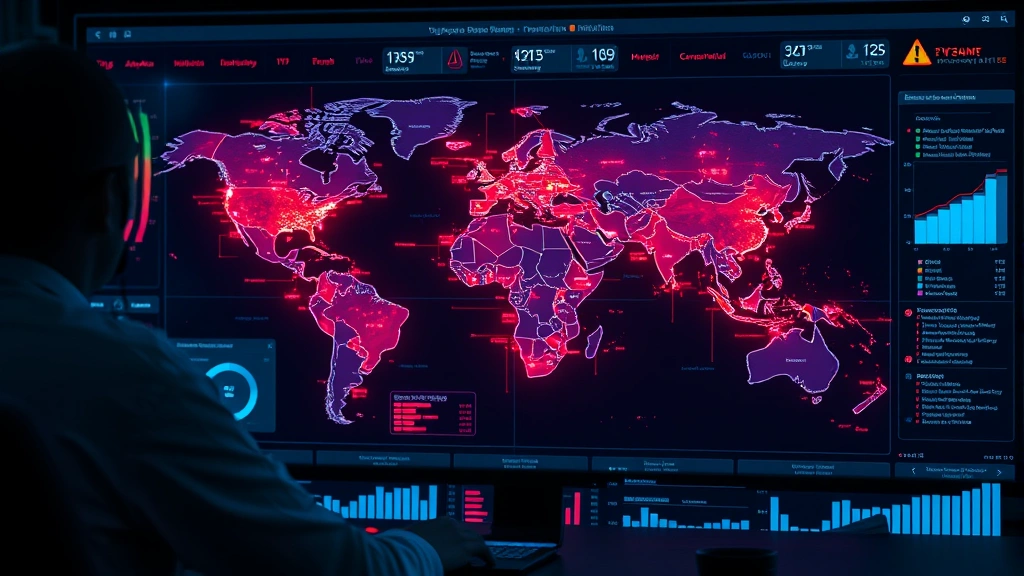
” alt=”Network security analyst monitoring threat intelligence dashboard with global attack map showing real-time cyber threat indicators across continents” />
FAQ
What specific threats should organizations prioritize based on Alex Wong’s national security framework?
Organizations should prioritize threats aligned with their business impact and likelihood. Critical infrastructure operators should emphasize state-sponsored threats and supply chain security. Financial institutions should focus on data theft and fraud. Healthcare organizations should prepare for ransomware and patient data compromise. MITRE ATT&CK framework provides detailed threat modeling guidance aligned with observed adversary techniques.
How can small organizations implement cybersecurity lessons from national security experts?
Small organizations should focus on foundational security practices before attempting advanced techniques. Implement multi-factor authentication, regular backups, patch management, and employee security training. Participate in industry ISACs for threat intelligence appropriate to organizational size. Consider managed security service providers (MSSPs) for capabilities beyond internal capacity. National security principles apply regardless of organization size.
What role should boards and executives play in cybersecurity strategy?
Executive leadership must view cybersecurity as strategic business imperative rather than IT technical issue. Boards should establish cyber governance committees, receive regular security briefings, allocate appropriate budgets, and ensure accountability for security outcomes. Executives should understand that cyber incidents represent business risks comparable to operational, financial, and reputational risks requiring equivalent attention.
How do organizations balance security investment against other business priorities?
Security investment decisions should follow risk-based frameworks quantifying potential impact of security failures. Organizations should conduct business impact analysis identifying systems where compromise creates greatest damage. Allocate security resources to highest-risk areas first. As security posture improves, extend protections to lower-risk systems. This approach demonstrates security value through risk reduction.
What indicators suggest an organization has achieved adequate cybersecurity maturity?
Mature organizations demonstrate: rapid vulnerability detection and remediation, successful incident containment limiting impact, comprehensive threat intelligence integration, effective security awareness across workforce, board-level security governance, and documented security strategy aligned with business objectives. Achieving maturity requires sustained commitment over years rather than one-time initiatives.


