
Airport Cyber Threats: Insights from Security Experts
Modern airports represent critical infrastructure that requires robust protection against evolving cyber threats. As transportation hubs connecting millions of passengers daily, airports face unprecedented cybersecurity challenges that demand sophisticated defense strategies. The airport security force must now contend with threats that extend far beyond physical perimeters, encompassing digital vulnerabilities that could compromise passenger safety, operational continuity, and sensitive data systems.
Recent incidents across global aviation infrastructure have demonstrated that cyber attacks targeting airports can disrupt flight operations, compromise passenger information, and create cascading security failures. Security experts warn that the convergence of operational technology and information technology systems creates unique vulnerabilities that threat actors actively exploit. Understanding these threats and implementing comprehensive defensive measures has become essential for airport operators worldwide.
This comprehensive guide examines the landscape of airport cyber threats through the lens of security professionals, exploring vulnerabilities, attack vectors, and evidence-based defense strategies that airport security forces can deploy to protect critical operations.
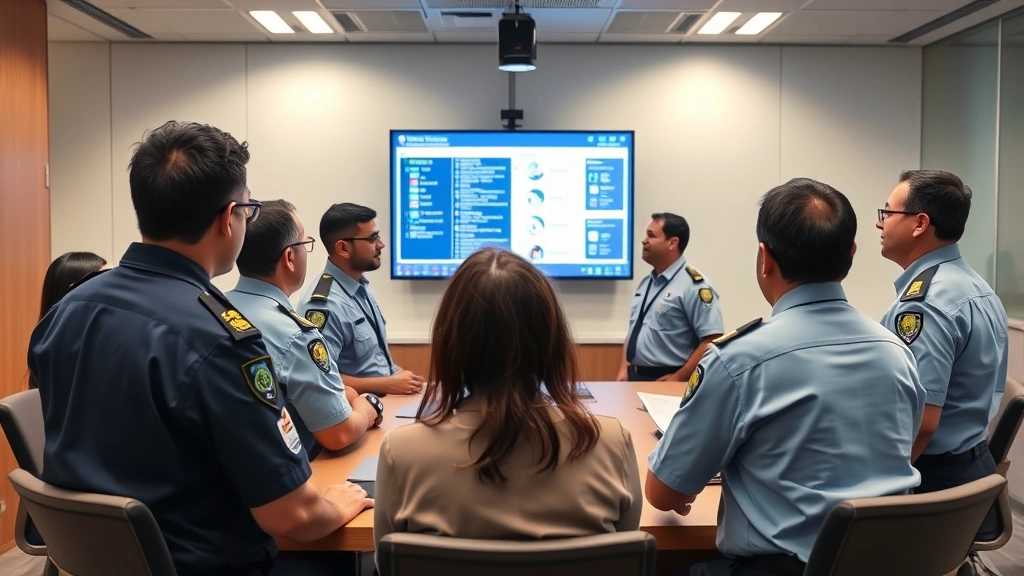
Understanding Airport Cyber Threat Landscape
The cyber threat landscape affecting airports has fundamentally transformed over the past decade. What once seemed like distant concerns from network administrators have become urgent priorities for executive leadership and operational teams. Airports now face threats from nation-state actors, cybercriminals, hacktivists, and insider threats—each with distinct motivations and capabilities.
According to CISA’s aviation security guidance, airport operators should recognize that cyber attacks targeting aviation infrastructure can have cascading effects throughout the entire transportation ecosystem. A successful attack on airport systems could disrupt air traffic control coordination, compromise passenger screening processes, or expose personal identification information for millions of travelers.
Security experts emphasize that airports represent attractive targets because they operate as interconnected systems where vulnerabilities in one area can propagate throughout the entire facility. The integration of baggage handling systems, passenger information databases, access control mechanisms, and operational networks creates a complex attack surface that requires constant monitoring and assessment.
The threat landscape includes several categories of adversaries: state-sponsored groups conducting espionage or infrastructure disruption, criminal organizations seeking financial gain through ransom or data theft, and ideologically motivated actors attempting to disrupt operations. Each threat category requires different defensive approaches and response protocols.

Critical Infrastructure Vulnerabilities in Aviation
Airport systems contain multiple layers of critical infrastructure, each presenting unique cybersecurity challenges. Legacy systems that have operated for decades often lack modern security controls, creating vulnerabilities that sophisticated attackers can exploit. The NIST Cybersecurity Framework provides guidance for identifying and managing these vulnerabilities across critical infrastructure sectors.
Operational Technology (OT) systems controlling physical airport functions—including baggage handling, runway lighting, and vehicle guidance systems—often operate on networks that were designed with accessibility rather than security as the primary concern. These systems frequently cannot accommodate modern encryption protocols or frequent security patches without disrupting operations. Airport security forces must understand these constraints when developing protective strategies.
Information Technology (IT) systems managing passenger data, booking information, and administrative functions face different but equally serious threats. These systems typically connect to external networks for passenger services, creating potential entry points for attackers. The integration between OT and IT systems means that a breach in one domain can potentially compromise the other.
Key vulnerabilities identified by security researchers include:
- Legacy system dependencies: Many airports still rely on systems deployed 15-20 years ago with no planned replacement
- Supply chain risks: Third-party vendors providing software, hardware, and services introduce potential attack vectors
- Inadequate network segmentation: Systems that should be isolated are often connected for operational convenience
- Weak authentication mechanisms: Default credentials and single-factor authentication persist in many airport environments
- Insufficient logging and monitoring: Many airports lack comprehensive visibility into system activities and potential intrusions
Common Attack Vectors Targeting Airports
Understanding the specific attack methods that threaten airports enables the airport security force to implement targeted defenses. Security experts have identified several attack vectors that consistently appear in threat intelligence reports and incident analyses.
Phishing and Social Engineering: These remain among the most effective attack vectors targeting airport personnel. Attackers craft convincing emails impersonating vendors, contractors, or internal departments to trick employees into revealing credentials or executing malware. A single successful phishing attack can provide attackers with initial access to airport networks.
Ransomware Deployment: Ransomware attacks against airports have increased dramatically, with attackers encrypting critical systems and demanding payment for decryption keys. These attacks can disable baggage handling systems, disrupt passenger processing, or compromise air traffic coordination. The operational pressure to restore systems quickly makes airports attractive targets for ransomware operators.
Supply Chain Compromise: Attackers increasingly target software and hardware providers serving airports, using these trusted vendors as entry points into airport networks. A compromised software update or hardware device can provide attackers with persistent access to critical systems.
Insider Threats: Employees with legitimate system access represent a significant threat category. Disgruntled staff members or individuals compromised by external actors can deliberately sabotage systems, steal data, or create backdoors for external attackers.
Network Reconnaissance: Attackers conduct extensive reconnaissance of airport networks before launching attacks, scanning for open ports, outdated software versions, and misconfigured systems. This reconnaissance phase often goes undetected, giving attackers weeks or months to identify vulnerabilities.
Impact of Cyber Incidents on Airport Operations
The operational consequences of successful cyber attacks extend far beyond IT departments. When airport systems fail due to cyber incidents, the effects cascade through passenger services, flight operations, and safety systems. The airport security force must understand these impacts to properly prioritize defensive measures.
A significant attack on baggage handling systems can create bottlenecks that delay hundreds of flights and strand thousands of passengers. Compromised access control systems may force manual screening procedures that reduce throughput and create security gaps. Disrupted communication systems can prevent coordination between ground operations and aircraft, creating safety hazards.
Financial impacts include direct costs of incident response and recovery, lost revenue from operational disruptions, regulatory fines for security failures, and long-term reputational damage. Some airports have experienced recovery costs exceeding $10 million for single incidents. Insurance may not cover all losses, particularly if the airport failed to implement industry-standard security controls.
Beyond immediate operational disruptions, cyber incidents create broader consequences. Compromised passenger data exposes individuals to identity theft and fraud. Disrupted flight schedules affect connecting passengers, cargo delivery, and supply chains dependent on air transportation. Safety systems failures could potentially create dangerous situations requiring emergency response protocols.
Security Expert Recommendations and Best Practices
Leading cybersecurity professionals have developed comprehensive recommendations for airport operators seeking to strengthen defenses against evolving threats. These recommendations represent consensus positions from government agencies, academic researchers, and industry practitioners.
The CISA Critical Infrastructure Security guidance emphasizes the importance of developing comprehensive cyber risk management programs that integrate cybersecurity into operational planning. Rather than treating cybersecurity as a separate IT function, airports should embed security considerations into every operational process.
Implement Defense in Depth: Rather than relying on single security controls, airports should deploy multiple layers of defensive measures. If one control fails, others remain in place to prevent attacker progression. This approach requires investment in firewalls, intrusion detection systems, endpoint protection, and behavioral monitoring tools working together as an integrated system.
Establish Security Operations Centers: Airports handling significant passenger volumes should establish Security Operations Centers (SOCs) providing 24/7 monitoring of network activity and system behavior. SOCs enable rapid detection of intrusions and faster response to emerging threats. For smaller airports, managed security service providers can provide equivalent monitoring capabilities.
Conduct Regular Security Assessments: Vulnerability assessments and penetration testing should occur regularly—at minimum annually, but preferably quarterly for critical systems. These assessments identify weaknesses before attackers discover them, enabling proactive remediation rather than reactive crisis response.
Develop Incident Response Plans: Comprehensive incident response plans should detail procedures for detecting, containing, investigating, and recovering from cyber attacks. These plans should include defined roles and responsibilities, escalation procedures, communication protocols, and coordination with law enforcement and regulatory agencies.
Role of Airport Security Force in Cyber Defense
The airport security force plays a critical but often underutilized role in defending against cyber threats. Physical security and cybersecurity must integrate into unified protective strategies rather than operating as separate domains.
Security personnel should receive training on identifying social engineering attempts targeting their colleagues. Attackers often research employees through social media and public records before contacting them with convincing pretexts. Trained security staff can recognize these manipulation techniques and alert appropriate personnel.
Physical access control directly impacts cybersecurity. Attackers who gain physical access to network infrastructure can install hardware devices enabling persistent access or data exfiltration. The airport security force must protect sensitive areas containing servers, network equipment, and critical infrastructure components. Implementing proper badge access controls, surveillance monitoring, and physical security audits prevents unauthorized access to these areas.
Security personnel can also identify suspicious activities that may indicate insider threats or reconnaissance activities. Individuals attempting to gain unauthorized access to restricted areas, photographing infrastructure, or conducting unusual network activities should be reported to appropriate authorities. The security force represents eyes and ears throughout the airport that can detect threats that purely technical controls might miss.
Additionally, the security force can assist in developing and testing emergency response procedures. Regular tabletop exercises where security personnel simulate responses to cyber incidents help identify gaps in procedures and improve coordination between physical security and IT teams.
Implementing Zero Trust Architecture
Security experts increasingly recommend Zero Trust Architecture as a foundational approach to airport cybersecurity. Rather than assuming that traffic and users inside the network perimeter can be trusted, Zero Trust requires verification of every access request regardless of origin.
Zero Trust implementation involves several components working together. Multi-factor authentication ensures that user credentials alone cannot provide access to systems. Network microsegmentation divides networks into smaller zones requiring additional authentication to traverse between zones. This prevents attackers from moving freely through networks after initial compromise.
Continuous monitoring and behavioral analysis detect unusual activities that might indicate compromised accounts or insider threats. Systems learn normal behavior patterns and alert security teams when deviations occur. This approach catches attackers attempting to move laterally through networks or exfiltrate data.
Implementing Zero Trust requires careful planning to avoid disrupting legitimate operations. The airport security force should work closely with IT teams to understand which access restrictions might impact physical security operations or emergency procedures. Phased implementation beginning with the most critical systems allows for gradual adjustment rather than disruptive wholesale changes.
Incident Response and Recovery Planning
Despite comprehensive preventive measures, some cyber incidents will inevitably occur. The difference between manageable incidents and catastrophic failures often depends on the quality of incident response and recovery planning. The airport security force should participate in developing and testing these plans.
Effective incident response begins with rapid detection. Security monitoring systems should alert personnel when attacks appear to be occurring. Clear escalation procedures ensure that appropriate decision-makers are informed quickly so that response actions can be authorized without delay.
Containment strategies must balance operational continuity with security requirements. Shutting down all systems immediately might prevent attacker progression but could create unsafe conditions if critical safety systems are disabled. Incident response plans should identify which systems can be safely isolated versus which must remain operational during response activities.
Forensic investigation during incident response preserves evidence that law enforcement agencies may use for prosecution and helps identify how attackers gained access and what damage occurred. Coordination with law enforcement and cybersecurity incident response firms should occur early in the response process.
Recovery planning addresses how systems will be restored to normal operations. This may involve restoring from clean backups, rebuilding systems from scratch, or applying patches to vulnerable systems. Testing recovery procedures regularly ensures that backups are viable and that recovery processes will function when actually needed during incidents.
FAQ
What are the most critical cyber threats facing airports today?
The most significant threats include ransomware attacks targeting operational systems, supply chain compromises affecting trusted vendors, advanced phishing campaigns targeting airport employees, and insider threats from compromised or disgruntled personnel. Nation-state actors also conduct reconnaissance and limited attacks targeting aviation infrastructure for strategic purposes.
How can airports improve their cybersecurity posture with limited budgets?
Prioritize basic security fundamentals: implement multi-factor authentication, establish regular patching procedures, conduct employee security awareness training, and deploy endpoint protection on critical systems. These foundational measures address the most common attack vectors and provide significant security improvements at reasonable cost. As budgets allow, expand to more sophisticated controls like security operations centers and advanced threat detection systems.
What role should the airport security force play in cybersecurity?
Physical security and cybersecurity must be integrated. The airport security force should receive training on social engineering tactics, implement strong physical access controls over critical infrastructure, conduct security awareness briefings, and participate in incident response planning and exercises. Physical security personnel often detect threats that technical controls miss.
How often should airports conduct security assessments?
Security assessments should occur at minimum annually, with quarterly assessments for the most critical systems. After significant changes to systems or infrastructure, additional assessments should be conducted. Continuous vulnerability scanning should supplement periodic formal assessments.
What should be included in an airport incident response plan?
Comprehensive plans should define roles and responsibilities, escalation procedures, communication protocols, containment strategies, forensic investigation procedures, recovery processes, and coordination with law enforcement. Plans should be documented, regularly updated, and tested through tabletop exercises and simulations.
How can airports protect against ransomware attacks?
Implement robust backup and recovery procedures ensuring backups are isolated from production networks and regularly tested. Deploy endpoint protection and behavioral monitoring detecting ransomware execution. Conduct employee training on phishing and social engineering. Establish incident response procedures specifically addressing ransomware. Consider cyber insurance covering ransomware incidents.


