
Are Adaptive Security Appliances Enough? Expert View on Modern Cybersecurity Defense
Adaptive security appliances have become a cornerstone of modern network defense strategies, offering organizations the promise of intelligent, context-aware threat protection. These sophisticated devices leverage machine learning, behavioral analysis, and real-time threat intelligence to adapt their security posture dynamically. However, cybersecurity experts increasingly question whether these appliances alone provide sufficient protection against today’s advanced, multi-vectored threat landscape. The reality is more nuanced than vendors’ marketing claims suggest.
Organizations worldwide are investing heavily in adaptive security appliances as part of their defense infrastructure. Yet breach statistics tell a concerning story: even companies with cutting-edge security technology continue to experience successful intrusions. This paradox raises critical questions about the limitations of appliance-centric security strategies and the necessity of layered, comprehensive defense approaches that extend far beyond hardware solutions.
Understanding the true capabilities and constraints of adaptive security appliances is essential for security leaders making infrastructure investments. This expert analysis examines whether these tools can stand alone or if they must be integrated into broader security frameworks to deliver meaningful protection.
What Are Adaptive Security Appliances?
Adaptive security appliances represent a significant evolution in network security hardware. These devices integrate multiple security functions—firewalling, intrusion prevention, advanced threat protection, and data loss prevention—into unified platforms. What distinguishes them from traditional appliances is their ability to learn from network traffic patterns, threat intelligence feeds, and user behavior to adjust detection rules and response mechanisms in real-time.
Modern adaptive security appliances employ several sophisticated technologies to enhance their effectiveness. Machine learning algorithms analyze millions of network events to identify anomalies that might indicate compromise. Behavioral analytics track user and entity activities to detect deviations from normal patterns. Threat intelligence integration ensures that the appliance understands current attack methodologies and emerging threat indicators. This combination creates a dynamic defense system that theoretically improves over time as it encounters more data and threats.
Leading vendors in this space include Palo Alto Networks, Fortinet, Cisco, and Check Point, each offering platforms that claim to provide next-generation protection capabilities. These appliances typically operate at network chokepoints, analyzing traffic at scale to protect entire organizational perimeters and internal segments.
The Promises vs. Reality Gap
Vendors marketing adaptive security appliances often present compelling narratives about automated threat detection and autonomous response capabilities. The promise is straightforward: deploy a sophisticated appliance, configure threat intelligence feeds, and let intelligent systems handle the complexity of modern cybersecurity. However, independent security research reveals significant gaps between vendor claims and real-world performance.
A critical issue is the false positive and false negative problem. While adaptive security appliances excel at detecting known threats and obvious attack patterns, they frequently generate false alarms that overwhelm security teams. Simultaneously, sophisticated adversaries consistently develop techniques to evade detection systems. CISA’s published threat advisories regularly document zero-day exploits and advanced persistent threat techniques that bypass signature-based and behavioral detection systems.
The fundamental limitation stems from the appliance’s inherent constraint: it can only analyze what flows through it. Encrypted traffic, lateral movements within trusted networks, and attacks originating from compromised internal systems often bypass the appliance’s inspection capabilities entirely. Organizations frequently discover breaches not through their adaptive security appliances but through incident response investigations triggered by external notifications or anomaly detection in other systems.
Additionally, the “adaptive” aspect of these appliances depends heavily on configuration quality and threat intelligence accuracy. Organizations with insufficient security expertise often deploy these systems with default or suboptimal settings, negating much of their adaptive potential. Threat intelligence feeds, while valuable, frequently contain false indicators or lack specificity relevant to particular organizational threats.
Limitations of Appliance-Only Security
Relying exclusively on adaptive security appliances creates dangerous blind spots in organizational security posture. Several critical limitations emerge when these devices serve as primary defense mechanisms:
Encrypted Traffic Inspection Challenges: Modern encryption protects sensitive data appropriately, but it also prevents appliances from inspecting encrypted traffic for threats. While SSL/TLS decryption capabilities exist, implementing them at scale introduces performance penalties, privacy concerns, and creates new security risks if decryption keys are compromised. Threat actors deliberately leverage encryption to hide malicious communications within legitimate-appearing encrypted channels.
Insider Threats and Compromised Credentials: Adaptive security appliances excel at detecting external attacks but struggle with internal threats. An employee with legitimate credentials accessing systems for malicious purposes or a compromised account used by attackers to move laterally appears normal to network-perimeter devices. These threats require endpoint detection, user behavior analytics, and privileged access management—capabilities that exist outside appliance infrastructure.
Supply Chain and Third-Party Compromises: Recent major breaches have demonstrated that attackers increasingly target software supply chains and third-party integrations rather than attacking networks directly. An adaptive security appliance cannot detect malicious code injected into trusted software updates or identify compromised SaaS applications that are used legitimately by the organization.
Advanced Evasion Techniques: Sophisticated adversaries employ polymorphic malware, living-off-the-land techniques that use legitimate tools, and time-delayed attacks that evade immediate detection. NIST Cybersecurity Framework guidance emphasizes that no single technology can provide complete protection, and adaptive security appliances are no exception.
Cloud and Distributed Infrastructure: Modern organizations operate hybrid and multi-cloud environments where traditional network appliances lack visibility. Applications running in containerized environments, serverless functions, and Software-as-a-Service platforms operate outside the appliance’s inspection scope. A perimeter-focused device cannot protect resources that exist beyond the perimeter.
Ransomware Propagation: While appliances can detect some ransomware variants, modern ransomware often spreads through compromised credentials and internal lateral movement after initial access. The appliance detects the entry point but fails to prevent propagation because the malware then operates using legitimate access patterns and trusted protocols.
Critical Defense Gaps Exposed
Real-world breach investigations consistently reveal that adaptive security appliances failed to prevent successful attacks, not because the technology is defective, but because critical defense layers were absent or inadequate. Understanding these gaps is essential for security architects designing comprehensive defenses.
Endpoint Security Gaps: Endpoints represent the primary infection vector for most attacks. While network appliances detect some malicious traffic, endpoint detection and response (EDR) solutions provide visibility into process execution, file operations, and system behavior that network devices cannot observe. Organizations deploying only network-level adaptive security appliances leave endpoints vulnerable to exploitation, privilege escalation, and lateral movement.
Identity and Access Management Failures: Many breaches succeed because attackers compromise credentials or exploit weak identity controls. Adaptive security appliances have no mechanism to enforce multi-factor authentication, validate user context, or detect impossible travel scenarios. Zero-trust security principles emphasize that every access request requires verification regardless of network location—a capability that requires identity-centric controls beyond appliance infrastructure.
Logging and Threat Intelligence Blind Spots: Detecting sophisticated attacks requires comprehensive logging across all systems and applications. Many organizations fail to collect, centralize, and analyze security logs, making it impossible to detect attacks even if the appliance alerts on initial compromise. Dark Reading’s threat intelligence research demonstrates that organizations with mature SIEM and log analytics capabilities detect breaches significantly faster than those relying on appliance-level detection alone.
Vulnerability Management Deficiency: Adaptive security appliances cannot patch systems or remediate vulnerabilities. Organizations that lack mature vulnerability management programs—identifying, prioritizing, and patching exposures—provide attackers with exploitation opportunities regardless of appliance sophistication. Threat actors routinely exploit known, unpatched vulnerabilities months after patches are available.
Security Awareness and Human Factors: Phishing, social engineering, and credential compromise remain primary attack vectors. No appliance can prevent an employee from clicking a malicious link or revealing credentials to a convincing attacker. Security awareness training, incident response procedures, and user behavior monitoring are human-centric controls that appliances cannot replace.

Beyond Hardware: Comprehensive Security Strategy
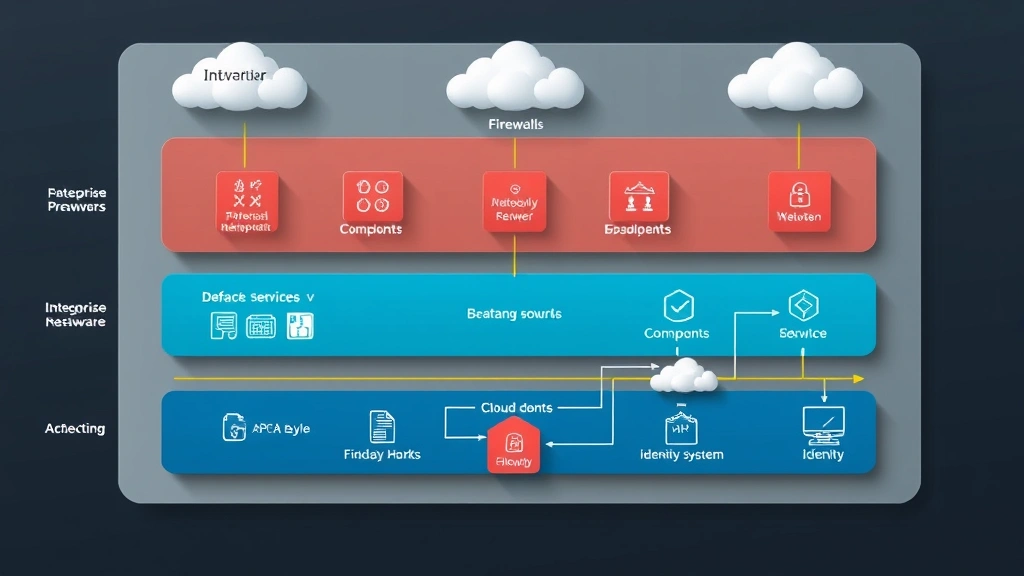
Expert consensus in cybersecurity is unequivocal: adaptive security appliances are necessary components of defense-in-depth strategies, but they are insufficient as standalone solutions. Organizations must integrate appliances into comprehensive security frameworks addressing multiple attack vectors and defense layers.
Implement Zero-Trust Architecture: Zero-trust principles mandate verification of every access request regardless of source or network location. This requires integrating appliances with identity verification systems, multi-factor authentication, and continuous risk assessment. Rather than trusting traffic because it originates from the internal network, zero-trust assumes breach and requires proof of trustworthiness for every transaction.
Deploy Endpoint Detection and Response: EDR solutions provide visibility into endpoint activity that network appliances cannot achieve. These tools detect suspicious process execution, unauthorized privilege escalation, and lateral movement attempts. Combined with adaptive security appliances, EDR creates a two-layer detection system—network and endpoint—that significantly improves threat detection capabilities.
Establish Security Information and Event Management: SIEM platforms correlate security events across multiple sources—appliances, endpoints, cloud services, applications—to identify attack patterns invisible to individual systems. A SIEM system can detect a sophisticated attack where the adaptive security appliance sees only normal traffic because the attack uses legitimate credentials and protocols.
Implement Vulnerability Management Programs: Organizations must systematically identify, prioritize, and remediate vulnerabilities. This process operates independently of adaptive security appliances but creates conditions where attacks are less likely to succeed. Regular vulnerability assessments, patch management, and security configuration management reduce the attack surface.
Develop Incident Response Capabilities: Even with comprehensive security controls, breaches will occur. Organizations require well-defined incident response procedures, trained personnel, and tools to investigate and contain breaches. Incident response effectiveness depends on logging comprehensiveness, threat intelligence quality, and personnel expertise—factors that extend far beyond appliance functionality.
Integrate Threat Intelligence: While adaptive security appliances consume threat intelligence feeds, organizations should implement broader threat intelligence programs. This includes subscribing to threat intelligence services, participating in information sharing communities, and analyzing internal threat data. Intelligence informs not only appliance configurations but also vulnerability prioritization, incident response procedures, and security architecture decisions.
Implementation Best Practices
For organizations currently deploying or upgrading adaptive security appliances, several best practices maximize effectiveness while acknowledging inherent limitations:
Conduct Thorough Requirements Analysis: Before selecting an appliance, organizations should define specific security requirements based on threat modeling, regulatory obligations, and business risk assessment. Not all appliances are equally capable across all threat categories. Some excel at preventing web-based attacks while others specialize in advanced malware detection. Selecting the right tool requires understanding organizational needs.
Ensure Adequate Expertise: Adaptive security appliances require skilled personnel to configure, tune, and maintain effectively. Organizations should invest in training or hire qualified security engineers. Default configurations provide minimal protection, and many organizations fail to optimize their appliances because they lack sufficient expertise. Consider managed security service providers if in-house expertise is unavailable.
Integrate with Broader Security Infrastructure: Configure appliances to feed security events to SIEM systems, share threat intelligence with endpoint protection tools, and integrate with identity management systems. The value of an adaptive security appliance increases dramatically when it operates as part of a connected security ecosystem rather than in isolation.
Implement Proper Segmentation: Use appliances to enforce network segmentation, limiting lateral movement if an attacker breaches the perimeter. Segment networks by trust level, with stricter policies for sensitive systems. This approach acknowledges that perimeter protection may fail while creating additional barriers to attackers.
Maintain Comprehensive Logging: Configure appliances to generate detailed logs of security events, network traffic, and policy decisions. Centralize these logs with other security data for comprehensive analysis. Many organizations deploy sophisticated appliances but fail to capture and analyze their output, negating much of their value.
Regularly Update Threat Intelligence: Ensure that threat intelligence feeds powering the appliance remain current and relevant. Subscribe to feeds specifically targeted at your industry and threat landscape. Validate feed quality and adjust appliance policies based on intelligence accuracy and false positive rates.
Conduct Regular Security Testing: Perform penetration testing and red team exercises to evaluate whether adaptive security appliances effectively detect and prevent attacks. Many organizations discover during testing that their appliances fail to detect sophisticated attack techniques. Use testing results to refine configurations and identify additional security controls needed.
FAQ
Can an adaptive security appliance prevent all network-based attacks?
No. While adaptive security appliances are effective against many known and signature-based attacks, sophisticated adversaries regularly develop evasion techniques. Zero-day exploits, encrypted traffic containing malicious payloads, and attacks using legitimate credentials bypass appliance detection. Additionally, appliances cannot prevent attacks originating from compromised internal systems or using legitimate protocols for malicious purposes. A comprehensive security strategy requires multiple defensive layers.
Why do organizations with advanced appliances still experience breaches?
Breaches occur despite advanced appliances because organizations often lack complementary security controls. Endpoint detection, identity verification, threat intelligence integration, and incident response capabilities are equally important. Additionally, some breaches exploit vulnerabilities that appliances cannot address—social engineering, supply chain compromise, or sophisticated insider threats. Finally, appliance effectiveness depends on proper configuration and skilled personnel, factors many organizations struggle with.
What is the relationship between adaptive security appliances and zero-trust security?
Adaptive security appliances support zero-trust implementation by providing network-level policy enforcement and threat detection. However, zero-trust requires additional components—identity verification, continuous risk assessment, and endpoint security—that extend beyond appliance capabilities. Appliances alone cannot implement zero-trust; they are one component of a broader architecture.
Should organizations replace their adaptive security appliances with other solutions?
No. Adaptive security appliances remain valuable components of security infrastructure. The issue is not that appliances are inadequate but that they are insufficient alone. Organizations should retain quality appliances while adding complementary controls—EDR, SIEM, identity management, vulnerability management—to create comprehensive defense.
How do I evaluate the effectiveness of my adaptive security appliance?
Evaluate effectiveness through multiple methods: review detection metrics and alert trends, conduct penetration testing to assess evasion vulnerability, analyze mean time to detection for known attack types, and compare your organization’s breach detection capabilities with industry benchmarks. Additionally, assess whether the appliance integration with broader security infrastructure provides value beyond isolated network monitoring.
What role does threat intelligence play in adaptive security appliance effectiveness?
Threat intelligence is essential to appliance effectiveness. Quality intelligence feeds enable accurate threat detection while reducing false positives. However, appliance-level threat intelligence consumption is only one component of an organizational threat intelligence program. Broader intelligence programs inform vulnerability prioritization, incident response procedures, and security architecture decisions beyond appliance scope.
Conclusion: Adaptive security appliances represent sophisticated security technology that effectively detects and prevents many attacks. However, experts unanimously agree that appliances alone are insufficient for comprehensive organizational security. Instead, appliances should be integrated into defense-in-depth strategies incorporating endpoint security, identity management, threat intelligence, vulnerability management, and incident response capabilities. Organizations asking whether adaptive security appliances are enough are asking the wrong question. The correct question is how to integrate appliances into comprehensive security frameworks that address the full complexity of modern threats. This layered approach, combining network-level, endpoint-level, and identity-centric controls, provides the resilience organizations require in today’s threat landscape.


