Adaptive Security Appliance: Expert Setup Guide
An adaptive security appliance represents a critical evolution in network defense, combining multiple security functions into a unified platform that intelligently responds to emerging threats. Unlike traditional firewalls that rely on static rule sets, these sophisticated devices employ machine learning and behavioral analysis to detect and mitigate threats in real-time. Organizations deploying adaptive security appliances gain comprehensive protection across network perimeters, significantly reducing their attack surface while maintaining operational efficiency.
Modern enterprises face an unprecedented volume of cyber threats, ranging from advanced persistent threats (APTs) to zero-day exploits and ransomware campaigns. An adaptive security appliance addresses these challenges by consolidating firewall capabilities, intrusion prevention, threat intelligence integration, and application-level filtering into a single, cohesive system. This consolidation not only simplifies network architecture but also enables security teams to implement consistent policies across their entire infrastructure, creating a more resilient defense posture.

Understanding Adaptive Security Appliance Architecture
An adaptive security appliance functions as a next-generation security platform that transcends traditional perimeter defense. The core architecture integrates stateful packet inspection, deep packet inspection (DPI), and machine learning algorithms to analyze traffic patterns and identify anomalous behavior. These devices maintain awareness of application-layer protocols, enabling granular control over specific services and data flows rather than merely blocking or allowing traffic based on IP addresses and ports.
The intelligence engine within an adaptive security appliance continuously processes threat intelligence from multiple sources, including CISA threat alerts, vendor vulnerability databases, and behavioral analytics. This real-time processing capability allows the appliance to adapt its security posture dynamically, recognizing when legitimate applications are being exploited for malicious purposes and responding within milliseconds. Organizations benefit from reduced false positives compared to signature-based systems, allowing security teams to focus on genuine threats rather than investigating benign anomalies.
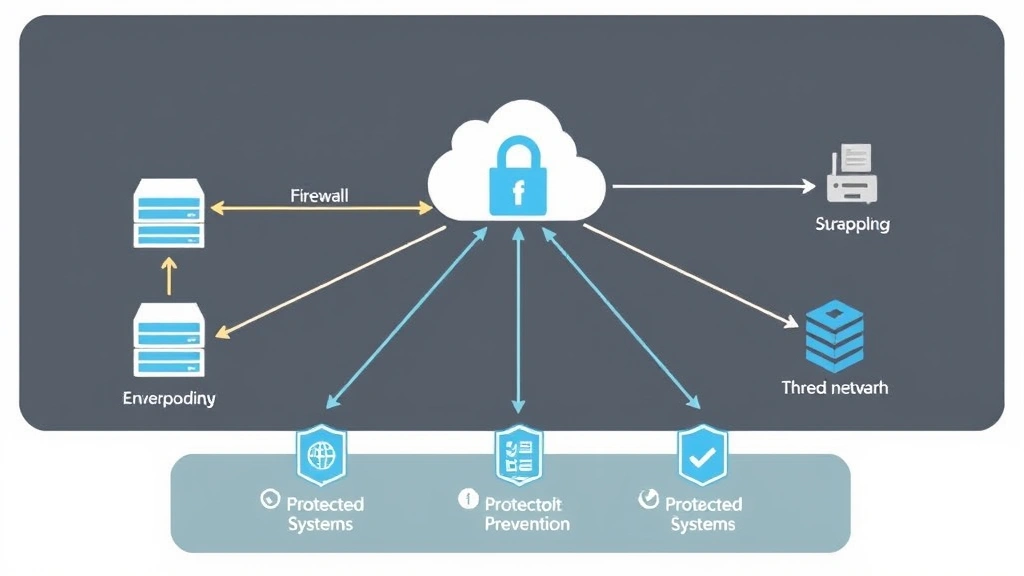
The architecture typically comprises several functional modules: the security gateway handles network traffic filtering, the threat intelligence module correlates data with external feeds, the application control engine manages application-specific policies, and the reporting framework provides visibility into security events. These components work in concert, sharing threat intelligence and coordinating responses to detected incidents.
Pre-Deployment Planning and Requirements
Before implementing an adaptive security appliance, organizations must conduct thorough environmental assessments and capacity planning. Network administrators should document existing traffic patterns, identify critical applications, and establish baseline performance metrics. This foundational work ensures the appliance deployment aligns with business requirements and doesn’t introduce bottlenecks that degrade user experience.
Key planning considerations include:
- Bandwidth requirements: Calculate peak traffic volumes and ensure the appliance can handle throughput without introducing latency. Underestimating capacity leads to performance degradation and potential security gaps when the system becomes overwhelmed.
- High availability architecture: Plan for redundancy using active-passive or active-active clustering to eliminate single points of failure. This is critical for organizations where network downtime directly impacts revenue or operations.
- Integration with existing infrastructure: Map connections to firewalls, intrusion detection systems, and SIEM platforms. An adaptive security appliance works most effectively when integrated into a comprehensive security ecosystem.
- Licensing and subscription models: Understand the cost structure for threat intelligence updates, advanced features, and technical support. Many vendors offer tiered licensing that scales with organizational needs.
- Compliance requirements: Identify regulatory mandates (HIPAA, PCI-DSS, GDPR) that influence configuration, logging, and retention policies.
Security teams should also establish deployment windows, backup procedures, and rollback plans. Testing the adaptive security appliance in a staging environment before production deployment prevents disruptions and allows teams to validate configurations against actual network conditions.
Installation and Initial Configuration
The physical installation of an adaptive security appliance involves positioning it strategically within the network topology. Most organizations deploy these devices at network boundaries, between internal networks and external connections, or at critical network segments protecting sensitive systems. The placement decision depends on network architecture, traffic patterns, and security objectives.
Initial configuration begins with basic network parameters: IP addressing, routing protocols, and DNS settings. Administrators must establish secure management access, typically through out-of-band management interfaces that remain isolated from monitored traffic. This separation prevents attackers from compromising the appliance through the very network it protects.
Setting up user authentication mechanisms is essential. Modern appliances support multiple authentication methods including local accounts, LDAP/Active Directory integration, and multi-factor authentication. Implementing strong authentication prevents unauthorized administrative access, which represents a critical vulnerability if compromised.
The initial configuration wizard typically guides administrators through essential setup steps, but manual configuration provides greater control for complex environments. Organizations should document all configuration decisions, maintain version control for policy files, and establish change management procedures. This documentation becomes invaluable during troubleshooting and when onboarding new security personnel.
Advanced Threat Detection Setup
Configuring advanced threat detection capabilities transforms an adaptive security appliance from a basic firewall into a sophisticated threat detection and prevention platform. This involves enabling and tuning intrusion prevention signatures, configuring behavioral analysis engines, and integrating threat intelligence feeds.
Signature-based detection remains foundational but insufficient alone. Organizations should enable NIST-aligned threat detection methodologies that combine multiple detection approaches. Behavioral analysis examines network flows, application behavior, and user activity patterns to identify deviations from normal operations. A user suddenly accessing resources at unusual times or transferring massive data volumes triggers alerts for investigation.
Machine learning models integrated into adaptive security appliances learn normal network behavior during an initial training period, typically 1-2 weeks. After this baseline establishment, the system identifies anomalies with increasing accuracy. These models improve continuously as new threat data is processed, making the appliance more effective over time without requiring manual signature updates for every emerging threat.
Threat intelligence integration connects the appliance to external feeds providing real-time information about known malicious IP addresses, domains, and file hashes. When traffic matches threat intelligence indicators, the appliance blocks it immediately, preventing command-and-control communications and data exfiltration. Organizations should validate threat intelligence quality, as false positives in feeds can block legitimate business activities.
Sandboxing capabilities allow the appliance to detonate suspicious files in isolated virtual environments, analyzing their behavior without risk to production systems. When a file exhibits malicious characteristics—process injection, registry modification, network reconnaissance—the appliance blocks it before it reaches end-user systems.
Network Integration and Policy Management
Effective adaptive security appliance deployment requires comprehensive policy frameworks that align with organizational security requirements. Policies should be structured hierarchically, with default-deny rules modified only when business requirements justify exceptions. This approach ensures that security remains the default state rather than something that must be constantly enforced.
Application control policies specify which applications are permitted, restricted, or prohibited. Rather than allowing all traffic to port 80 (HTTP), policies can permit only specific applications or block bandwidth-intensive applications during business hours. This granularity prevents shadow IT, where employees use unauthorized applications that circumvent security controls.
User and group-based policies enable context-aware security decisions. Different user populations have different security requirements; executives might require more stringent controls over data transfers while developers need broader access for legitimate work. The appliance can enforce different policies based on user identity, device type, and location.
Integration with network access control (NAC) systems ensures that only compliant devices access the network. An adaptive security appliance can quarantine devices that fail compliance checks, preventing infected or misconfigured systems from becoming attack vectors. This integration extends security beyond the perimeter to every connected device.
VPN integration enables secure remote access while maintaining threat detection capabilities. Traffic from remote users passes through the same threat detection engines as on-premise traffic, ensuring consistent security regardless of access location. This becomes critical for distributed workforces where employees connect from various locations and networks.
Monitoring and Optimization
Deploying an adaptive security appliance is not a “set and forget” proposition. Continuous monitoring and optimization ensure the system remains effective against evolving threats while supporting business operations. Organizations should establish monitoring dashboards displaying key metrics: blocked threats, application usage, bandwidth consumption, and system health indicators.
Log analysis reveals patterns in security events, helping identify emerging attack campaigns targeting the organization. A sudden spike in blocked connections from specific countries or attempts to access unusual network resources warrants investigation. Many organizations integrate appliance logs with SIEM platforms for centralized analysis and correlation with other security events.
Performance tuning balances security effectiveness with network responsiveness. Aggressive threat detection might block legitimate traffic if thresholds are set too strictly. Administrators should review false positive rates, adjust sensitivity levels for specific threats, and optimize deep packet inspection settings to minimize latency without sacrificing security.
Firmware and signature updates maintain protection against newly discovered threats. Vendors regularly release updates addressing zero-day vulnerabilities, improving detection algorithms, and adding support for emerging protocols. Organizations should establish update schedules that balance security currency with stability requirements, typically deploying updates within 30 days of release unless specific vulnerabilities demand immediate patching.
Maintenance Best Practices
Long-term success with adaptive security appliances depends on disciplined maintenance practices. Regular backup procedures ensure that configurations can be restored quickly if the appliance fails or is compromised. Backups should be encrypted and stored securely, separate from the appliance itself.
Capacity planning prevents performance degradation as network traffic grows. Organizations should monitor resource utilization trends and upgrade appliances before reaching capacity limits. A fully utilized appliance cannot process additional traffic, creating a denial-of-service condition where legitimate traffic is dropped.
Security updates and patch management follow structured processes. Testing patches in staging environments prevents unintended consequences in production. Some organizations stagger updates across redundant appliances, ensuring continuous protection while validating patches.
Documentation maintenance keeps records current as configurations change. Security personnel should understand policy rationale, exceptions, and implementation details. This knowledge transfers between team members and facilitates troubleshooting when issues arise. Change logs tracking modifications help identify when problems began and what modifications might have caused them.
Incident response procedures should incorporate the adaptive security appliance as both a data source and response tool. When security incidents occur, appliance logs provide forensic evidence. The appliance can also implement blocking rules to prevent attackers from exfiltrating data or launching further attacks.
FAQ
What distinguishes an adaptive security appliance from traditional firewalls?
Traditional firewalls use static rules based on IP addresses and ports. Adaptive security appliances employ machine learning and behavioral analysis to understand application behavior and identify threats based on activity patterns rather than predefined signatures. This enables detection of novel attacks and zero-day exploits that traditional firewalls cannot recognize.
How does an adaptive security appliance handle encrypted traffic?
Modern appliances use SSL/TLS inspection to decrypt encrypted traffic, inspect its contents for threats, and re-encrypt it before forwarding. This requires careful implementation to maintain privacy while enabling threat detection. Some organizations implement this selectively, inspecting traffic from untrusted sources while exempting sensitive business communications.
What is the typical deployment timeframe?
Small deployments might be completed in days, while enterprise implementations spanning multiple data centers can require months. Planning and testing phases consume the majority of time. Organizations should allocate 4-8 weeks for comprehensive deployment including testing, policy development, and team training.
How does threat intelligence improve appliance effectiveness?
Threat intelligence feeds provide real-time information about known malicious entities. When traffic matches indicators of compromise, the appliance blocks it immediately without waiting for behavioral analysis. This combination of signature-based and behavioral detection provides comprehensive protection against both known and emerging threats.
Can adaptive security appliances prevent insider threats?
Yes, behavioral analysis identifies unusual user activities—abnormal access times, excessive data transfers, or attempts to access systems outside normal job functions. User and entity behavior analytics (UEBA) integration enables detection of compromised accounts and malicious insiders. While appliances cannot prevent all insider threats, they provide valuable visibility into suspicious activities.


