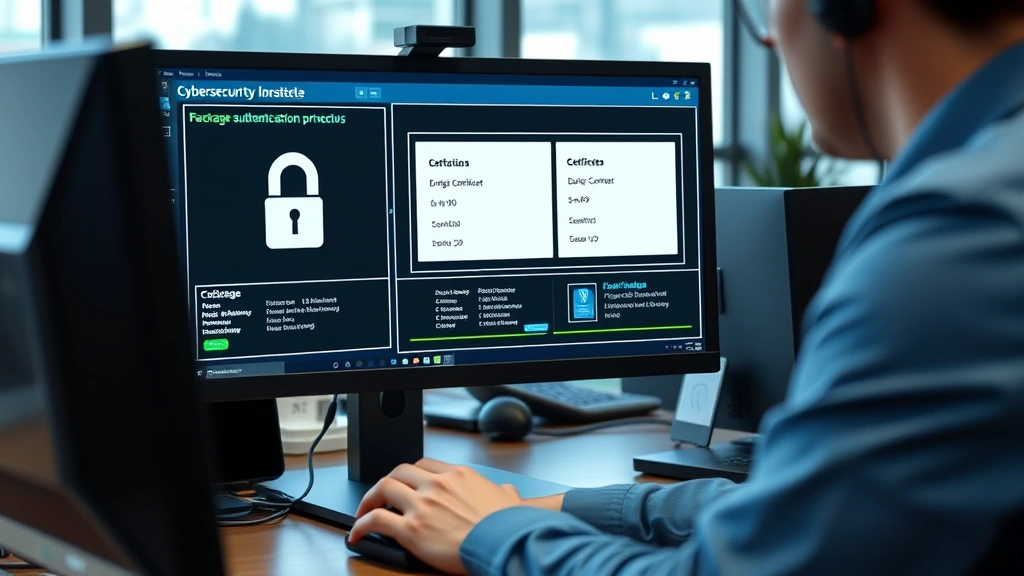
Secure Packages: IT Specialist’s Guide to Access Secure Packages
In today’s digital landscape, securing software packages has become a critical responsibility for IT specialists and development teams worldwide. Whether you’re managing dependencies for enterprise applications or deploying open-source libraries, understanding how to access secure packages protects your organization from supply chain attacks, malware injection, and unauthorized code modifications. The stakes have never been higher—recent high-profile breaches demonstrate that compromised packages can infiltrate thousands of organizations within hours, making package security a fundamental pillar of cybersecurity strategy.
This comprehensive guide equips IT specialists with practical knowledge to implement robust package security measures. From authentication mechanisms to verification protocols, we’ll explore the technical and procedural safeguards that prevent malicious packages from reaching your production environments. By mastering these techniques, you’ll significantly reduce your attack surface and maintain the integrity of your software supply chain.
Understanding Package Security Fundamentals
Package security encompasses the entire lifecycle of software components—from creation and distribution to installation and execution. IT specialists must recognize that packages represent trusted code running with significant privileges on systems. A compromised package can execute arbitrary commands, exfiltrate data, establish persistence mechanisms, or serve as a pivot point for lateral movement within your network.
The threat landscape includes multiple attack vectors: typosquatting attacks where malicious packages use names similar to legitimate libraries, dependency confusion attacks that exploit version resolution mechanisms, and account takeovers of legitimate package maintainers. According to CISA, supply chain compromises have increased substantially, with attackers specifically targeting package repositories as high-impact entry points.
Understanding these threats requires familiarity with common vulnerability databases and threat intelligence sources. The National Vulnerability Database (NVD) maintained by NIST provides comprehensive vulnerability information essential for assessing package security posture. IT specialists should regularly consult these resources when evaluating dependencies and planning security updates.
Package managers themselves—whether npm, pip, Maven, or RubyGems—implement varying security levels. Some repositories enforce stricter verification requirements than others, making your choice of package sources strategically important. Private repositories and mirrored package systems offer additional control layers for organizations requiring heightened security measures.
Authentication and Access Control Mechanisms
Controlling who can upload, modify, or access packages represents the first line of defense against malicious package injection. Multi-factor authentication (MFA) on package repository accounts prevents unauthorized access even when credentials are compromised. IT specialists should mandate MFA for all accounts with package upload or modification privileges, particularly for critical infrastructure libraries.
Role-based access control (RBAC) within repositories allows organizations to implement principle of least privilege. Different team members require different permission levels: developers need read access to dependencies, maintainers require upload capabilities, and security teams need audit and revocation permissions. Granular permission management prevents accidental or intentional misuse of elevated privileges.
API tokens and machine authentication credentials require special attention. These should be rotated regularly, stored securely in secrets management systems, and scoped to minimal required permissions. Never embed credentials in code repositories—use environment variables or dedicated credential management platforms. When configuring CI/CD pipelines to access secure packages, implement token-based authentication rather than storing passwords in configuration files.
Many organizations implement signed commits and signed releases where package maintainers cryptographically sign their uploads. This verification proves the package originated from the claimed maintainer and hasn’t been tampered with during transmission. GPG signatures, code signing certificates, and other cryptographic mechanisms provide technical proof of authenticity.
Access logging and audit trails document all package operations. IT specialists should review these logs regularly for suspicious activity: unusual upload times, uploads from unfamiliar locations, or modifications to critical packages by unexpected accounts. Automated alerts on suspicious access patterns provide early warning of potential compromise.
Cryptographic Verification Methods
Cryptographic verification ensures packages haven’t been modified and originate from legitimate sources. Checksums and cryptographic hashes (SHA-256, SHA-512) provide integrity verification—if even a single byte changes, the hash becomes invalid. When downloading packages, always verify that the downloaded file’s hash matches the published hash from the official repository.
Digital signatures using public key cryptography offer stronger assurance than hashes alone. Package maintainers sign releases with their private key; recipients verify signatures using the public key. This proves authenticity because only the private key holder could generate valid signatures. Many repositories display maintainer public keys, enabling verification without additional infrastructure.
Package managers often support lock files (package-lock.json, Pipfile.lock, pom.xml) that record exact versions and checksums of all dependencies and transitive dependencies. These prevent unexpected package version changes and enable reproducible builds. Lock files should be committed to version control and reviewed carefully during updates—sudden hash changes may indicate compromised packages.
Cryptographic verification in CI/CD pipelines should be automated and enforced. Builds should fail if package verification fails, preventing deployment of unverified code. This requires integrating verification checks into your build process and maintaining current cryptographic keys for all trusted package sources.
Some organizations implement Software Bill of Materials (SBOM) standards using formats like SPDX or CycloneDX. These documents enumerate all components, dependencies, and licenses, providing comprehensive visibility into software composition. SBOMs facilitate vulnerability tracking and enable rapid identification of affected systems when vulnerabilities are discovered.
Repository Security Best Practices
Organizations requiring maximum control over package security often implement private package repositories or mirrors. A private repository acts as a gatekeeper, allowing security teams to vet packages before making them available to developers. This approach adds latency but provides significant security benefits for risk-sensitive environments.
Repository mirroring creates local copies of packages from upstream sources. This approach provides resilience against upstream repository unavailability and enables organizations to implement additional security scanning before packages reach developers. Mirrors should be regularly synchronized with upstream repositories to maintain current package versions.
Vulnerability scanning tools integrated with package repositories automatically identify known vulnerabilities in dependencies. Tools like Snyk, WhiteSource, or Dependabot scan package manifests and alert teams to vulnerable versions. These should be configured to block deployment of packages with critical vulnerabilities or to mandate immediate updates.
Package repository access should be restricted to internal networks or protected by additional authentication layers. Avoid exposing private repositories to the public internet without strong access controls. Use VPN, IP whitelisting, or network segmentation to limit repository access to authorized systems.
Regular security audits of repository infrastructure identify misconfigurations and access control weaknesses. Audit all administrator accounts, review permission assignments, examine backup and disaster recovery procedures, and validate that security controls function as intended. Third-party security assessments provide independent validation of repository security posture.
Implementing Secure Package Management
Developing a comprehensive package management policy establishes organizational standards for secure package access and usage. This policy should specify: approved package repositories, required verification procedures, acceptable package age and maintenance levels, and procedures for dependency updates. All development teams should understand and follow these standards.
Dependency management tools help maintain visibility and control over package usage. Tools that generate and track dependency trees reveal transitive dependencies—packages required by your direct dependencies. Understanding the full dependency graph enables comprehensive vulnerability assessment and helps identify unnecessary dependencies that increase attack surface.
Version pinning and constraint strategies balance security updates with stability. Pinning exact versions provides predictability but may delay security patches. Allowing minor version updates (e.g., 2.5.x) provides patches while avoiding breaking changes. Organizations should implement policies defining acceptable version flexibility for different package types.
Automated dependency update tools like Renovate or Dependabot streamline the update process. These tools automatically create pull requests when updates are available, enabling teams to evaluate changes and run tests before merging. This automation ensures updates don’t languish indefinitely, reducing the window of exposure to known vulnerabilities.
When accessing secure packages, document all dependencies and their sources. Maintain software inventory including package names, versions, sources, and update dates. This inventory enables rapid response when vulnerabilities are discovered—you immediately know which systems are affected and can prioritize remediation efforts.
Establish a process for evaluating new packages before adoption. Assess package maturity (development activity, community size, maintenance frequency), security track record (history of vulnerabilities), and licensing compliance. Avoid adopting packages in early development stages or with minimal community adoption unless they provide unique functionality unavailable elsewhere.
Monitoring and Incident Response
Continuous monitoring of package repositories and dependencies provides early warning of security incidents. Monitor for: unexpected package updates, changes to package maintainers or ownership, unusual download patterns, or packages flagged by security vendors. Automated monitoring systems should alert security teams to anomalies requiring investigation.
Establish incident response procedures for compromised packages. Define who should be notified, what information should be gathered, and how affected systems should be remediated. Practice these procedures through security exercises to ensure teams understand their roles and can respond effectively under pressure.
When a package is discovered to be compromised, rapid response is essential. Determine which systems have the affected version installed, assess whether malicious code has executed, and begin remediation. Remove affected versions from repositories if you control them, notify users of the compromise, and provide guidance on remediation steps.
Post-incident analysis should examine how the compromise occurred and what controls failed. Use these findings to strengthen package security: improve verification procedures, enhance monitoring capabilities, or tighten access controls. Communicate lessons learned to development teams to increase security awareness.
Maintain relationships with package maintainers and repository administrators. In security emergencies, direct communication enables rapid coordination. Consider joining security mailing lists for critical dependencies to receive advance notice of security issues before public disclosure.
Review the OWASP Cheat Sheet Series for additional guidance on supply chain security and package management best practices. These resources provide detailed technical recommendations complementing organizational policies.
Integration with threat intelligence feeds enables proactive identification of emerging threats targeting package repositories. Security vendors provide intelligence on typosquatting campaigns, dependency confusion attacks, and new malware families. Incorporating this intelligence into your security operations helps anticipate and prevent attacks.
FAQ
What is the most critical control for secure package access?
Multi-factor authentication on repository accounts combined with cryptographic verification of downloaded packages provides the strongest foundational control. These two measures prevent unauthorized uploads and ensure downloaded packages haven’t been tampered with.
How often should organizations audit package repositories?
Security audits should occur at least quarterly, with immediate audits following any security incidents. Organizations handling sensitive data or providing critical infrastructure should audit repositories monthly or implement continuous monitoring systems.
Can small organizations implement private package repositories?
Yes, though the complexity and cost vary. Cloud-based solutions like Artifactory Cloud or Azure Artifacts provide managed private repositories without requiring dedicated infrastructure. These offer security benefits of private repositories with reduced operational overhead.
What’s the difference between package signing and checksums?
Checksums verify file integrity but don’t prove authenticity—anyone can compute a checksum. Package signing uses cryptographic keys to prove the package originated from the claimed maintainer and hasn’t been modified. Signing provides stronger assurance of legitimacy.
How should organizations handle vulnerable transitive dependencies?
Generate dependency trees to identify transitive dependencies, use vulnerability scanners to detect vulnerable versions, and update packages when patches are available. If the direct dependency doesn’t update its own dependencies, consider switching packages or requesting upstream updates.
What role does the Linux Foundation play in package security?
The Linux Foundation maintains the Cloud Native Computing Foundation and provides security guidance for open-source projects. Many critical packages undergo security reviews through Foundation programs, enhancing overall ecosystem security.


