
Cybersecurity for Fire Systems: ABCO’s Expert Guide to Protecting Critical Infrastructure
Fire protection systems represent one of the most critical infrastructure components in modern buildings, yet they remain surprisingly vulnerable to cyber threats. As organizations increasingly digitize their fire detection, suppression, and alarm systems, the intersection of physical safety and cybersecurity has become a paramount concern. ABCO Fire Protection, a leader in integrated fire safety solutions, recognizes that protecting these systems from digital threats is just as important as maintaining their physical integrity.
The convergence of operational technology (OT) and information technology (IT) in fire systems creates unique security challenges. Legacy fire protection equipment, often designed without cybersecurity considerations, now communicates with modern networks, cloud platforms, and mobile applications. This digital transformation, while improving response times and system monitoring, introduces attack vectors that malicious actors actively exploit. Understanding these vulnerabilities and implementing comprehensive cybersecurity measures is essential for facility managers, security professionals, and fire protection specialists.
Why Fire Systems Are Critical Cybersecurity Targets
Fire protection systems protect lives and property—making them high-value targets for cybercriminals, hacktivists, and state-sponsored actors. Unlike IT systems where a breach might compromise data, a compromised fire system could disable critical safety mechanisms when buildings need them most. This high-impact potential makes fire systems attractive to threat actors seeking to cause maximum disruption or harm.
The financial stakes are enormous. A disabled fire suppression system in a data center could result in catastrophic losses. A malfunctioning alarm system in a hospital could endanger patients. The Cybersecurity and Infrastructure Security Agency (CISA) has documented multiple incidents where fire systems were targeted in ransomware attacks, highlighting the real-world severity of these threats.
Beyond external attackers, insider threats pose significant risks. Employees with system access, disgruntled contractors, or compromised credentials can introduce malware, disable sensors, or manipulate alarm thresholds. The interconnected nature of modern fire systems means that compromising one component can cascade through the entire infrastructure.
Fire systems also lack the security maturity of traditional IT infrastructure. Many facilities operate with outdated equipment running obsolete firmware, no encryption, and minimal authentication mechanisms. This security debt creates exploitable gaps that determined attackers can leverage.
Understanding Fire System Architecture and Vulnerabilities
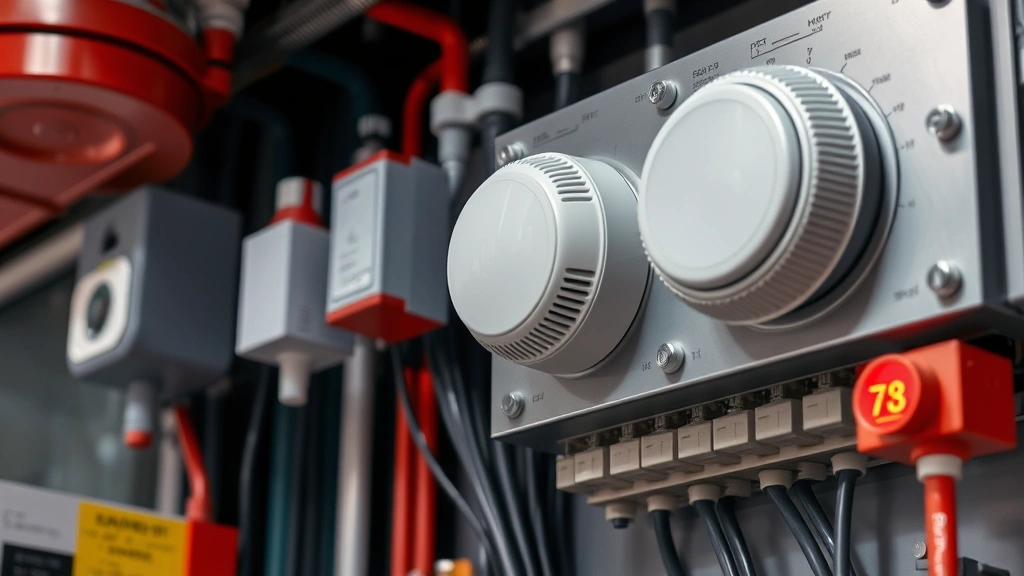
Modern fire protection systems integrate multiple components: detection devices (smoke detectors, heat sensors), control panels, notification systems, suppression mechanisms, and monitoring stations. Each component represents a potential entry point for cyber attacks.
Detection Layer Vulnerabilities: Wireless fire detectors, increasingly common for ease of installation, transmit signals that can be jammed, spoofed, or intercepted. Attackers can trigger false alarms, suppress legitimate alerts, or disable sensors entirely. IoT-based sensors often lack robust authentication, allowing unauthorized devices to join the network.
Control Panel Weaknesses: Fire control panels frequently operate with default credentials, outdated operating systems, and no encryption. Many panels were designed for isolated networks and lack basic security controls like password requirements or audit logging. Remote management interfaces, added for convenience, often bypass traditional security protocols.
Communication Infrastructure Risks: Fire systems communicate across networks—sometimes shared with general IT infrastructure, sometimes dedicated but poorly isolated. Unencrypted communications allow man-in-the-middle attacks. Insecure APIs connecting to cloud monitoring platforms create additional attack surfaces.
Suppression System Exploitation: Automated suppression systems controlled by networked panels can be manipulated to activate inappropriately or fail to activate when needed. Chemical suppression systems, in particular, pose safety risks if their discharge mechanisms are triggered by attackers.
ABCO Fire Protection addresses these architectural vulnerabilities through comprehensive security assessment and modernization strategies that maintain system functionality while dramatically improving resilience.
Common Cyber Threats to Fire Protection Infrastructure
Ransomware Attacks: Ransomware represents the most prevalent threat to fire systems. Attackers encrypt critical system files, disabling fire protection capabilities and threatening facility safety. They then demand payment for decryption keys. Organizations face impossible choices: pay criminals or operate without fire protection.
Denial of Service (DoS) Attacks: DDoS attacks can overwhelm fire monitoring centers, preventing legitimate alarm signals from reaching emergency responders. Localized DoS attacks can disable wireless fire detection networks or prevent cloud-based monitoring platforms from receiving sensor data.
Malware and Firmware Compromise: Attackers inject malware into fire system components, creating persistent backdoors for future access. Compromised firmware can disable sensors, manipulate alert thresholds, or prevent proper system operation.
Supply Chain Attacks: Vulnerabilities in third-party software, hardware, or services used by fire systems provide indirect attack vectors. A compromised component from a vendor can introduce vulnerabilities across entire system deployments.
Credential-Based Intrusions: Weak or default credentials allow unauthorized access to fire system interfaces. Compromised employee accounts provide legitimate-looking access that bypasses many security controls. Credential stuffing attacks test credentials stolen from other breaches.
Physical Attacks Combined with Cyber Tactics: Sophisticated attackers combine physical tampering with cyber manipulation—disabling sensors physically while using malware to prevent alerts from reaching monitoring centers.
Understanding these threat vectors is essential for developing effective defensive strategies. ABCO’s approach integrates awareness of these specific threats into every security recommendation.
ABCO’s Comprehensive Security Framework
ABCO Fire Protection has developed a layered security framework specifically designed for fire protection systems. This approach recognizes that fire systems have unique requirements—they must remain operational under any circumstances, cannot fail to alarming states, and must respond predictably in emergencies.
Security Assessment and Baseline Establishment: ABCO begins by thoroughly assessing existing fire system infrastructure, identifying vulnerabilities, documenting current configurations, and establishing security baselines. This assessment includes physical inspections, network analysis, and testing of system responses to simulated attacks.
Secure System Design: For new installations or major upgrades, ABCO implements security from the ground up. This includes selecting components with strong security track records, designing isolated network segments for fire systems, implementing encryption for all communications, and establishing robust authentication mechanisms.
Legacy System Hardening: Recognizing that many facilities operate older fire systems, ABCO specializes in hardening legacy equipment without compromising functionality. This includes firmware updates, network isolation improvements, enhanced monitoring capabilities, and compensating controls where direct system modifications aren’t feasible.
Integration with IT Security: ABCO coordinates fire system security with broader organizational IT security programs. This ensures that fire systems benefit from enterprise-wide security investments while maintaining appropriate isolation from general IT infrastructure.
The framework aligns with NIST SP 800-82 guidelines for industrial control system security, adapting them specifically for fire protection contexts.
Network Segmentation and Access Control
Network segmentation represents one of the most effective defenses for fire system security. By isolating fire systems from general IT networks, organizations dramatically reduce attack surface and limit potential lateral movement by attackers.
DMZ Implementation for Fire Systems: ABCO designs demilitarized zones (DMZs) specifically for fire protection equipment. Fire sensors, control panels, and local alarm devices operate on isolated network segments. Only carefully controlled communication pathways connect fire systems to monitoring centers, cloud platforms, or building management systems.
Zero-Trust Architecture: Rather than trusting devices simply because they’re on the same network, ABCO implements zero-trust principles where every communication, every device, and every user requires authentication and authorization. This prevents compromised devices from freely accessing other systems.
Access Control Lists and Firewall Rules: Detailed firewall rules restrict communication to only necessary protocols and ports. Outbound communication from fire systems is limited to authorized monitoring centers. Inbound access is restricted to authenticated administrators using VPN or secure remote access solutions.
Wireless Network Security: For wireless fire detection systems, ABCO implements strong encryption (WPA3 where possible), robust key management, and intrusion detection to identify rogue access points or jamming attempts. Wireless networks are segregated from general building WiFi.
Vendor Access Management: Remote access by fire system vendors for maintenance or monitoring is strictly controlled through secure remote access platforms, requiring multi-factor authentication and detailed audit logging. Access is time-limited and monitored in real-time.
Proper network segmentation ensures that even if attackers penetrate general IT infrastructure, they cannot easily reach critical fire systems. This principle of defense in depth provides multiple layers of protection.
Monitoring, Detection, and Incident Response
Continuous monitoring enables early detection of suspicious activities before they cause damage. ABCO implements comprehensive monitoring specifically designed for fire system environments.
Security Information and Event Management (SIEM): Fire system events—sensor activations, system configuration changes, authentication attempts, and communications—are logged to centralized SIEM systems. Automated rules detect anomalies: unexpected configuration changes, authentication failures, unusual communication patterns, or sensor data inconsistencies.
Behavioral Analysis: Rather than relying solely on signature-based detection, ABCO implements behavioral analysis that learns normal fire system operation patterns and alerts on deviations. This catches novel attacks that wouldn’t match known signatures.
Network Traffic Analysis: Deep packet inspection tools monitor fire system network traffic for suspicious patterns, unauthorized protocols, or exfiltration attempts. Encrypted traffic analysis identifies suspicious communication patterns even when content is encrypted.
Integrity Monitoring: File integrity monitoring tools detect unauthorized changes to fire system software, configuration files, or firmware. Any modification to critical files triggers immediate alerts.
Incident Response Planning: ABCO develops detailed incident response plans specifically for fire system cyber incidents. These plans address scenarios like ransomware infections, sensor failures, communication disruptions, and control system compromise. Plans include isolation procedures that don’t disable fire protection, escalation procedures, and coordination with emergency responders.
Incident response drills help organizations practice responding to cyber incidents affecting fire systems, ensuring they can execute response procedures quickly and effectively during actual incidents.

Compliance Standards and Regulatory Requirements
Multiple regulatory frameworks address fire system cybersecurity. Organizations must understand applicable requirements for their industry and jurisdiction.
NFPA 72 Updates: The National Fire Protection Association (NFPA) has incorporated cybersecurity requirements into NFPA 72 (National Fire Alarm and Signaling Code). These standards require fire alarm systems to include security measures, encrypted communications, and documented security procedures.
IEC 62443 Industrial Automation Security: This international standard for industrial control system security applies to fire systems, requiring security levels based on risk assessment. ABCO designs systems compliant with appropriate IEC 62443 security levels.
Sector-Specific Regulations: Healthcare facilities must comply with HIPAA’s security requirements, which extend to fire systems as part of facility infrastructure. Financial institutions face requirements under GLBA. Critical infrastructure operators must comply with CISA requirements and executive orders addressing industrial control system security.
Building and Fire Codes: Local and state building codes increasingly include cybersecurity requirements for fire protection systems. ABCO ensures systems meet all applicable code requirements while maintaining compliance with evolving standards.
Insurance and Liability Considerations: Insurance carriers increasingly require cybersecurity measures for fire systems as condition of coverage. Organizations lacking adequate security measures may face coverage denial or premium increases. ABCO’s recommendations help organizations maintain insurance compliance.
Compliance is not a one-time achievement but an ongoing process. ABCO helps organizations establish compliance management programs that maintain security posture as standards evolve and threats change.
FAQ
What makes fire systems attractive targets for cyberattacks?
Fire systems are high-value targets because compromising them directly endangers lives and property. Unlike IT systems where breaches compromise data, fire system attacks can disable critical safety mechanisms. This high-impact potential makes them attractive to ransomware operators, hacktivists, and actors seeking to cause maximum disruption.
Can ABCO secure older fire systems without replacing them?
Yes. ABCO specializes in hardening legacy fire systems through network isolation, enhanced monitoring, compensating controls, and firmware updates where available. Complete replacement isn’t always necessary—strategic improvements can dramatically enhance security while preserving existing investments.
How does fire system cybersecurity differ from general IT security?
Fire systems have unique requirements: they must never fail to alarming states, must operate during network outages, cannot tolerate extended downtime for updates, and have different threat models than IT systems. ABCO’s approach accounts for these differences, implementing security measures designed specifically for fire protection contexts.
What should organizations do if their fire system is compromised?
Immediate steps include isolating affected systems from networks while maintaining fire protection capability, documenting all indicators of compromise, notifying relevant authorities and insurance carriers, engaging forensic investigators, and implementing incident response procedures. ABCO can assist with all these steps and help organizations recover secure systems.
How often should fire system security be reassessed?
ABCO recommends annual security assessments, with additional assessments following major system changes, new threat intelligence indicating vulnerabilities in your system components, or significant organizational changes. Continuous monitoring supplements periodic assessments, identifying emerging issues between formal reviews.
What is the cost of fire system cybersecurity implementation?
Costs vary dramatically based on system complexity, age, and existing security maturity. ABCO provides detailed cost-benefit analyses showing that security investments typically cost far less than potential losses from fire system compromise. Many security measures provide additional benefits like improved system visibility and maintenance efficiency.


