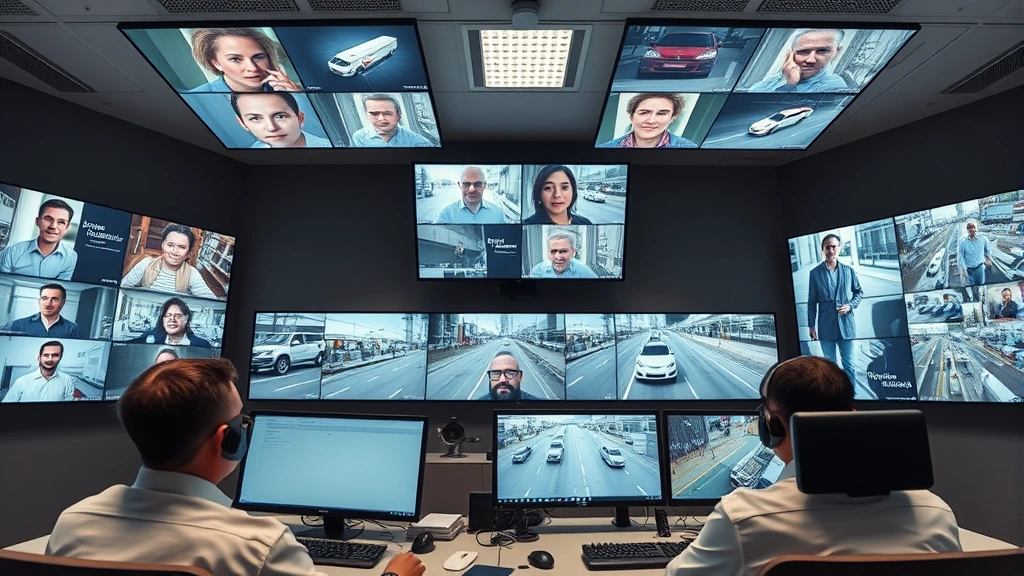
4K Security Cameras: Are They Worth It? Expert Insights on Modern Surveillance Technology
The security camera market has undergone a dramatic transformation over the past decade. What once meant grainy footage and limited visibility has evolved into crystal-clear 4K resolution systems that capture every detail with stunning clarity. But as with any technology investment, the question remains: are 4K security cameras truly worth the premium price tag, or is standard HD surveillance sufficient for most homeowners and businesses?
This comprehensive guide explores the technical advantages, practical applications, cost considerations, and real-world performance of 4K security cameras. Whether you’re protecting your home, retail space, or enterprise facility, understanding the nuances between resolution standards helps you make an informed decision that aligns with your security needs and budget constraints.
Understanding 4K Resolution in Security Cameras
Before evaluating whether 4K security cameras merit your investment, it’s essential to understand what 4K resolution actually means and how it compares to standard definitions. A 4K security camera captures video at 3840 × 2160 pixels, delivering approximately four times the pixel count of 1080p Full HD cameras. This dramatic increase in resolution translates to substantially more visual information being recorded in every frame.
The term “4K” originated in cinema but has become increasingly common in surveillance technology. Professional security systems now frequently feature NIST-compliant standards for video surveillance that include 4K specifications. The pixel density improvement means that when you zoom into footage, you retain far more usable detail compared to lower-resolution systems.
Modern 4K security cameras typically operate at frame rates between 24 and 60 frames per second, depending on the model and intended application. Higher frame rates prove particularly valuable when monitoring areas with significant movement or activity, such as retail environments or high-traffic commercial spaces. The combination of resolution and frame rate creates comprehensive visual records that serve both deterrent and investigative purposes.
Image Quality and Detail Capture Advantages
The primary benefit of 4K security cameras lies in their exceptional image quality and detail preservation. When an incident occurs, the difference between identifying a suspect’s facial features clearly versus struggling to make out basic characteristics can prove decisive. Law enforcement agencies consistently report that higher-resolution footage significantly improves their ability to identify perpetrators and gather actionable intelligence.
Facial recognition capabilities represent one of the most compelling advantages of 4K technology. Security professionals working with 4K footage can identify individuals with greater accuracy from greater distances. A person 30 feet away from the camera appears with sufficient detail for reliable identification, whereas the same person in 1080p footage might appear as an indistinct blur.
License plate capture demonstrates another practical advantage. 4K cameras can reliably capture and read vehicle license plates from distances where 1080p systems produce illegible results. This proves invaluable for parking lot surveillance, perimeter monitoring, and traffic management applications. The additional pixels allow for clear recognition of characters and plate numbers without requiring specialized license plate recognition software.
Wide-angle coverage combined with 4K resolution creates opportunities for comprehensive monitoring. A single 4K camera can effectively cover areas that previously required multiple lower-resolution cameras, providing consistent coverage without blind spots. This efficiency particularly benefits large open spaces, warehouses, and outdoor perimeters where deploying numerous cameras would prove impractical or cost-prohibitive.
Storage and Bandwidth Requirements
The substantial resolution advantages of 4K security cameras come with significant technical trade-offs, particularly regarding storage capacity and network bandwidth. A single 4K camera recording continuously can consume between 50 to 150 gigabytes of storage daily, depending on compression settings, frame rate, and video codec efficiency.
This storage demand creates several important considerations for implementation. A modest security system with just four 4K cameras recording continuously could generate 200 to 600 gigabytes of data daily. Over a month, this translates to 6 to 18 terabytes of storage requirement. Many small businesses and homeowners find these numbers daunting, necessitating investment in robust Network-Attached Storage (NAS) systems or cloud storage solutions.
Bandwidth consumption presents another critical factor. Transmitting 4K video feeds across networks requires substantially higher bandwidth than HD systems. A single 4K camera stream might consume 10-20 Mbps, whereas comparable 1080p cameras typically require 2-5 Mbps. For businesses or residences with limited internet connectivity, this difference can prove prohibitive. CISA provides guidance on operational technology security that addresses bandwidth planning for surveillance systems.
However, modern video compression technologies substantially mitigate these concerns. H.265 (HEVC) codec compression can reduce 4K file sizes by 50% compared to H.264 encoding without perceptible quality loss. Many contemporary 4K security cameras employ intelligent compression algorithms that reduce data consumption during periods of minimal activity, further optimizing storage requirements.
Cost Analysis: Initial Investment vs. Long-Term Value
The financial investment required for 4K security cameras represents a significant consideration in the purchasing decision. A quality 4K security camera typically costs $300 to $800 per unit, compared to $100 to $300 for equivalent 1080p cameras. For a four-camera system, this difference amounts to $800 to $2000 in additional camera costs alone.
Beyond camera hardware, the supporting infrastructure requires investment. Network switches capable of handling 4K streams, storage systems with sufficient capacity, and potentially enhanced internet connectivity all add to the total cost of ownership. A complete 4K security system installation might cost $3000 to $8000, whereas comparable 1080p systems typically range from $1500 to $4000.
Despite higher initial costs, 4K systems offer compelling long-term value propositions. The improved detail capture often reduces investigation time and increases prosecution success rates, generating tangible ROI through reduced losses and improved recovery rates. Businesses implementing 4K surveillance frequently report decreased theft and vandalism incidents, with the improved deterrent effect partially offsetting technology costs.
Insurance considerations provide another financial angle. Some insurers offer premium discounts for businesses implementing advanced security measures, including 4K surveillance. These discounts can substantially reduce the effective cost of the system over time. Additionally, the superior evidence quality from 4K cameras strengthens insurance claims documentation, improving claim approval rates and settlement amounts.
Practical Applications Where 4K Excels
Certain security applications derive substantially greater benefit from 4K resolution than others. Understanding these optimal use cases helps determine whether 4K investment makes sense for your specific situation. Retail environments represent an ideal application, where 4K cameras excel at capturing facial features for customer recognition and loss prevention. The National Institute of Standards and Technology recognizes facial recognition accuracy improvements with higher-resolution surveillance footage.
Banking and financial institutions rely heavily on 4K surveillance for regulatory compliance and fraud prevention. The detailed facial capture and transaction documentation requirements make 4K systems nearly essential in these environments. Casino surveillance similarly demands 4K resolution to detect fraudulent activities and provide irrefutable evidence for regulatory authorities.
Parking facilities and vehicle-intensive environments benefit tremendously from 4K’s license plate recognition capabilities. Parking garage surveillance, dealership monitoring, and fleet management all leverage 4K detail to track vehicles and identify unauthorized access or theft.
Large outdoor perimeters, warehouses, and industrial facilities with expansive areas to monitor often justify 4K investment because a single 4K camera effectively replaces multiple lower-resolution cameras. This consolidation reduces installation complexity and maintenance overhead while improving coverage consistency.
Conversely, 4K cameras may represent overkill for certain applications. Narrow hallways, small residential properties, and low-traffic areas often function adequately with 1080p systems. Understanding your specific security priorities prevents wasteful spending on unnecessary resolution where 1080p performs equally well.
Comparison with HD and 2K Alternatives
The security camera market offers multiple resolution options between standard 1080p and full 4K. Understanding how these intermediate options compare helps identify the optimal balance for your requirements. Standard 1080p Full HD remains the most economical choice, providing adequate detail for basic surveillance in many scenarios. However, 1080p systems struggle with facial recognition at distance and provide limited detail for investigative purposes.
2K resolution (2560 × 1440 pixels) represents a middle ground, offering approximately 2.25 times the pixels of 1080p while consuming significantly less storage and bandwidth than 4K. Many security professionals view 2K as the practical sweet spot, delivering substantial quality improvements over 1080p without the storage and infrastructure demands of full 4K. For budget-conscious implementations, 2K cameras often provide superior value compared to either 1080p or 4K extremes.
4K surpasses 2K in every measurable way, but the incremental improvements may not justify the additional costs in all scenarios. The jump from 1080p to 2K produces noticeable quality enhancements, whereas the progression from 2K to 4K yields more subtle improvements that primarily matter in specialized applications like facial recognition or license plate capture.
When evaluating alternatives, consider your specific use case carefully. Retail environments typically benefit more from 4K than warehouse monitoring. High-value asset protection justifies 4K investment more than general premises monitoring. Your threat assessment should drive resolution decisions rather than defaulting to the highest available option.

Technical Considerations for Installation
Implementing a 4K security system requires careful technical planning beyond simply purchasing cameras and recording equipment. Network infrastructure represents the foundation for successful 4K deployment. Your network must support the bandwidth demands of multiple simultaneous 4K streams without degradation. Cisco’s enterprise security design guidance addresses network architecture for surveillance systems.
Quality network switches rated for gigabit or higher throughput prove essential. Budget network equipment often becomes the bottleneck limiting 4K system performance. Power-over-Ethernet (PoE) switches rated for high power output ensure adequate power delivery to cameras while maintaining data transmission quality. Many 4K cameras consume 15-20 watts, compared to 5-10 watts for 1080p models, requiring more robust power infrastructure.
Storage solutions demand careful consideration. Network-Attached Storage (NAS) systems designed for surveillance provide better performance than general-purpose storage. Look for NAS units with RAID configuration for data redundancy, as losing weeks of surveillance footage to drive failure creates significant security gaps. Cloud storage options offer convenient backup but introduce ongoing subscription costs and potential bandwidth limitations.
Lighting conditions substantially impact 4K camera performance. While 4K cameras capture impressive detail in ideal lighting, poor illumination negates resolution advantages. Ensure adequate lighting at camera locations, or select cameras with enhanced low-light performance and infrared capabilities. This often overlooked consideration frequently determines whether 4K systems deliver their promised benefits.
Professional installation becomes increasingly valuable for 4K systems. The technical complexity of configuring network settings, optimizing camera placement, and integrating storage systems typically exceeds DIY capabilities. Experienced installers understand the nuances of 4K deployment and avoid common pitfalls that compromise system performance.
Future-Proofing Your Security Infrastructure
Technology evolution represents an important consideration when evaluating security camera investments. 4K resolution currently represents the practical ceiling for security surveillance, though 8K technology exists in experimental stages. Investing in 4K cameras provides substantial future-proofing compared to 1080p systems, which may become obsolete as resolution expectations increase industry-wide.
Software advancement continues improving 4K camera capabilities through firmware updates. Features like advanced motion detection, object recognition, and behavioral analytics increasingly rely on high-resolution video input. Cameras with superior resolution provide better raw material for these intelligent features to process, yielding more accurate alerts and reduced false positives.
Compatibility with emerging security standards and protocols matters for long-term viability. Ensure selected 4K cameras support current cybersecurity standards and receive regular security updates. CISA’s Cybersecurity Framework provides guidelines applicable to security camera systems and network infrastructure.
The integration potential of 4K systems with broader security ecosystems—access control, alarm systems, and analytics platforms—determines long-term utility. Cameras with robust API support and integration capabilities adapt to future system expansions without requiring complete replacement. This flexibility justifies higher initial investment by extending useful system lifespan.
Consider your organization’s growth trajectory when planning 4K implementation. Systems designed with scalability in mind accommodate future camera additions and capability expansions without fundamental redesign. Modular approaches prove far more cost-effective than piecemeal upgrades.
FAQ
How much storage do 4K security cameras require?
A single 4K camera recording continuously generates 50-150 GB daily depending on compression settings and frame rate. A four-camera system could require 6-18 TB monthly. Modern H.265 compression significantly reduces these requirements compared to older H.264 encoding.
Can 4K cameras work over standard internet connections?
4K streaming typically requires 10-20 Mbps bandwidth per camera. Standard residential internet often supports one or two 4K streams, but multiple simultaneous streams may cause buffering. Business-grade internet connections handle multiple 4K feeds reliably.
What’s the actual difference between 4K and 2K security cameras?
4K provides approximately 1.78 times more pixels than 2K. While measurable quality differences exist, the practical improvements depend on application. Facial recognition and license plate capture benefit more from 4K than general surveillance.
Do 4K cameras require special installation?
4K cameras need robust network infrastructure, adequate power delivery, and proper placement for optimal performance. Professional installation helps ensure proper configuration and avoids common implementation mistakes.
Are 4K security cameras worth it for residential use?
For most homes, 1080p or 2K cameras provide adequate security. 4K makes sense for high-value residences, those in high-crime areas, or homes with specific security concerns requiring facial recognition or detailed evidence capture.
How do 4K cameras perform in low light?
4K cameras vary significantly in low-light performance. Models with larger sensors, wider apertures, and infrared capabilities handle darkness better. Check specifications and reviews for low-light scenarios relevant to your installation locations.


