Top Drop-Proof Phone Cases: Expert Recommendations
Your smartphone is one of your most valuable possessions, containing sensitive personal data, financial information, and irreplaceable memories. Yet millions of people drop their phones daily, risking catastrophic damage to both the device and the data it holds. A quality drop-proof phone case isn’t just about protecting your investment—it’s about safeguarding your digital security. When your phone hits the ground unprotected, the impact can crack screens, damage internal components, and potentially compromise the security features that protect your personal information.
Choosing the best cell phone case for drop protection requires understanding the science of impact absorption, material durability, and real-world testing standards. This comprehensive guide examines the top drop-proof cases available today, analyzing their protective capabilities, design features, and suitability for different user needs. Whether you’re a construction worker facing daily hazards, a parent managing a child’s device, or simply someone who values comprehensive protection, you’ll find evidence-based recommendations grounded in expert testing and consumer feedback.
Understanding Drop Protection Standards
Drop protection isn’t measured by marketing claims alone—legitimate manufacturers subject their cases to rigorous testing protocols. The most widely recognized standard is MIL-STD-810G, a military specification that simulates extreme conditions including repeated drops from various heights onto concrete surfaces. Cases certified to this standard have survived drops from 6 feet onto concrete, which represents one of the most demanding real-world scenarios your phone might encounter.
When evaluating drop-proof protection, manufacturers typically report their cases’ ability to withstand falls from specific heights. A case rated for 6-foot drops provides substantially more protection than one rated for 3 feet. However, the testing surface matters enormously—dropping onto carpet differs dramatically from dropping onto concrete. Most legitimate manufacturers test on concrete, the worst-case scenario for your device.
Impact absorption depends on several factors working in concert. The case must dissipate kinetic energy across a broader area, preventing concentrated force from reaching vulnerable phone components. Shock-absorbing materials like thermoplastic polyurethane (TPU) and specialized foams compress upon impact, converting the sudden stopping force into deformation that protects internal electronics. Corner protection proves especially critical, as phones typically land on edges where damage is most likely to occur.
Beyond drop protection, consider whether the case offers comprehensive defense against other damage vectors. Scratches, dust, and moisture can compromise your phone’s integrity over time. The best drop-proof cases integrate multiple protective layers, creating a comprehensive defense system rather than focusing solely on impact resistance. This ScreenVibe Daily Blog emphasizes how comprehensive device protection extends your phone’s usable lifespan.
Top Drop-Proof Cases Reviewed
OtterBox Defender Series represents the gold standard for comprehensive drop protection. These cases combine a hard outer shell with internal shock-absorbing foam, creating a two-stage protection system. The Defender series withstands drops from 10 feet onto concrete, among the highest ratings available. The integrated screen protector adds another protective layer, though it may slightly reduce touch sensitivity. OtterBox’s proven track record across millions of units makes this a trusted choice for professionals requiring maximum protection.
Spigen Tough Armor offers an excellent balance between protection and usability. Featuring dual-layer construction with air cushion technology at corners and edges, this case protects against 6-foot drops while maintaining a slim profile. The raised bezels protect your screen and camera from direct contact with surfaces. Spigen cases receive consistently high ratings from independent testers and offer exceptional value, making them ideal for everyday users who want serious protection without bulk.
Lifeproof Fré Series combines drop protection with waterproofing and dustproofing, creating a sealed protective environment. These cases survive 6-foot drops while maintaining full water resistance—valuable if you use your phone near pools, beaches, or during outdoor activities. The sealed design means no dust or moisture can compromise internal components, providing protection against multiple damage vectors simultaneously.
Rhinoshield SolidSuit delivers military-grade protection (MIL-STD-810G certified) in a relatively slim design. Drop-tested from 11 feet onto concrete, this case absorbs impact energy through dual-layer construction while maintaining reasonable bulk. The reinforced corners and edges concentrate protection where phones most commonly fail, and the textured back prevents accidental drops from slippery fingers.
Mous Limitless Series uses aerospace-grade materials and patented impact protection technology. These premium cases combine carbon fiber, TPU, and specialized foam to protect against 14-foot drops. While significantly more expensive than budget options, the Mous design aesthetic appeals to users who refuse to sacrifice style for protection. Independent drop testing confirms the manufacturer’s claims, validating the premium price point.
Material Science Behind Protection
Understanding the materials in your drop-proof case helps you make informed decisions about protection quality. Thermoplastic polyurethane (TPU) serves as the foundation for most shock-absorbing cases. This flexible polymer compresses upon impact, converting kinetic energy into deformation rather than allowing force to reach your phone. Quality TPU maintains flexibility across temperature ranges and resists yellowing over time, whereas cheaper TPU degrades and becomes brittle.
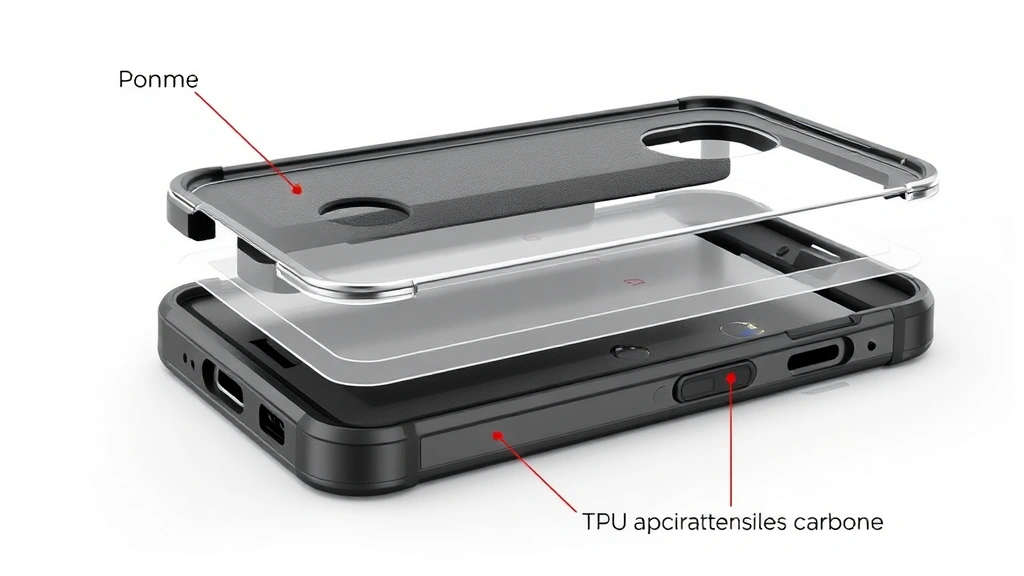
Hard polycarbonate shells provide the outer armor layer in multi-layer designs. Polycarbonate’s rigidity prevents the case from deforming in ways that could damage your phone, while the inner TPU layer absorbs shock. The combination creates a system where the hard shell maintains structural integrity while the soft layer dissipates energy. Cases using only TPU or only polycarbonate sacrifice some protective capability compared to dual-layer designs.
Specialized foam materials like expanded polypropylene (EPP) and ethylene-vinyl acetate (EVA) offer superior shock absorption compared to standard padding. These materials feature closed-cell structures that compress uniformly, preventing localized stress points. Premium cases invest in thicker, denser foam layers, which correlates directly with better drop protection. Thinner foam provides minimal benefit over no cushioning at all.
Corner guards and edge reinforcement represent critical design elements that manufacturers often highlight. Phones typically land on corners or edges, concentrating impact force on small areas. Cases with reinforced corners distribute this force across larger regions, reducing peak stress on vulnerable components. Air cushion technology—tiny air pockets strategically placed at impact points—provides additional shock absorption without adding significant bulk.
The relationship between case thickness and protection follows a non-linear curve. Adding material improves protection up to a point, but extremely thick cases introduce other problems like reduced accessibility and increased bulk. The most effective designs optimize material placement, concentrating protection where it matters most rather than uniformly padding the entire case. This strategic approach explains why some thinner cases outperform thicker competitors in drop testing.
Real-World Testing Methods
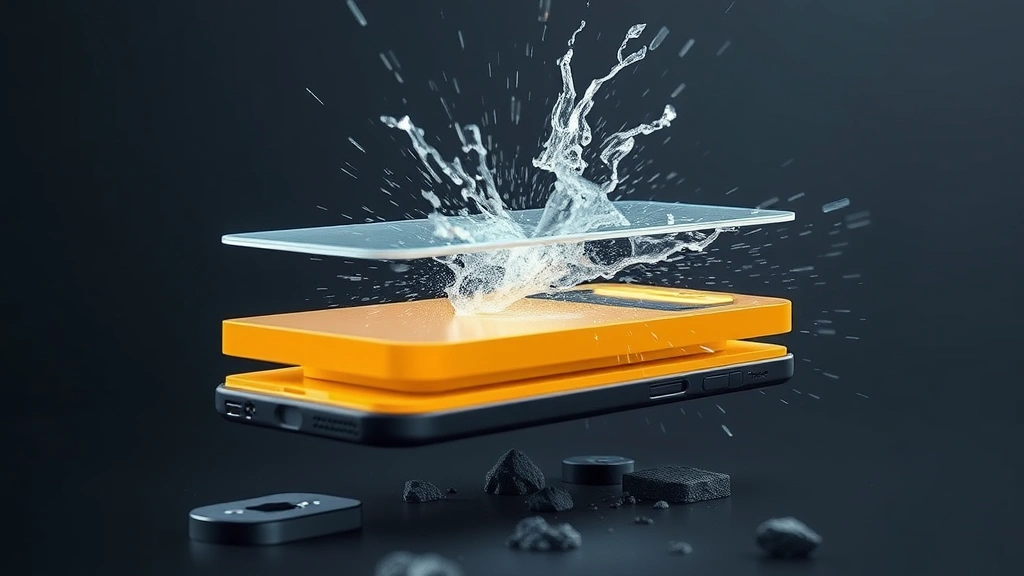
Legitimate manufacturers employ standardized testing protocols to validate their drop protection claims. MIL-STD-810G Method 516.8 represents the most rigorous standard, involving repeated drops from increasing heights onto concrete surfaces. Cases must survive multiple drops from 6 feet without allowing damage to internal components. Independent laboratories verify these claims, and reputable manufacturers publish detailed test results.
Third-party testing organizations like NIST and independent tech reviewers conduct their own drop tests using standardized equipment and procedures. These tests provide unbiased assessments that help consumers distinguish between marketing claims and actual performance. Consumer reports and YouTube channels dedicated to drop testing provide valuable visual evidence of case performance under extreme conditions.
Real-world drop patterns differ from laboratory conditions in important ways. Most people don’t drop phones from exactly 6 feet onto concrete—drops vary in height, angle, and surface. A case rated for 6-foot drops on concrete provides reasonable protection for typical household drops, but might fail if dropped from a second-story window or from the roof of a vehicle. Understanding the difference between test conditions and your specific environment helps set realistic expectations.
The testing surface significantly impacts results. Concrete provides the worst-case scenario, transferring maximum force to the case. Drops onto carpet, wood, or grass involve far less energy transfer, and your phone will likely survive even with minimal protection. If you primarily use your phone in relatively safe environments, a mid-tier case may provide adequate protection. Those in high-risk occupations should prioritize cases with the highest-rated protection levels.
Repeated drops gradually degrade case materials, particularly TPU and foam components. A case that survives its first 6-foot drop might fail the fifth drop as materials fatigue. Manufacturers typically test cases for multiple drops, but real-world degradation rates vary based on usage patterns, environmental factors, and material quality. Premium cases maintain protection longer, justifying their higher cost for heavy-use scenarios.
Choosing Your Ideal Case
Selecting the best drop-proof case requires balancing protection level, device compatibility, aesthetic preferences, and budget constraints. Begin by honestly assessing your typical usage environment. Construction workers, field technicians, and outdoor enthusiasts require maximum protection—prioritize cases rated for 10+ foot drops. Office workers and home-based users might find mid-tier protection adequate for occasional mishaps.
Device compatibility matters more than many users realize. A case designed for iPhone 14 won’t fit iPhone 15, and forcing incompatible cases onto devices creates gaps that defeat protection. Verify that your chosen case explicitly fits your specific phone model, including considerations for any screen protectors or other accessories you use. This comprehensive guide to finding quality reviews applies equally to case selection—read detailed reviews from verified purchasers rather than relying on marketing claims.
Budget considerations shouldn’t force you to choose inadequate protection, but premium doesn’t always mean better for your specific needs. A $50 case rated for 6-foot drops provides better protection than a $200 case rated for 8 feet if you typically drop from lower heights. Mid-range options from established manufacturers like Spigen offer exceptional value, delivering military-grade protection at reasonable prices.
Aesthetic preferences and usability matter for daily satisfaction. You’ll only use a protective case if you actually keep it on your phone. If a bulky case bothers you, you’re more likely to remove it—defeating the entire purpose. Choose a case you’ll genuinely keep on your device, even if it means accepting slightly less protection than the maximum available option. A good case you use consistently beats a perfect case you remove and leave at home.
Consider your phone’s other vulnerabilities beyond drops. If you spend time near water, waterproof cases like Lifeproof add crucial protection. If you work in dusty environments, sealed cases prevent debris from entering ports and damaging internal components. If you use wireless charging, verify that your case is compatible—some thick cases block wireless signals. This guide to critical evaluation methodology helps you systematically assess cases against your specific requirements.
Screen protection integration deserves careful consideration. Cases with built-in screen protectors offer convenience but may reduce touch sensitivity or color vibrancy. Separate screen protectors provide flexibility but create additional failure points. Some users prefer the protection of integrated solutions despite minor usability compromises, while others prioritize responsiveness and use separate products.
Warranty and customer support indicate manufacturer confidence in their products. Reputable case manufacturers offer multi-year warranties and responsive customer service. If your case fails under normal use, a good warranty provides peace of mind. Budget brands sometimes lack adequate support, making warranty length a useful quality indicator. Check whether the manufacturer covers drop damage or only manufacturing defects.
Installation and removal ease affects long-term satisfaction. Some cases require tools or significant force to install, creating frustration when you need to access your SIM card or clean ports. Cases with easy installation encourage regular use and maintenance. If you frequently remove your case—to clean, charge, or access hardware—prioritize designs that facilitate quick installation and removal.
Compatibility with car mounts, desk stands, and other accessories matters if you use your phone in multiple contexts. Some thick cases don’t fit standard mounts, forcing you to remove them for navigation or video calls. Verify that your chosen case works with any accessories you currently use or plan to use. This exploration of adaptation quality demonstrates how compatibility between components affects the overall experience—the same principle applies to phone case ecosystems.
FAQ
What drop height should I prioritize?
Most people encounter drops from waist height (3-4 feet) or chest height (5-6 feet) in typical daily use. A case rated for 6-foot drops on concrete provides adequate protection for normal accidents. If you work at heights, use your phone while climbing, or have a history of dropping devices, prioritize cases rated for 8+ feet.
Do thicker cases always provide better protection?
No. Material quality and strategic placement matter more than overall thickness. A well-designed 8mm case with quality shock-absorbing materials outperforms a poorly designed 15mm case. Focus on material composition and test ratings rather than thickness alone.
Can I use a drop-proof case with a screen protector?
Yes, most drop-proof cases work well with separate screen protectors. If your case includes an integrated screen protector, adding another might cause lifting at edges. Test the combination before committing to it for long-term use.
How long does a drop-proof case remain effective?
Quality cases maintain protection for 2-3 years of typical use. TPU and foam materials gradually degrade through UV exposure and repeated stress. If you notice yellowing, cracking, or reduced shock absorption, consider replacing your case even if it appears intact.
Are expensive cases always better than budget options?
Not necessarily. Mid-range cases from established manufacturers like Spigen often provide better protection than cheaper alternatives. However, premium brands like OtterBox and Mous invest in superior materials that maintain protection longer. Choose based on test ratings and material quality rather than price alone.
What’s the difference between water-resistant and waterproof cases?
Water-resistant cases survive splashes and brief submersion but aren’t sealed completely. Waterproof cases are fully sealed, protecting against extended underwater exposure. If you need genuine waterproofing, verify that your case is fully sealed and tested to specific depths.


