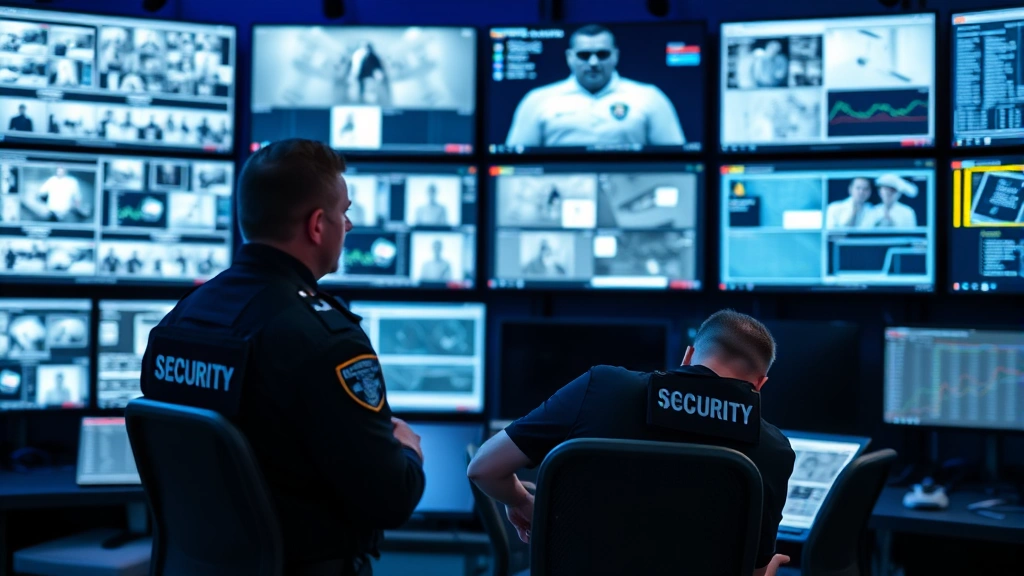
Armed Security: Are They Cyber-Aware? Expert Insights on Physical and Digital Protection
Armed security personnel have long served as the frontline defense against physical threats to critical infrastructure, corporate facilities, and high-profile individuals. However, in an era where cyber attacks pose threats equally devastating as physical breaches, a critical question emerges: Are armed security professionals adequately trained in cybersecurity awareness? The convergence of physical and digital security has become unavoidable, yet many armed security teams operate with significant knowledge gaps in cyber threat recognition and response protocols.
The traditional role of armed security focused exclusively on visible, tangible threats. Guards monitored entry points, detected suspicious individuals, and responded to physical disturbances. Today’s threat landscape demands more. When a hacker infiltrates building access control systems, when surveillance cameras are compromised, or when a social engineering attack targets facility staff, armed security personnel must understand the cyber dimension of their responsibilities. This article explores the critical intersection of armed security and cybersecurity awareness, examining current gaps, training needs, and best practices for comprehensive protection.
The Growing Cyber Threat to Physical Security Infrastructure
Physical security systems have become increasingly digitized, creating unprecedented vulnerabilities. Access control systems, surveillance networks, alarm systems, and communication platforms that armed security personnel rely upon are now potential entry points for cyber attackers. The Cybersecurity and Infrastructure Security Agency (CISA) has documented thousands of incidents where compromised physical security systems enabled unauthorized facility access.
Consider a typical armed security operation: guards use digital badge readers to control entry, monitor CCTV feeds on networked systems, communicate via encrypted radios connected to cloud platforms, and log incidents in centralized databases. Each of these systems represents a potential cyber vulnerability. A sophisticated attacker could disable alarm systems before executing a theft, manipulate access logs to hide their presence, or feed looped video footage to surveillance monitors while conducting unauthorized activity.
The Department of Homeland Security estimates that critical infrastructure facilities face over 1,000 cyber incidents daily. For armed security personnel, this statistic translates directly to operational risk. When cyber systems fail, armed security teams must recognize the anomalies and respond appropriately—yet many lack the training to distinguish between system malfunctions and active cyber attacks.
Current State of Cyber Awareness Among Armed Security Personnel
Industry assessments reveal a troubling reality: most armed security personnel receive minimal cybersecurity training. Traditional security certifications focus on threat assessment, conflict de-escalation, legal liability, and physical protection protocols. Cybersecurity education remains largely absent from standard armed security curricula.
A 2023 survey by the International Association of Professional Security Consultants found that fewer than 30% of armed security companies provide mandatory cyber awareness training. Among those that do, training typically consists of basic password hygiene and phishing email recognition—insufficient for professionals responsible for protecting high-value assets.
The knowledge gap exists for several reasons. First, armed security recruitment traditionally emphasized physical capabilities and legal compliance rather than technical aptitude. Second, cybersecurity expertise commands premium salaries that many security firms cannot afford. Third, rapid evolution of cyber threats makes training materials quickly obsolete, requiring continuous investment. Finally, organizational silos often separate physical security operations from IT departments, limiting knowledge transfer.
This gap has direct operational consequences. Armed security teams may fail to recognize signs of cyber intrusion, miss indicators of compromised access control systems, or misinterpret network anomalies as equipment failures. When response is required, they lack the technical vocabulary to communicate effectively with IT security teams, creating dangerous coordination failures.
How Cyber Attacks Directly Impact Armed Security Operations
The relationship between cyber attacks and physical security is not theoretical—it manifests in concrete operational challenges:
- Access Control Compromise: Attackers who infiltrate badge reader systems can grant themselves or accomplices facility access, bypassing armed security’s primary defense mechanism. Guards may have no visibility into unauthorized system modifications.
- Surveillance System Manipulation: Compromised CCTV systems can display looped footage, blind spots, or false feeds. Armed security personnel monitoring these systems believe they maintain visual coverage when they actually observe manipulated imagery.
- Communication Disruption: Encrypted radio systems and mobile communication platforms are cyber targets. Compromised communications can prevent armed security from coordinating responses or calling for backup.
- Alarm System Disablement: Integrated alarm systems connected to building networks can be remotely disabled by cyber attackers, eliminating early warning systems that armed security depends upon.
- Incident Log Manipulation: Digital incident logging systems allow attackers to erase evidence of their presence, preventing post-incident forensic investigation and undermining accountability.
- Personnel Targeting: Cyber attacks often precede physical crimes through social engineering. Attackers gather intelligence on armed security staff, their schedules, vulnerabilities, and response protocols through digital reconnaissance.
Each scenario represents a failure point where armed security personnel, lacking cyber awareness, cannot detect or appropriately respond to threats. The integration of cyber and physical attacks creates compound vulnerabilities that exceed either threat in isolation.

Essential Cybersecurity Training for Security Teams
Effective cyber awareness training for armed security personnel must be tailored to their operational context. Generic cybersecurity training designed for office workers fails to address the unique challenges security teams face. Essential curriculum components include:
Cyber Threat Recognition: Armed security must understand common attack vectors targeting physical security infrastructure. This includes phishing campaigns targeting facility staff, social engineering attempts to extract access credentials, and reconnaissance activities that precede physical attacks. Training should include real-world examples of how cyber attacks have compromised physical security operations.
System Anomaly Detection: Guards need practical knowledge to recognize when access control systems, surveillance networks, or communication platforms behave abnormally. This includes understanding baseline system performance, identifying unusual access patterns, detecting network congestion, and recognizing system lag that might indicate compromise.
Incident Response Coordination: When armed security suspects cyber compromise, they must know how to communicate findings to IT security teams effectively. Training should establish clear escalation procedures, define communication protocols, and clarify roles and responsibilities during cyber-related incidents.
Password and Credential Security: Armed security personnel often have elevated access privileges. Comprehensive password management training, multi-factor authentication protocols, and credential protection procedures are essential. NIST guidelines on digital identity provide frameworks that security organizations can adapt for their personnel.
Social Engineering Resistance: Security staff are frequent targets for social engineering attacks designed to extract credentials or facility information. Training should include practical exercises in recognizing pretexting, baiting, and manipulation tactics.
Secure Communication Practices: Armed security teams must understand principles of secure communication, including when to avoid discussing sensitive operations over unsecured channels and how to verify the identity of personnel requesting sensitive information.
Supply Chain Security: Attackers often compromise physical security systems through supply chain vulnerabilities. Training should address risks from third-party vendors, software updates, and equipment procurement processes.
Building an Integrated Physical-Digital Security Framework
Effective security requires integration of physical and cyber capabilities at the organizational level. This demands structural changes beyond individual training:
Unified Security Operations Center: Progressive organizations establish integrated security operations centers where armed security personnel, surveillance specialists, and IT security analysts work collaboratively. This breaks down silos and enables real-time information sharing when anomalies occur.
Joint Training Programs: Armed security and IT security teams should participate in joint training exercises. When cyber and physical security professionals understand each other’s capabilities and constraints, coordination during actual incidents improves dramatically.
Shared Incident Response Procedures: Organizations must develop comprehensive incident response procedures that address scenarios combining physical and cyber elements. These procedures should clarify decision-making authority, communication protocols, and escalation triggers.
Regular Security Assessments: Penetration testing and security assessments should evaluate both physical and cyber vulnerabilities. Red team exercises that simulate combined physical-cyber attacks reveal integration gaps.
Vendor Management: Organizations should implement strict vendor assessment procedures for any systems that armed security personnel rely upon. This includes evaluating cybersecurity practices of access control manufacturers, surveillance system providers, and communication platform vendors.
Technology Integration: Modern security platforms provide unified visibility across physical and cyber domains. These systems can correlate access control events with network activity, flag suspicious patterns, and alert security teams to anomalies.
Real-World Case Studies and Lessons Learned
Examining real incidents illustrates the consequences of inadequate cyber awareness among armed security personnel:
Case Study 1: Access Control System Compromise: In 2022, a major financial services facility experienced unauthorized access to its executive floor. Investigation revealed attackers had compromised the facility’s access control system through a phishing attack targeting the IT administrator. Armed security personnel observed unusual access patterns but interpreted them as system glitches rather than security incidents. The attackers gained access to sensitive documents before being discovered. Had armed security received cyber awareness training, they might have escalated concerns earlier.
Case Study 2: Surveillance System Manipulation: A retail distribution center fell victim to a sophisticated theft coordinated with surveillance system compromise. Attackers disabled cameras in warehouse sections while accomplices loaded merchandise. Armed security monitoring the CCTV system saw only looped footage and detected nothing unusual. Post-incident forensics revealed the cyber attack had occurred days before the physical theft. Better cyber awareness might have prompted security to verify system integrity proactively.
Case Study 3: Communication System Disruption: During a critical facility incident, armed security personnel could not reach backup units because attackers had compromised the facility’s communication system. The armed security team lacked knowledge to recognize communication compromise and continued attempting failed communications rather than establishing alternative protocols. Response coordination suffered significantly.
These cases share common themes: armed security personnel lacked training to recognize cyber indicators, failed to escalate suspicions appropriately, and could not coordinate effectively with IT security teams. Each incident reinforced the necessity of comprehensive cyber awareness training.

Technology Solutions for Enhanced Security Awareness
Beyond training, technology solutions can enhance armed security’s cyber awareness capabilities:
Integrated Security Monitoring Platforms: Modern systems provide unified dashboards displaying physical security events alongside network anomalies. Armed security personnel can view access control events, surveillance system status, and network health metrics simultaneously, enabling pattern recognition across domains.
Behavioral Analytics: Advanced analytics detect unusual access patterns, irregular system usage, and anomalous network activity. Systems can alert security personnel when patterns deviate from baseline operations, prompting investigation before incidents escalate.
Mobile Security Applications: Secure mobile apps enable armed security personnel to report suspicions, access incident response procedures, and communicate with IT security teams directly. Applications can include photo documentation, incident logging, and real-time escalation capabilities.
Automated Threat Intelligence Integration: Security platforms can integrate threat intelligence feeds, automatically alerting security teams when facility systems match known attack signatures or compromised credentials appear in breach databases.
Training Platforms with Scenario-Based Learning: Gamified training platforms present realistic scenarios requiring armed security personnel to identify cyber elements and respond appropriately. These platforms track competency development and identify training gaps.
System Health Monitoring Dashboards: Dashboards displaying real-time status of access control systems, surveillance networks, alarm systems, and communication platforms help armed security personnel understand baseline system performance and recognize anomalies.
Future-Proofing Armed Security Operations
As threats evolve, armed security organizations must adopt forward-looking strategies:
Continuous Education Programs: Rather than one-time training, organizations should implement continuous education addressing emerging threats. Monthly briefings on new attack methods, quarterly tabletop exercises, and annual comprehensive training maintain awareness as threats evolve.
Recruitment and Hiring Standards: Organizations should emphasize technical aptitude in security personnel recruitment. Candidates demonstrating interest in technology, analytical thinking, and problem-solving contribute more effectively to integrated security operations.
Certification and Professional Development: Security industry certifications now increasingly address cyber-physical integration. Organizations should support personnel pursuing credentials like ISC² certifications and similar professional development opportunities.
Collaboration with Threat Intelligence Community: Organizations should engage with threat intelligence sharing communities and industry groups. InfraGard and similar organizations provide valuable threat intelligence and best practice sharing.
Zero Trust Architecture Implementation: Organizations should adopt zero trust security principles, which assume all systems and personnel require verification regardless of location or previous trust status. This architecture naturally integrates physical and cyber security.
Regular Security Assessments: Organizations should conduct annual security assessments specifically evaluating armed security personnel’s cyber awareness. These assessments identify training gaps and inform curriculum updates.
The evolution toward integrated security represents a significant shift in how organizations protect critical assets. Armed security personnel who embrace cyber awareness and develop technical competencies position themselves as invaluable members of comprehensive security operations. Organizations investing in this transformation gain competitive advantage in protecting against increasingly sophisticated threats combining physical and cyber elements.
FAQ
What specific cybersecurity threats should armed security personnel prioritize?
Armed security should prioritize threats directly impacting their operational systems: access control compromise, surveillance system manipulation, communication disruption, and alarm system disablement. Additionally, they should be aware of social engineering attacks targeting facility staff and reconnaissance activities preceding physical incidents.
How much cybersecurity training do armed security personnel typically receive?
Current industry data shows fewer than 30% of armed security companies provide mandatory cyber awareness training. When training exists, it typically covers only basic concepts like password hygiene and phishing recognition, insufficient for modern threat environments.
Can armed security personnel coordinate effectively with IT security teams without technical expertise?
Yes, but coordination improves significantly when armed security understands basic cybersecurity concepts and can communicate suspicions clearly. Training should focus on recognition and appropriate escalation rather than technical expertise.
What are the most common vulnerabilities in integrated physical-cyber security?
Common vulnerabilities include: inadequate vendor security assessment, insufficient system monitoring integration, unclear incident response procedures, poor coordination between physical and IT security teams, and lack of personnel training addressing both domains.
How can organizations measure armed security personnel’s cyber awareness competency?
Organizations can measure competency through scenario-based assessments, incident response exercises, knowledge quizzes, and observation of actual anomaly detection during operations. Regular tabletop exercises combining physical and cyber scenarios provide realistic evaluation.
What role should armed security play in incident response for cyber events?
Armed security should serve as first observers, recognizing potential cyber indicators, documenting anomalies, preserving evidence, and escalating concerns appropriately to IT security teams. They should not attempt technical remediation but should ensure physical security of affected systems.
How does cyber awareness training for armed security differ from general employee training?
Armed security training emphasizes operational impact on their specific systems, includes incident recognition specific to physical security infrastructure, addresses social engineering tactics targeting security personnel, and clarifies their role in incident response coordination with IT teams.
What external resources help organizations develop armed security cyber awareness programs?
Security industry publications and organizations provide guidelines and best practices. NIST guidelines, CISA resources, and professional security associations offer frameworks organizations can customize for their needs.


