
Do Armed Guards Enhance Cybersecurity? Expert Insights on Physical Security Integration
The intersection of physical security and cybersecurity has become increasingly critical in today’s threat landscape. While armed guards have traditionally protected physical assets, many organizations wonder whether their presence contributes meaningfully to cybersecurity defenses. This question deserves nuanced exploration, as the relationship between armed security personnel and digital threat mitigation is far more complex than a simple yes or no answer.
Armed security guards can indeed enhance cybersecurity, but not through direct digital defense mechanisms. Instead, they function as a critical layer in a comprehensive security strategy that addresses both physical and cyber threats. Understanding how physical security integrates with cybersecurity requires examining multiple dimensions: threat prevention, insider risk mitigation, facility protection, and strategic deterrence.
The Physical-Cyber Security Connection
Cybersecurity professionals often focus exclusively on firewalls, encryption, and software vulnerabilities, yet this narrow perspective misses critical attack vectors. Physical security and cybersecurity are fundamentally interconnected, as highlighted by guidance from the Cybersecurity and Infrastructure Security Agency (CISA). Armed guards contribute to this integrated defense by preventing unauthorized physical access to servers, networking equipment, and sensitive infrastructure.
The reality is that many successful cyberattacks begin with physical breaches. Threat actors may attempt to gain access to data centers, server rooms, or network closets to install malware, intercept data, or sabotage systems. Without proper physical security measures, even the most sophisticated digital defenses become vulnerable. Armed security personnel serve as the first line of defense against these physical intrusion attempts.
Consider that insider threats represent one of the costliest security risks. According to research from leading security organizations, insiders with malicious intent or those compromised by external actors can bypass digital controls entirely by physically accessing critical systems. Armed guards trained in security protocols help identify suspicious behavior, verify credentials, and prevent unauthorized individuals from entering restricted areas.
Armed Guards and Insider Threat Prevention
Insider threats have evolved significantly in recent years. The National Institute of Standards and Technology (NIST) emphasizes that organizations must implement layered defenses against internal threats, which include disgruntled employees, contractors, and compromised personnel.
Armed guards contribute to insider threat mitigation through several mechanisms:
- Behavioral observation: Trained security personnel can identify unusual patterns such as accessing restricted areas outside normal hours, attempting to remove equipment, or bypassing established procedures
- Credential verification: Guards ensure that only authorized individuals enter sensitive zones, preventing unauthorized access even by employees with valid badges obtained through social engineering
- Equipment monitoring: Physical presence deters theft of hardware containing sensitive data and prevents unauthorized removal of storage devices or network equipment
- Incident response: Armed guards can respond immediately to suspicious activity, containing potential threats before they escalate
The psychological deterrent effect cannot be overstated. Visible armed security significantly reduces the likelihood of insider threats materializing, as potential bad actors recognize the increased risk of detection and apprehension. This preventive aspect of physical security often proves more valuable than reactive measures.
Protecting Critical Infrastructure
Organizations operating critical infrastructure—energy facilities, water treatment plants, telecommunications hubs, and financial institutions—face unique cybersecurity challenges. These facilities require both robust digital defenses and comprehensive physical security measures. Armed guards play an essential role in this context.
Critical infrastructure attacks can have cascading consequences affecting entire regions. A successful physical breach leading to system compromise could result in widespread outages, financial losses, and public safety risks. Armed security personnel trained in critical infrastructure protection help prevent these scenarios by:
- Monitoring access points to sensitive operational technology (OT) networks
- Verifying the authenticity of maintenance personnel and contractors
- Preventing unauthorized photography or surveillance of critical systems
- Responding to suspicious activities that may indicate reconnaissance for future attacks
- Enforcing physical security policies that support cybersecurity objectives
The integration of armed guards with cybersecurity teams creates a unified defense posture. When security personnel understand the cyber implications of physical access, they become force multipliers for digital security efforts. Regular training ensures that guards recognize and report activities consistent with pre-attack reconnaissance.
Access Control and Data Center Security
Data centers represent the crown jewels of organizational infrastructure. These facilities house servers, storage systems, and networking equipment containing sensitive data and critical applications. Armed guards are essential components of data center security strategies, working alongside electronic access controls and surveillance systems.
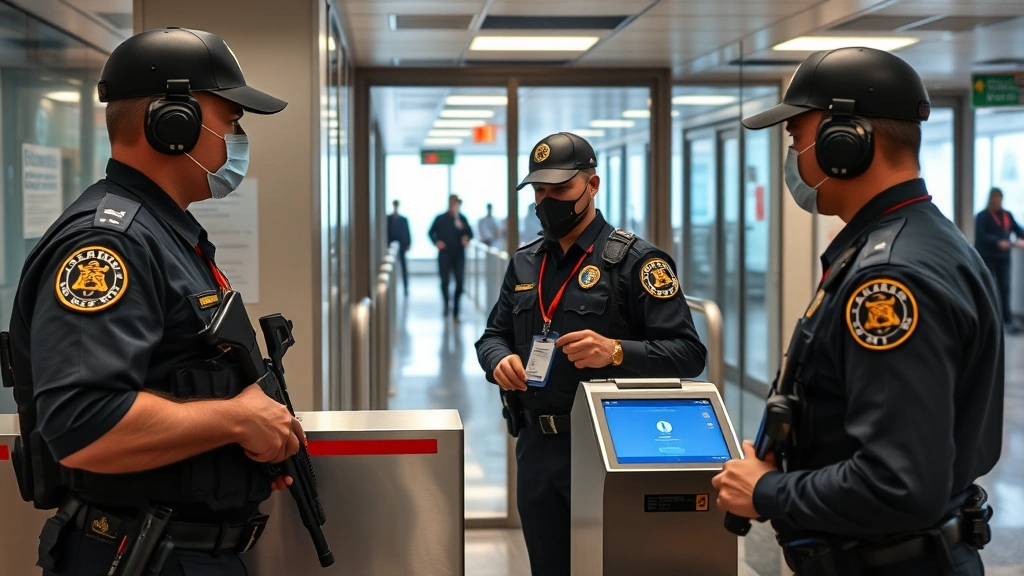
Modern data centers employ multi-factor physical access controls where armed security personnel verify credentials, check visitor logs, and ensure that access badges match authorized personnel. This human element supplements electronic systems that can be compromised or bypassed. Guards can:
- Conduct physical searches of bags and equipment entering restricted areas
- Verify that individuals are authorized to access specific zones
- Identify social engineering attempts targeting facility access
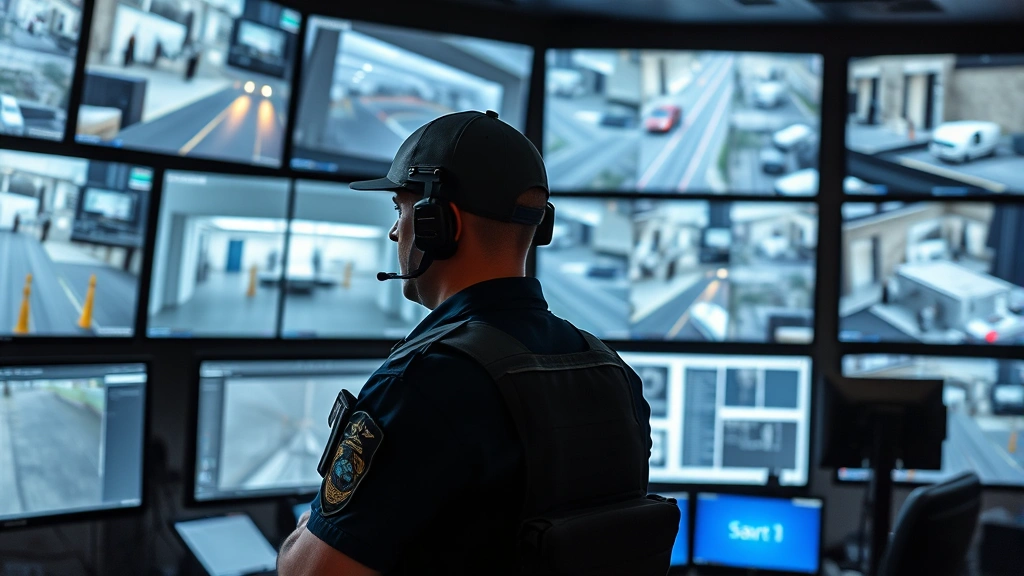
- Monitor surveillance systems and respond to alerts
- Enforce policies preventing tailgating or unauthorized entry
The combination of armed guards, biometric access controls, and surveillance creates a formidable barrier against unauthorized access. This layered approach addresses multiple attack vectors simultaneously, making it significantly more difficult for threat actors to compromise physical security and subsequently exploit systems.
Deterrence and Risk Reduction
A fundamental principle of security is that visible deterrence reduces attack attempts. Armed security guards serve as a visible reminder that facilities are protected and that unauthorized access carries significant consequences. This deterrent effect extends to both external threat actors and internal bad actors.
Research on security effectiveness demonstrates that organizations with visible armed security experience fewer physical security incidents. Sophisticated threat actors conduct extensive reconnaissance before attempting attacks. When they observe armed guards, surveillance systems, and robust physical controls, many choose to pursue softer targets instead.
This risk displacement is valuable because it shifts threat actors away from your organization. However, it’s important to recognize that determined adversaries may still attempt breaches. For this reason, armed guards must work in conjunction with comprehensive cybersecurity measures including:
- Network segmentation and zero-trust architecture
- Advanced threat detection and response capabilities
- Employee security awareness training
- Incident response planning and testing
- Regular security assessments and penetration testing
The synergy between physical and cyber defenses creates a security posture that addresses threats at multiple levels. Armed guards handle the physical dimension while cybersecurity teams manage the digital realm, with integration points ensuring comprehensive coverage.
Implementation Best Practices
Organizations seeking to leverage armed security for cybersecurity purposes should follow established best practices. The ASIS International organization provides professional standards for security personnel training and deployment.
Key implementation considerations include:
- Security clearances and vetting: Armed guards must undergo thorough background investigations to ensure trustworthiness. This is critical because guards themselves represent insider threat risks
- Specialized training: Guards should receive training in cybersecurity fundamentals, helping them understand the digital implications of physical security breaches
- Rules of engagement: Clear protocols defining when guards can intervene, search individuals, or restrict access prevent legal complications while maintaining security
- Integration with security operations: Guards must coordinate with security teams, sharing information about suspicious activities and potential threats
- Regular assessment: Security effectiveness should be evaluated through testing, drills, and incident reviews
- Technology integration: Guards should work with access control systems, surveillance, and alarm systems to create unified monitoring
Organizations should also ensure that armed security roles align with legal requirements in their jurisdictions. Licensing, training certifications, and use-of-force policies vary by location and must be carefully managed to maintain compliance while achieving security objectives.
Cost-Benefit Analysis
The financial investment in armed security must be justified through cost-benefit analysis. Organizations must weigh the costs of employing armed guards against the value of risk reduction and potential incident prevention.
Costs associated with armed security include:
- Personnel compensation and benefits
- Training and certification maintenance
- Insurance and liability coverage
- Uniforms, equipment, and technology
- Supervision and management overhead
Benefits include:
- Reduced likelihood of successful physical intrusions
- Earlier detection of insider threats
- Prevention of data theft and equipment loss
- Faster incident response capabilities
- Psychological deterrence effects
- Potential insurance premium reductions
For high-value targets, critical infrastructure operators, and organizations handling sensitive data, the benefits typically justify the investment. Smaller organizations with limited budgets might achieve similar results through technology-focused solutions like advanced surveillance, access controls, and monitoring systems, supplemented by part-time security personnel.
The key is matching security investments to actual risk profiles. Organizations should conduct comprehensive risk assessments to determine whether armed guards provide the best return on investment or whether alternative approaches would be more cost-effective.
FAQ
Can armed guards prevent all cybersecurity threats?
No. Armed guards address only the physical security dimension. Comprehensive cybersecurity requires layered defenses including network security, endpoint protection, employee training, and incident response capabilities. Physical security is one component of a complete program.
Are armed guards necessary for cybersecurity?
It depends on your risk profile. Organizations with critical infrastructure, sensitive data, or high-value targets benefit significantly from armed security. Smaller organizations or those with lower risk profiles might achieve adequate protection through electronic access controls and monitoring systems alone.
What training should armed guards have?
Guards should receive training in facility security procedures, access control policies, emergency response, and ideally, basic cybersecurity awareness. This helps them understand why physical security measures matter for digital protection.
How do armed guards integrate with cybersecurity teams?
Integration occurs through shared information systems, regular communication, joint training, and incident response coordination. Security teams should brief guards on current threats and suspicious indicators while guards report physical security observations that may indicate cyber threats.
Are there alternatives to armed guards?
Yes. Organizations can employ unarmed security personnel, electronic access controls, surveillance systems, and visitor management systems. The appropriate approach depends on facility type, threat level, and budget constraints. Many organizations use hybrid approaches combining multiple methods.
Can armed guards detect cyber attacks?
Not directly. Guards cannot monitor networks or detect malware. However, they can identify physical indicators of cyber attack preparation, such as unauthorized access to network closets or suspicious personnel in data centers.
What legal considerations apply to armed security?
Regulations vary by jurisdiction regarding licensing, training requirements, use of force authority, and liability. Organizations must ensure compliance with local laws and maintain appropriate insurance coverage for armed security operations.


