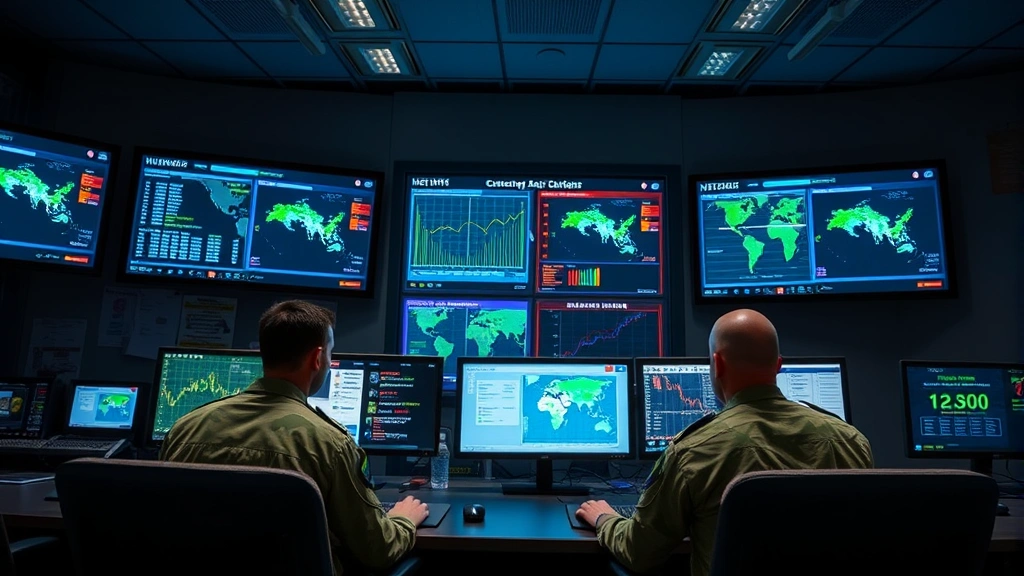
Air Force Cyber Jobs: Demand & Opportunities in Military Cybersecurity
The United States Air Force faces unprecedented demand for cybersecurity professionals as digital threats escalate globally. With adversaries targeting critical military infrastructure, the Air Force has prioritized cyber defense capabilities, creating substantial career opportunities for skilled security professionals. The cyber warfare landscape demands specialists who can protect sensitive military networks, detect intrusions, and respond to sophisticated attacks in real-time.
Air Force cyber security jobs represent one of the most secure and rewarding career paths in the defense sector. Personnel fill roles spanning from entry-level technicians to senior strategic advisors, each contributing to national security objectives. The combination of meaningful work, competitive compensation, advanced training, and long-term stability makes these positions increasingly attractive to cybersecurity professionals seeking purpose-driven careers beyond traditional civilian sectors.
Understanding the landscape of Air Force cyber opportunities requires examining specific roles, qualifications, compensation structures, and career progression pathways. This comprehensive guide explores how to enter this specialized field and what to expect throughout your military cybersecurity career.

Understanding Air Force Cyber Operations
The Air Force Cyber Command (AFCYBER) operates as the primary organization managing all Air Force cyber warfare and defense initiatives. Established to consolidate cyber capabilities, AFCYBER coordinates offensive and defensive operations protecting military networks, satellites, and communications infrastructure. The command employs thousands of cyber professionals across multiple installations worldwide, making it one of the largest employers of military cybersecurity talent.
Cyber operations within the Air Force encompass three primary domains: cyberspace defense, information warfare, and cyber attack capabilities. Personnel working in these areas protect against nation-state actors, terrorist organizations, and criminal enterprises attempting to compromise military systems. The threat environment remains dynamic, with adversaries continuously developing sophisticated techniques requiring adaptive defensive strategies and highly trained personnel.
The Air Force recognizes cyber personnel as essential to military readiness equivalent to pilots and combat engineers. This recognition translates into career stability, competitive compensation, and advancement opportunities. Unlike civilian cybersecurity roles that frequently experience turnover and salary inflation, Air Force positions offer predictable career progression and long-term employment security.

Primary Cyber Career Paths
Air Force cyber security jobs span multiple specialized career fields accommodating different skill sets and interests. The primary career path is the 17D Cyberspace Operations Officer, a commissioned position requiring specific education and experience. Officers in this role direct cyber operations, manage personnel, and develop strategic cyber initiatives. These positions typically require a bachelor’s degree and completion of Officer Training School or Academy attendance.
The enlisted equivalent, 1B4X1 (Cyber Warfare Operations Specialist), represents the largest cyber career field in the Air Force. These professionals conduct day-to-day cyber operations, including threat hunting, vulnerability assessment, and incident response. Entry requirements include high school graduation or GED, with positions available for individuals seeking technical careers without pursuing commissioned officer status.
Additional cyber-related specialties include 3D0X2 (Cyber Systems Operations), which focuses on network infrastructure supporting cyber operations. These technicians maintain systems, troubleshoot connectivity issues, and ensure operational networks remain available and secure. The 1B4X2 (Cyber Operations Support) career field provides administrative and analytical support to cyber operations centers, suitable for individuals transitioning into specialized roles.
Specialized positions such as 1N4X1 (Geospatial Intelligence Analyst) and 1A8X1 (Airborne Cryptologic Linguist) support broader cyber and intelligence operations. These roles demand language proficiency, analytical skills, and security clearances, offering unique career paths for linguistically talented professionals. The diversity of career options ensures candidates with varying backgrounds can find appropriate positions matching their capabilities.
Security Clearance Requirements
All Air Force cyber security jobs require security clearances, with most positions demanding Top Secret/Sensitive Compartmented Information (TS/SCI) clearances. The clearance process involves extensive background investigations, financial reviews, and personal interviews examining your entire history. Applicants with foreign contacts, financial problems, or drug use history may face challenges obtaining necessary clearances.
The background investigation process typically requires six to twelve months for Top Secret clearances, with TS/SCI clearances potentially extending longer. The Air Force conducts periodic reinvestigations throughout your career, typically every five years for Top Secret clearances. Maintaining clearance eligibility requires avoiding criminal activity, managing finances responsibly, and reporting significant life changes.
Certain factors can disqualify applicants from obtaining security clearances. These include felony convictions, illegal drug use within the past several years, and undisclosed foreign contacts. The government evaluates financial irresponsibility seriously, as debt and poor credit history suggest vulnerability to coercion or compromise. Applicants must be honest during investigations, as deception or omission of information can result in permanent clearance denial and military separation.
Foreign citizenship or dual citizenship can complicate clearance processing, though it doesn’t automatically disqualify candidates. The Air Force evaluates foreign ties carefully, particularly regarding countries of concern. Applicants with family members in sensitive countries or recent immigration history should expect extended investigation periods. Transparency about foreign contacts and relationships expedites the clearance process significantly.
Education and Certification Standards
Air Force cyber security jobs increasingly require formal cybersecurity education and industry certifications. The Air Force Cyber Aces program provides free online training in fundamental cyber concepts, network security, and coding, preparing individuals for career entry. Completing these courses demonstrates commitment to cybersecurity and provides foundational knowledge expected in entry-level positions.
Industry certifications significantly enhance career prospects and advancement potential. The CompTIA Security+ certification serves as the baseline requirement for many Air Force cyber positions, validating fundamental security knowledge. Advanced certifications including Certified Information Systems Security Professional (CISSP), Certified Ethical Hacker (CEH), and GIAC Security Essentials (GSEC) enhance qualifications and support promotion eligibility.
Bachelor’s degree programs in cybersecurity, computer science, or related fields accelerate career progression and officer commission eligibility. The Air Force encourages personnel to pursue formal education through tuition assistance programs and Tuition Assistance benefits covering 100% of eligible course costs. Many enlisted personnel complete degrees while serving, positioning themselves for officer commissions and advanced roles.
Specialized certifications addressing specific career fields improve technical competency. Network administrators benefit from CompTIA Network+ and Cisco certifications, while system administrators should pursue Microsoft and Linux certifications. The Air Force provides funding for certification exam costs and study materials, recognizing that certified personnel perform more effectively and advance faster through career fields.
Compensation and Benefits
Air Force cyber security jobs offer competitive compensation packages combining base salary, housing allowances, and comprehensive benefits. Entry-level enlisted personnel (E-1 through E-4) earn approximately $22,000 to $28,000 annually, with increases tied to rank progression and time in service. Non-commissioned officers (E-5 through E-9) earn $35,000 to $85,000 annually depending on rank and years of service.
Officers commissioned at O-1 level earn approximately $38,000 annually, with progression to O-3 (Captain) providing $55,000 to $70,000 annually. Senior officers (O-4 and above) earn $85,000 to $200,000+ annually. These salaries exclude housing allowances (BAH), subsistence allowances (BAS), and clothing allowances, which collectively add $12,000 to $20,000 annually depending on location and family status.
Comprehensive health insurance covers all service members and eligible family members at minimal out-of-pocket cost. Dental and vision coverage extends to families, with preventive care completely covered. Mental health services, including counseling and therapy, remain confidential and free to service members. This comprehensive health coverage often exceeds civilian benefits, particularly for individuals with pre-existing conditions or family healthcare needs.
Retirement benefits represent substantial long-term compensation. Service members retiring after 20 years receive monthly pension payments calculated at 50% of base pay, with increases for each additional year of service. A cyber professional retiring at age 42 after 20 years service receives lifetime pension payments, health insurance benefits, and commissary privileges. These retirement benefits often exceed what civilian cybersecurity professionals accumulate over equivalent careers.
Additional benefits include 30 days annual leave, life insurance coverage, education benefits through the GI Bill, and veteran’s preference for federal employment. The GI Bill provides up to $36,000 for post-military education, enabling service members to pursue advanced degrees or civilian certifications. These cumulative benefits create substantial lifetime value beyond salary comparisons.
Recruitment and Entry Process
Interested candidates begin the Air Force cyber security jobs application process by contacting local Air Force recruiters. Recruiters provide detailed information about specific career fields, qualifications, and current opportunities. The Air Force actively recruits individuals with cybersecurity backgrounds, often offering accelerated entry ranks for those with relevant certifications or experience.
The Military Entrance Processing Station (MEPS) conducts medical examinations, drug screening, and preliminary background investigations. Applicants must meet vision and hearing standards, maintain appropriate body weight, and pass drug screening. Medical disqualifications for conditions including corrected vision beyond specified limits, certain medications, and mental health diagnoses can prevent entry, though waivers exist for some conditions.
The Air Force Officer Qualifying Test (AFOQT) measures academic aptitude and determines officer commission eligibility. Civilian cybersecurity professionals with bachelor’s degrees can commission as officers, bypassing enlisted service. The Officer Training School (OTS) provides twelve weeks of officer training before assignment to cyber career fields. This pathway appeals to experienced professionals seeking military service without extended enlisted service.
The Armed Services Vocational Aptitude Battery (ASVAB) determines enlisted career field eligibility. Cyber positions require minimum scores in electronics, mathematics, and reasoning sections. Individuals scoring above minimum thresholds receive priority for cyber career field assignment. The Air Force provides study materials and practice tests, enabling applicants to maximize scores and secure preferred career fields.
Career Advancement Opportunities
Air Force cyber security jobs provide clear advancement pathways from entry-level positions to senior leadership roles. Enlisted personnel progress through ranks E-1 through E-9, with promotion based on time in service, performance evaluations, and examination scores. Most cyber professionals reach E-5 (Staff Sergeant) within five to seven years, enabling advancement to supervisory and leadership positions.
Officers commissioned through OTS or Academy attendance follow progression from O-1 (Second Lieutenant) through O-10 (General). Typical career progression sees promotion to O-3 (Captain) after four years service and O-4 (Major) after ten to twelve years. Senior officers lead major commands and strategic initiatives, requiring advanced education and extensive experience. The promotion timeline ensures competitive compensation and authority growth throughout careers.
Lateral entry programs enable experienced cybersecurity professionals to commission at higher ranks. Individuals with master’s degrees may commission at O-2 level, while those with relevant military experience can receive credit toward time in service. These programs accelerate advancement for professionals transitioning from civilian cybersecurity careers, reducing years required to reach senior positions.
Specialized training opportunities enhance qualifications and support advancement. The Air Force Cyber College provides advanced cyber operations training, while the Air Force Institute of Technology (AFIT) offers graduate degree programs in cybersecurity and related fields. Personnel selected for AFIT receive full tuition coverage and paid leave, with degree completion often leading to accelerated promotion and senior assignments.
Training and Professional Development
The Air Force invests substantially in cyber personnel training, recognizing that technological advancement requires continuous skill development. Initial skills training provides foundational knowledge in assigned career fields, typically lasting four to twelve weeks. Cyber Warfare Operations Specialists complete training covering threat analysis, intrusion detection, and incident response procedures.
Advanced technical training opportunities develop specialized expertise in emerging technologies. Personnel can pursue training in cloud security, artificial intelligence applications in cybersecurity, and advanced persistent threat (APT) analysis. The Air Force partners with leading cybersecurity firms and academic institutions, providing access to cutting-edge training often exceeding civilian opportunities.
Professional military education (PME) develops leadership and strategic thinking capabilities. Enlisted personnel complete Airman Leadership School (ALS), Non-Commissioned Officer Academy (NCOA), and Senior Non-Commissioned Officer Academy (SNCOA) progressively throughout careers. Officers complete Air Force Officer School (AFOS), Squadron Officer School (SOS), and Air War College, preparing them for increasing responsibility levels.
Tuition assistance programs enable service members to pursue civilian education while serving. The Air Force covers 100% of eligible course costs up to annual limits, enabling pursuit of bachelor’s degrees, master’s degrees, and professional certifications. Many cyber professionals complete advanced degrees while serving, enhancing promotion potential and post-military career prospects.
The Air Force Cyber Aces program provides free online training in fundamental cybersecurity concepts accessible to service members and civilians. These courses cover network security, cryptography, and secure systems administration. Completing Cyber Aces training demonstrates commitment to continuous learning and provides foundation for pursuing advanced certifications.
FAQ
What qualifications do I need for Air Force cyber security jobs?
Minimum qualifications include high school graduation or GED, U.S. citizenship, valid driver’s license, and ability to obtain Top Secret security clearance. Specific career fields may require additional qualifications such as ASVAB scores in particular sections or relevant certifications. The Air Force website details specific requirements for each cyber career field.
How long does the security clearance process take?
Top Secret clearance investigations typically require six to twelve months, depending on background complexity. TS/SCI clearances may extend twelve to eighteen months. The timeline depends on foreign contacts, financial history, and employment background. Applicants should expect periodic updates and follow-up questions during investigation.
Can I enter as an officer if I have cybersecurity experience?
Yes, experienced cybersecurity professionals can commission as officers through Officer Training School (OTS). Bachelor’s degree holders commission at O-1 level, while master’s degree holders may commission at O-2. This pathway enables experienced professionals to begin military service at higher ranks and faster advancement timelines.
What is the typical career length in Air Force cyber?
Service members can serve 20+ years, with most remaining until 20-year retirement eligibility. Many cyber professionals continue beyond 20 years, reaching 30-year service milestones. Career length depends on individual preferences, advancement opportunities, and Air Force needs. Voluntary separations and involuntary separations both occur based on performance and force structure requirements.
How does Air Force cyber compare to civilian cybersecurity careers?
Air Force cyber offers greater stability, comprehensive benefits, and guaranteed advancement compared to civilian careers. Compensation may be lower initially, but total compensation including benefits, retirement, and healthcare exceeds most civilian positions. The meaningful work defending national security attracts many professionals despite civilian salary premiums in some markets.
Can I pursue cybersecurity certifications while serving?
Yes, the Air Force actively supports certification pursuit through tuition assistance and paid study time. CompTIA Security+, CISSP, CEH, and GIAC certifications are encouraged and supported. Many cyber career fields require specific certifications, with the Air Force covering exam costs and study materials. Certification advancement often correlates with promotion eligibility.


