
Cloud Security: Advanced Threat Defense Tips
Cloud infrastructure has become the backbone of modern enterprise operations, yet it introduces complex security challenges that traditional on-premises defenses cannot adequately address. Organizations migrating to cloud environments face sophisticated threat actors who exploit misconfigurations, inadequate access controls, and unpatched vulnerabilities at scale. Advanced threat protection for cloud requires a multi-layered approach combining proactive detection, continuous monitoring, and incident response capabilities specifically designed for distributed cloud architectures.
The cloud’s dynamic nature—with resources spinning up and down, data moving between regions, and third-party integrations multiplying—creates blind spots where threats can flourish undetected. Ransomware actors, data exfiltration campaigns, and supply chain attacks increasingly target cloud environments because they often represent the path of least resistance. This comprehensive guide explores cutting-edge defense strategies, architectural best practices, and tactical implementations that security teams can deploy immediately to strengthen their cloud security posture against advanced persistent threats.
Understanding Cloud-Specific Threat Vectors
Cloud environments introduce unique attack surfaces that differ fundamentally from traditional IT infrastructure. Threat actors exploit these differences through several primary vectors: misconfigured storage buckets exposing sensitive data, overly permissive identity policies granting excessive privileges, inadequate API security allowing unauthorized access, and insufficient logging preventing detection of unauthorized activities.
API exploitation represents one of the most dangerous cloud-specific threats. Cloud services communicate through APIs, and attackers systematically scan for exposed endpoints, weak authentication, and unvalidated input handling. A single compromised API credential can grant access to entire cloud estates. Additionally, container image vulnerabilities pose escalating risks as organizations adopt containerized workloads. Malicious or compromised images propagate quickly across orchestration platforms, potentially affecting thousands of running instances simultaneously.
Misconfiguration remains the leading cause of cloud security breaches. According to threat intelligence from major cloud providers, over 80 percent of cloud breaches stem from customer misconfiguration rather than cloud platform vulnerabilities. This includes publicly accessible S3 buckets, unencrypted databases, disabled logging, overly broad security groups, and default credentials remaining active. The scale of cloud infrastructure means even small configuration errors can expose massive attack surfaces.
Lateral movement within compromised cloud accounts occurs with alarming speed. Once attackers gain initial access through phishing, credential compromise, or misconfiguration, they exploit weak inter-service permissions to move deeper into the environment. Cloud environments often feature implicit trust between services, allowing attackers to escalate privileges and access sensitive resources without triggering alerts.
Identity and Access Management as Your First Line of Defense
Identity represents the new security perimeter in cloud environments. Traditional network-based controls lose effectiveness when users and services access resources from anywhere, across multiple clouds and on-premises systems. Zero Trust identity principles demand continuous verification of every user, device, and service regardless of location or previous access patterns.
Implementing multi-factor authentication (MFA) universally across all cloud accounts serves as the most critical foundational control. MFA blocks 99.9 percent of account takeover attacks according to Microsoft security research. However, basic MFA using SMS or email proves insufficient against sophisticated attackers. Organizations should prioritize hardware security keys and authenticator apps for high-privilege accounts, particularly those managing cloud infrastructure.
Privileged access management (PAM) becomes exponentially more important in cloud environments where service accounts outnumber human users. Cloud applications generate service principals, API keys, and temporary credentials at massive scale. These credentials require the same rigorous management as traditional administrative accounts: rotation policies, least-privilege assignment, audit logging, and anomaly detection. Unmanaged service credentials represent persistent backdoors that attackers actively hunt for and exploit.
Role-based access control (RBAC) implementation must follow the principle of least privilege strictly. Cloud platforms offer granular permission models, yet organizations often default to broad roles (Owner, Administrator, Contributor) for convenience. Security teams should conduct regular access reviews identifying and removing unnecessary permissions. Custom roles should define minimum required permissions for specific job functions, reducing blast radius when credentials become compromised.
Conditional access policies add sophisticated behavioral analysis to identity verification. These policies can enforce additional authentication when users access sensitive resources from unusual locations, using unknown devices, or during abnormal hours. Integrating threat intelligence feeds allows policies to block access from IP addresses associated with known threat actors or compromised networks, providing dynamic risk-based access decisions.
Network Segmentation and Zero Trust Architecture
Cloud networks differ fundamentally from traditional data center networks, yet many organizations apply legacy network security models to cloud environments with disappointing results. Traditional perimeter security becomes irrelevant when users connect directly to cloud resources from anywhere, services communicate across regions, and threat actors operate from within the network perimeter.
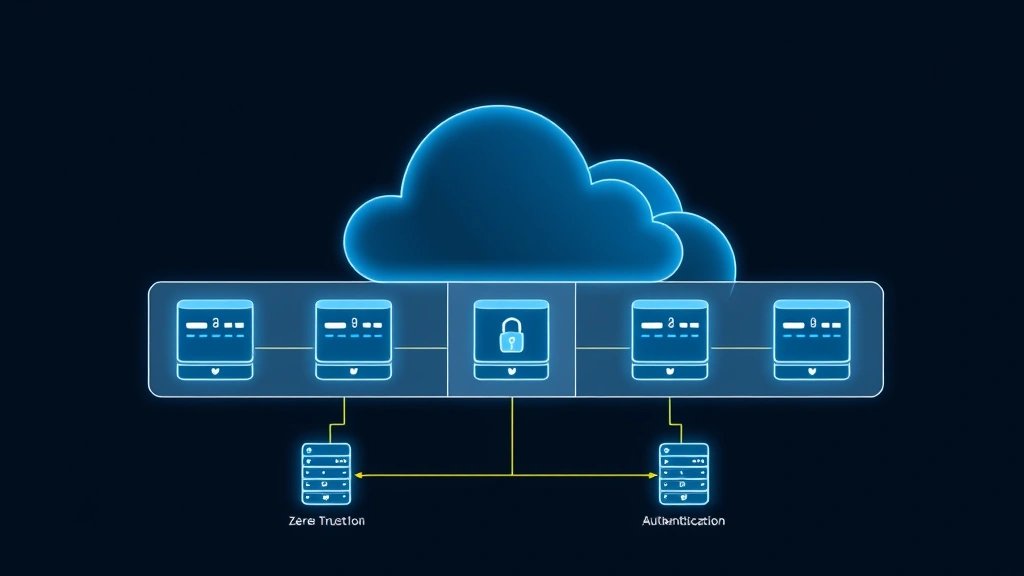
Zero Trust architecture replaces implicit trust with continuous verification. Every connection request undergoes authentication and authorization evaluation regardless of source or previous access patterns. This approach requires implementing microsegmentation—dividing the network into smaller zones requiring separate authentication for each transition.
Implementing zero trust in cloud requires several key components working in concert. Network policies should explicitly deny all traffic by default, allowing only necessary communication between specific resources. Cloud platforms provide security groups, network ACLs, and policy engines that enable this default-deny posture. Organizations should define communication requirements by workload type and data sensitivity, then implement policies reflecting those requirements.
Service mesh technology provides sophisticated traffic management and security policies at the application layer. Tools like Istio, Linkerd, and cloud-native offerings (AWS App Mesh, Azure Service Fabric) enable fine-grained traffic control, mutual TLS encryption between services, and policy enforcement without modifying application code. Service meshes also provide detailed observability into inter-service communication, revealing suspicious traffic patterns indicative of lateral movement attempts.
Virtual private cloud (VPC) design should follow architectural principles separating resources by sensitivity and function. Public subnets containing load balancers should never directly access private resources containing sensitive data or infrastructure. Application subnets should communicate with database subnets through controlled interfaces only. This layered approach ensures that compromising a single component doesn’t automatically grant access to entire infrastructure tiers.
Cloud firewalls and intrusion prevention systems (IPS) provide additional network-layer protection. Next-generation firewalls offering deep packet inspection, threat intelligence integration, and SSL/TLS decryption can identify and block malicious traffic regardless of encryption. However, these tools require careful tuning to avoid false positives that degrade user experience and create alert fatigue.
Advanced Threat Detection and Response
Detection capabilities determine whether your organization identifies threats in minutes or months. Cloud security requires real-time analysis of massive data volumes across multiple services, regions, and accounts. Traditional SIEM approaches struggle with cloud scale and complexity, necessitating cloud-native detection platforms.
Cloud-native detection and response (CDR) platforms analyze cloud-specific data sources including API logs, container runtime events, infrastructure-as-code changes, and resource configuration snapshots. These platforms understand cloud-specific attack patterns—such as privilege escalation through policy modifications, data exfiltration through storage bucket changes, or cryptomining through resource utilization spikes—that traditional security tools miss entirely.
Behavioral analytics powered by machine learning identify anomalous activities that rule-based detection cannot catch. These systems establish baselines for normal user and service behavior, then flag deviations indicating potential compromise. Examples include: a user accessing resources they’ve never accessed before, unusual data volumes transferred from typically quiet accounts, API calls from new geographic locations, or service principals making administrative changes outside normal patterns.
Threat intelligence integration enriches detection capabilities with external context about known threat actors, attack campaigns, and infrastructure. Cloud platforms should automatically block known malicious IP addresses, correlate observed attacks with known threat groups, and alert security teams to indicators matching active campaigns. Organizations should subscribe to CISA threat intelligence feeds and industry-specific threat reports relevant to their sector.
Incident response playbooks specifically designed for cloud incidents enable rapid containment and recovery. Cloud-specific playbooks should address scenarios including: compromised cloud credentials, unauthorized API access, resource deletion or modification, data exfiltration through storage services, cryptomining through compute resources, and lateral movement between accounts. Playbooks should define investigation steps, containment procedures, evidence preservation requirements, and recovery procedures specific to cloud architectures.
Automated response capabilities reduce response time from hours to seconds. Security orchestration, automation and response (SOAR) platforms can automatically revoke compromised credentials, isolate affected resources, disable suspicious API keys, and trigger incident response workflows upon detecting threats. However, automation must balance speed with accuracy—false positive automation can cause legitimate service disruptions and erode trust in security systems.
Data Protection and Encryption Strategies
Data represents the ultimate target of most cloud attacks. Advanced threat protection requires comprehensive data protection strategies addressing data in transit, at rest, and in use across cloud environments.
Encryption in transit using TLS 1.2 or higher should be mandated for all cloud data movement. However, standard TLS proves insufficient when threat actors operate from within the network or possess encryption keys. Organizations should implement mutual TLS (mTLS) requiring both client and server authentication, preventing man-in-the-middle attacks even within private networks. Certificate management systems must automatically rotate certificates, preventing expiration-related outages and limiting exposure if certificates become compromised.
Encryption at rest protects stored data from unauthorized access. Cloud platforms offer transparent encryption by default, yet organizations should verify encryption implementation and manage encryption keys independently. Customer-managed keys (CMK) provide better security than provider-managed keys because only your organization controls decryption access. Key management services should enforce access controls, audit all key usage, and support key rotation policies.
Encryption in use addresses the most challenging scenario: protecting data while applications actively process it. Homomorphic encryption, secure enclaves (Intel SGX, AMD SEV), and confidential computing platforms enable processing encrypted data without decryption. While computationally expensive, these technologies protect against threats including compromised infrastructure, insider threats, and supply chain attacks affecting cloud providers themselves.
Data classification and discovery systems identify sensitive information across cloud environments, enabling appropriate protection measures. These tools scan storage services, databases, and application memory identifying personally identifiable information (PII), payment card data, credentials, and proprietary information. Automated classification allows policies to enforce encryption, access restrictions, and audit logging proportional to data sensitivity.
Data loss prevention (DLP) prevents exfiltration of sensitive information through unauthorized channels. DLP policies monitor and control data movement through email, cloud storage, messaging applications, and removable media. Cloud-native DLP tools understand cloud-specific threats including unauthorized sharing, API-based exfiltration, and storage bucket exposure.
Compliance and Security Monitoring
Continuous monitoring and compliance verification ensure sustained security posture against evolving threats. Cloud environments change rapidly—resources deploy and retire, configurations change, and new vulnerabilities emerge constantly. Static security assessments become obsolete within hours in dynamic cloud environments.
Cloud security posture management (CSPM) platforms continuously scan cloud accounts identifying misconfigurations, compliance violations, and security risks. These tools compare actual configurations against security benchmarks including NIST cloud security guidelines, CIS benchmarks, and organization-specific policies. Automated remediation capabilities can fix certain misconfigurations automatically, reducing mean time to remediation from days to minutes.
Vulnerability management in cloud environments requires continuous scanning of compute instances, container images, and infrastructure-as-code templates. Organizations should scan images before deployment, preventing vulnerable containers from reaching production. Scanning must continue after deployment, identifying zero-day vulnerabilities in running systems. Vulnerability scanners should integrate with patch management systems, automating remediation when possible.
Audit logging provides the forensic evidence necessary for incident investigation and compliance demonstration. All cloud accounts should enable comprehensive audit logging capturing API calls, administrative actions, resource changes, and authentication events. Logs should flow to centralized repositories outside the cloud accounts being monitored, preventing attackers from deleting evidence of their activities.
Log analysis requires sophisticated tools capable of processing massive volumes of data. Cloud-scale SIEM solutions and specialized cloud analytics platforms correlate events across services and accounts, identifying attack patterns. Analysis should focus on high-risk activities including: privilege escalation, credential creation, policy modifications, resource deletions, and data access patterns deviating from normal behavior.
Compliance automation streamlines regulatory requirements including HIPAA, PCI-DSS, SOC 2, and industry-specific regulations. Compliance platforms continuously assess whether cloud configurations meet regulatory requirements, generating evidence for audits. Automated evidence collection eliminates manual, error-prone processes while maintaining audit trails proving continuous compliance.
Security training addressing cloud-specific threats reduces human-factor vulnerabilities. Employees should understand cloud-specific risks including misconfigurations, credential compromise, phishing targeting cloud accounts, and social engineering. Regular security awareness training, phishing simulations, and cloud security certifications develop organizational security culture emphasizing cloud security as shared responsibility.
Third-party risk management extends security oversight beyond direct cloud infrastructure to integrated services and vendors. Organizations should assess vendor security practices, data handling procedures, and incident response capabilities. Contracts should include security requirements, audit rights, and incident notification obligations. Continuous monitoring of third-party access and activities prevents compromised vendors from becoming attack vectors.
Disaster recovery and business continuity planning ensure cloud environments remain operational despite successful attacks. Recovery strategies should address scenarios including ransomware encryption, data deletion, account compromise, and service disruption. Regular disaster recovery testing validates recovery procedures actually work, identifying gaps before actual incidents occur. Recovery objectives should reflect criticality of each workload, guiding resource allocation and protection investments.
FAQ
What is the most critical control for cloud security?
Identity and access management represents the most critical control. In cloud environments, identity essentially replaces traditional network perimeter security. Compromised credentials grant attackers immediate access to cloud resources regardless of network controls. Implementing strong authentication (MFA), least-privilege access, and continuous access verification prevents majority of cloud breaches.
How often should cloud security assessments occur?
Continuous automated assessment using CSPM platforms should occur constantly, with daily vulnerability scans. Manual penetration testing and security assessments should occur at least annually, with additional assessments following significant infrastructure changes, new service deployments, or suspected incidents. Threat hunting exercises should occur quarterly, proactively searching for indicators of compromise.
What is zero trust and why does it matter for cloud?
Zero trust means never trusting connections implicitly—continuously verifying every access request regardless of source or previous access patterns. This matters for cloud because traditional perimeter security becomes irrelevant when users access cloud from anywhere, services communicate across regions, and threat actors operate from within networks. Zero trust provides continuous protection regardless of network location.
How should encryption keys be managed in cloud?
Customer-managed keys provide superior security compared to provider-managed keys. Organizations should implement key management services enabling independent key control, automatic rotation, and audit logging. Keys should reside in hardware security modules (HSMs) or key management services never exposing plaintext keys. Access to keys should require multi-factor authentication and be subject to audit logging and anomaly detection.
What should be included in cloud incident response plans?
Cloud incident response plans should address cloud-specific scenarios including compromised credentials, unauthorized API access, resource deletion or modification, data exfiltration through storage services, cryptomining, and lateral movement. Plans should define investigation procedures, containment steps (disabling users, isolating resources, revoking credentials), evidence preservation requirements, recovery procedures, and post-incident review processes. Plans should be tested regularly through tabletop exercises and simulations.
How can organizations detect insider threats in cloud environments?
Behavioral analytics and user and entity behavior analytics (UEBA) platforms establish baselines for normal user behavior, flagging anomalies indicating potential insider threats. Monitoring should track unusual data access patterns, after-hours administrative activity, bulk data downloads, unusual geographic access locations, and privilege escalation attempts. Combining technical monitoring with background checks, access reviews, and security awareness training provides comprehensive insider threat detection and prevention.


