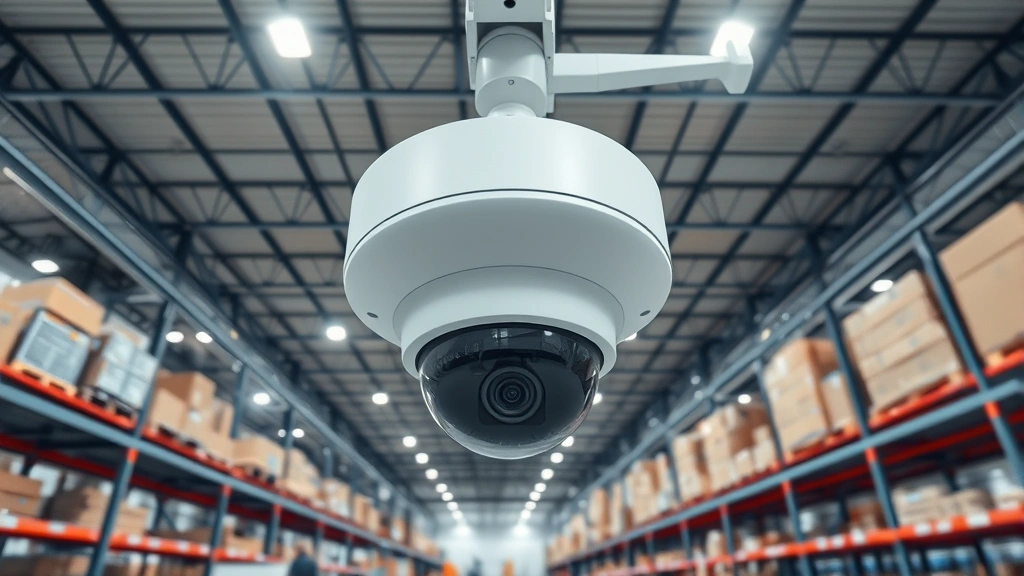
Are 360 Security Cameras Really Effective? Expert View
360-degree security cameras have revolutionized how businesses and homeowners approach surveillance, offering panoramic coverage that traditional fixed cameras cannot match. These omnidirectional systems capture complete visual data across expansive areas, eliminating blind spots and reducing the need for multiple camera installations. However, effectiveness extends far beyond the impressive 360-degree field of view—it encompasses image quality, cybersecurity vulnerabilities, integration capabilities, and real-world deployment scenarios.
Security professionals increasingly recognize that while 360 cameras provide exceptional spatial coverage, they introduce unique technical challenges that demand careful consideration. Understanding their true effectiveness requires examining both the substantial advantages and critical limitations these systems present. This comprehensive analysis explores whether 360 security cameras deliver on their promises and how to maximize their protective capabilities within your security infrastructure.
Understanding 360 Security Camera Technology
360-degree security cameras utilize advanced optical and digital technologies to capture complete panoramic views. These systems employ multiple sensors, fisheye lenses, or rotating mechanisms to achieve their comprehensive coverage. Understanding the technical foundation helps security decision-makers evaluate whether these cameras align with organizational requirements.
Fisheye lens technology represents the most common approach, using extreme wide-angle lenses that capture approximately 180 degrees vertically and 360 degrees horizontally. Advanced models incorporate image stitching algorithms that merge multiple sensor feeds into seamless panoramic displays. Some sophisticated systems employ rotating mechanisms that mechanically pan and tilt, capturing sequential 360-degree sweeps throughout surveillance areas.
The backend processing infrastructure proves equally important as the hardware components. 360-degree cameras generate massive data volumes—often exceeding 50-100 megabytes per minute depending on resolution settings. This requires robust storage solutions, efficient compression algorithms, and powerful processing capabilities. Professional installations typically implement edge computing at the camera level, performing initial analysis and compression before transmitting data to central monitoring systems.
Modern 360 cameras increasingly integrate artificial intelligence capabilities, including motion detection across the entire panoramic field, person and vehicle recognition, and anomaly identification. These intelligent features dramatically improve practical effectiveness by filtering irrelevant footage and alerting security personnel to genuine threats. When evaluating any security monitoring solution, understanding the technological sophistication becomes critical for maximizing protection.
Coverage Capabilities and Blind Spot Elimination
The most compelling advantage of 360-degree cameras lies in their ability to eliminate traditional surveillance blind spots. A single 360-degree camera replaces four to six conventional fixed cameras while providing continuous, seamless coverage. For security managers overseeing expansive retail spaces, warehouses, or parking facilities, this represents transformative operational improvement.
Single installation point advantage: Traditional security systems require multiple cameras positioned at different angles to cover large areas comprehensively. This necessitates extensive cabling infrastructure, multiple recording channels, and complex coordination between individual camera feeds. A single 360-degree camera mounted at a strategic central location achieves equivalent or superior coverage with minimal infrastructure investment.
Consider a warehouse environment spanning 50,000 square feet. Conventional camera systems might require 12-15 fixed cameras positioned around perimeters and overhead. Installation costs, cabling requirements, and maintenance responsibilities multiply accordingly. A strategically positioned 360-degree camera, perhaps suspended from the ceiling, captures the entire warehouse floor simultaneously, dramatically reducing installation complexity and operational overhead.
Dynamic monitoring capabilities: Advanced 360 systems enable security personnel to examine specific areas of interest within the panoramic view without repositioning hardware. Operators can digitally zoom into regions of concern, review high-resolution detail, and track suspicious activities across the complete field of view. This flexibility transforms security monitoring from passive observation into active threat investigation.
The elimination of blind spots directly enhances security effectiveness by preventing criminals from exploiting coverage gaps. Thieves, vandals, and intruders typically identify and exploit areas lacking surveillance. 360-degree cameras systematically remove these vulnerabilities, substantially increasing detection probabilities for unauthorized activities.
Perimeter security optimization: Organizations protecting valuable assets benefit dramatically from comprehensive perimeter coverage. A single 360-degree camera positioned at building corners captures approaching threats from all directions. This proves particularly effective for monitoring loading docks, parking areas, and building entrances where traditional fixed cameras leave dangerous gaps.

Image Resolution and Detail Challenges
While 360-degree cameras excel at comprehensive coverage, they present significant resolution trade-offs compared to specialized fixed cameras. This fundamental limitation directly impacts practical security effectiveness in critical identification scenarios.
Resolution distribution complexity: A typical 360-degree camera might capture 12-megapixel panoramic imagery. However, this resolution distributes across the complete 360-degree field, meaning any specific direction occupies only a fraction of available pixels. When security personnel zoom into a particular area to identify suspects or read vehicle license plates, effective resolution drops dramatically. What appears clear in the full panoramic view often becomes pixelated and unusable when isolated.
Consider facial recognition requirements, increasingly important for modern security operations. Identifying specific individuals from surveillance footage requires minimum 80-100 pixels across the face width. A 360-degree camera capturing a suspect 30 feet away might provide insufficient facial detail for reliable identification. Fixed high-resolution cameras positioned near entry points capture the same subject with vastly superior clarity, enabling forensic analysis and identification workflows.
License plate recognition limitations: Security professionals frequently require vehicle identification capabilities for parking enforcement, theft investigation, and access control. 360-degree cameras struggle with license plate legibility unless vehicles pass directly beneath the camera position. Fixed cameras strategically angled toward parking areas or building exits consistently outperform 360 systems for this critical application. External links to CISA guidelines emphasize matching camera capabilities to specific identification requirements.
Compensating through technology: Advanced 360 systems incorporate digital pan-tilt-zoom (PTZ) capabilities and AI-powered super-resolution algorithms that enhance zoomed imagery. These technological improvements partially mitigate resolution limitations, though they cannot fully replicate the capabilities of dedicated high-resolution fixed cameras positioned optimally for specific threat scenarios.
Effective security implementations often combine 360-degree cameras for comprehensive area coverage with strategic fixed high-resolution cameras for critical identification zones. This hybrid approach maximizes coverage efficiency while maintaining facial and license plate recognition capabilities where needed most.
Cybersecurity Risks and Vulnerability Exposure
360-degree security cameras introduce substantial cybersecurity considerations that security professionals must address proactively. These connected devices represent potential entry points for malicious actors seeking network access or surveillance data compromise.
Expanded attack surface: 360-degree cameras typically feature sophisticated network connectivity, cloud integration capabilities, and remote access functionality. Each networked feature introduces potential security vulnerabilities. Attackers can target outdated firmware, weak authentication mechanisms, or unencrypted data transmission to compromise cameras and access sensitive surveillance footage.
Security researchers from the National Institute of Standards and Technology document thousands of camera vulnerabilities annually. 360-degree systems, with their increased complexity and advanced features, present larger attack surfaces than basic fixed cameras. Vulnerable devices can be weaponized for botnet activities, data theft, or network reconnaissance.
Data privacy implications: 360-degree cameras capture comprehensive environmental data, including faces, conversations, and activities across expansive areas. This raises significant privacy concerns, particularly in residential settings or environments with reasonable privacy expectations. Compromised cameras could expose sensitive personal information to unauthorized parties.
Firmware and patch management: Maintaining security requires consistent firmware updates and security patch deployment. 360-degree camera systems often present patching challenges, particularly when deployed across distributed locations or integrated with legacy infrastructure. Delayed patch application leaves systems vulnerable to known exploits.
Effective cybersecurity strategies for 360 camera deployments include:
- Network segmentation: Isolate camera networks from critical business systems using firewalls and VLANs
- Strong authentication: Implement complex passwords, multi-factor authentication, and certificate-based access controls
- Encryption enforcement: Require TLS/SSL encryption for all data transmission and storage
- Regular vulnerability assessment: Conduct periodic security audits and penetration testing
- Firmware management: Establish automated patch deployment and version tracking procedures
Organizations considering 360-degree camera systems should review CISA security advisories for camera-specific vulnerabilities and implement corresponding protections. This proactive approach transforms cameras from potential security liabilities into reliable protective assets.
Integration with Existing Security Systems
Successful security camera implementations require seamless integration with broader organizational infrastructure. 360-degree cameras must work effectively within existing security ecosystems, analytics platforms, and operational workflows.
Video management system compatibility: Professional-grade 360 cameras require robust video management software (VMS) capable of handling panoramic data streams and advanced analytics. Not all legacy VMS platforms support 360-degree formats effectively. Organizations must evaluate compatibility requirements before deployment, potentially requiring software upgrades or platform migrations.
Analytics and intelligence extraction: The true value of 360-degree cameras emerges through advanced analytics capabilities. Modern systems integrate machine learning algorithms that identify threats, track individuals across panoramic fields, and generate intelligent alerts. These analytical capabilities transform raw footage into actionable security intelligence.
Access control integration: Sophisticated security deployments link camera systems with access control platforms, enabling coordinated threat response. When 360-degree cameras detect unauthorized access attempts near secured entry points, integrated systems can trigger alarms, lock doors, and alert security personnel simultaneously.
When examining comprehensive security documentation, integration requirements should feature prominently in evaluation criteria. Systems that integrate poorly with existing infrastructure create operational friction and reduce practical effectiveness.
Cloud and edge computing: 360-degree cameras generate substantial data volumes that strain traditional storage infrastructure. Modern deployments leverage cloud platforms for scalable storage and computing resources. Organizations must evaluate cloud provider security credentials, data residency requirements, and compliance obligations before committing to cloud-based 360 camera systems.
Real-World Effectiveness in Different Environments
Retail environments: 360-degree cameras prove exceptionally effective in retail spaces where comprehensive floor coverage prevents theft and loss. A single overhead 360-degree camera can monitor an entire store layout, capturing all customer interactions and employee activities. Retailers report significant reductions in inventory shrinkage after implementing panoramic camera systems.
Warehouse and logistics facilities: Large warehouse operations benefit tremendously from 360-degree coverage. These environments require monitoring across expansive areas with minimal infrastructure obstruction. 360 cameras suspended from ceiling structures provide complete visibility over receiving areas, storage zones, and shipping operations.
Parking facilities: Multi-level parking structures present unique surveillance challenges. Traditional camera systems leave numerous blind spots between rows and at structure perimeters. Strategic 360-degree camera placement dramatically improves security while reducing the overall number of installations required. However, license plate recognition capabilities may require supplementary fixed cameras for reliable vehicle identification.
Office and corporate environments: Professional workspaces benefit from 360-degree cameras in common areas, conference facilities, and building entrances. These systems capture visitor interactions and employee activities while maintaining privacy in individual offices.
Limitations in specific scenarios: 360-degree cameras struggle in environments requiring extreme detail at specific locations. Emergency rooms, jewelry stores, and high-value asset storage areas typically benefit more from specialized high-resolution fixed cameras positioned for optimal facial recognition and object identification.

Cost-Benefit Analysis for Your Needs
Determining whether 360-degree cameras represent appropriate investments requires careful analysis of organizational requirements, budget constraints, and security objectives.
Capital cost considerations: High-quality 360-degree camera systems typically cost $800-$3,000 per unit, compared to $200-$800 for conventional fixed cameras. However, the cost advantage emerges through reduced installation requirements. A single 360-degree camera replaces four to six fixed cameras, potentially reducing total hardware expenditure by 40-50% in many deployments.
Installation and infrastructure: 360 cameras often require less cabling infrastructure and fewer mounting locations than equivalent fixed camera coverage. This reduces installation labor costs and minimizes building modifications. Organizations can realize 30-40% savings on installation expenses compared to traditional multi-camera systems.
Operational efficiency: Fewer camera units mean simplified maintenance, easier firmware updates, and reduced troubleshooting complexity. Security personnel spend less time managing individual camera configurations and more time analyzing meaningful security data. These operational efficiencies compound over years of system operation.
Scalability and future expansion: Organizations anticipating facility expansion should consider 360-degree systems’ scalability advantages. Adding coverage to new areas requires fewer additional cameras and simpler infrastructure modifications compared to traditional systems.
Specific use case evaluation: Organizations requiring exceptional facial recognition or license plate identification capabilities may find that 360-degree cameras don’t justify their cost when specialized high-resolution alternatives prove more effective. Conversely, operations requiring comprehensive area coverage benefit tremendously from panoramic systems.
Effective cost-benefit analysis compares total cost of ownership (TCO) across five to ten year periods, including hardware, installation, maintenance, storage, and operational labor. Many organizations discover that 360-degree cameras deliver superior value when deployed strategically for comprehensive area monitoring, while maintaining specialized fixed cameras for critical identification requirements.
Professional security consultants can evaluate specific facility requirements and recommend optimal camera configurations. This customized approach ensures organizations invest in systems that maximize security effectiveness while optimizing budget allocation. When reviewing comprehensive security planning documentation, cost-benefit analysis should receive thorough examination.
FAQ
Are 360 security cameras better than traditional cameras?
360-degree cameras excel at comprehensive area coverage and eliminate blind spots, making them superior for monitoring large open spaces. However, traditional fixed cameras provide better detail for facial recognition and license plate identification. Most effective security systems combine both technologies—360 cameras for perimeter and area coverage, fixed cameras for critical detail zones.
Can 360 cameras be hacked?
Yes, 360-degree cameras present cybersecurity risks like all connected devices. They require robust security practices including strong authentication, encryption, regular firmware updates, and network segmentation. Organizations should implement comprehensive cybersecurity protocols when deploying any panoramic camera system. Reference NIST cybersecurity guidelines for detailed implementation standards.
What resolution do 360 security cameras offer?
Most professional 360-degree cameras capture 8-12 megapixels in panoramic format. However, this resolution distributes across the complete 360-degree field. When zooming into specific areas, effective resolution drops significantly. For comparison, specialized fixed cameras often provide 2-5 megapixels concentrated on specific zones, delivering superior detail for identification purposes.
How much storage do 360 cameras require?
360-degree cameras generate 50-100 megabytes per minute depending on resolution and compression settings. A single camera operating continuously generates approximately 70-140 gigabytes daily. Organizations typically implement tiered storage strategies combining edge storage at camera locations with cloud or datacenter systems for long-term retention. Consult CISA storage security recommendations for data protection standards.
Are 360 cameras suitable for residential use?
Residential applications benefit from 360-degree cameras in common areas like garages, driveways, and outdoor perimeters. However, privacy considerations and resolution requirements may favor traditional cameras for specific applications. Homeowners should evaluate their specific security objectives and privacy concerns before implementing panoramic systems.
How do 360 cameras compare in cost to traditional systems?
Individual 360-degree cameras cost more than single fixed cameras ($800-$3,000 vs. $200-$800), but total system costs often favor 360 systems because fewer units provide equivalent coverage. Organizations typically save 40-50% on hardware and 30-40% on installation compared to traditional multi-camera systems providing similar coverage.


