1080p Security Cameras: Are They Enough? Expert Insight
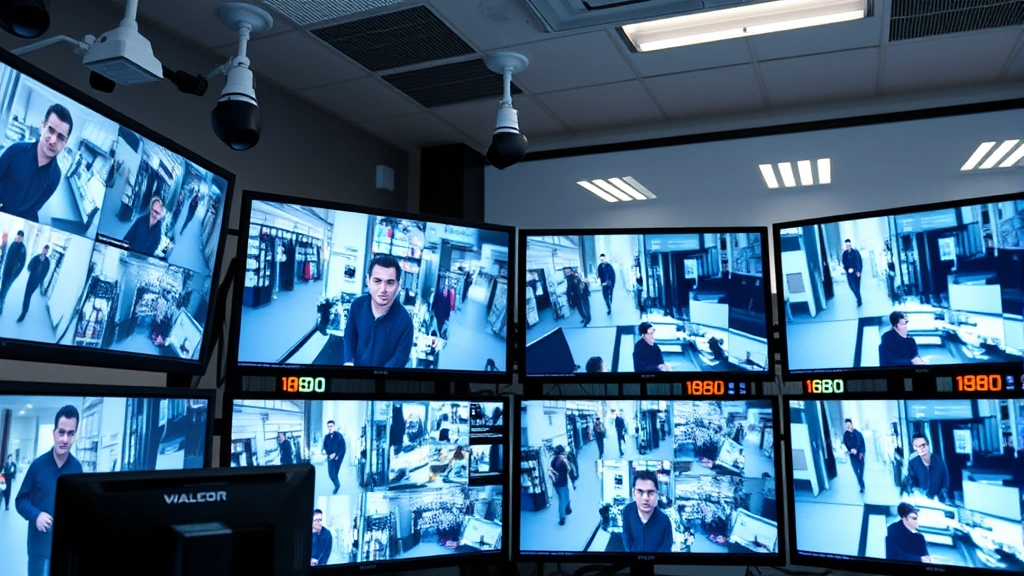
Security camera technology has evolved dramatically over the past decade, yet many property owners remain uncertain about whether 1080p resolution provides adequate protection for their homes and businesses. The debate between 1080p and higher resolutions like 2K, 4K, and beyond continues to dominate security conversations, with valid arguments on both sides. Understanding the capabilities and limitations of 1080p security cameras is essential for making informed decisions about your surveillance infrastructure.
The proliferation of affordable 1080p cameras has democratized security monitoring, allowing small businesses and homeowners to implement comprehensive surveillance systems without breaking the bank. However, as cyber threats evolve and criminal tactics become more sophisticated, the question of whether 1080p resolution suffices for identifying perpetrators and gathering forensic evidence has become increasingly complex. This comprehensive guide examines the technical specifications, practical applications, security implications, and expert recommendations regarding 1080p security cameras in today’s threat landscape.
Understanding 1080p Resolution Basics
1080p resolution, also known as Full HD (High Definition), delivers 1920 x 1080 pixels of image data. This translates to approximately 2.07 megapixels per frame, providing substantially more detail than older 720p systems which offered only 1280 x 720 pixels. When security professionals evaluate camera specifications, pixel count represents just one factor among many that determine overall image quality and usability.
The technical foundation of 1080p cameras involves sensor technology, lens quality, and compression algorithms. Modern 1080p security cameras employ either CMOS (Complementary Metal-Oxide-Semiconductor) or CCD (Charge-Coupled Device) sensors, with CMOS sensors dominating contemporary installations due to superior low-light performance and cost efficiency. The frame rate, typically measured in frames per second (fps), significantly impacts video smoothness and motion capture capability. Most 1080p security systems operate at 30fps, though some models support 60fps for enhanced motion tracking.
Compression standards like H.264 and H.265 (HEVC) determine how efficiently video data is stored and transmitted. H.265 offers approximately 50% better compression than H.264, meaning 1080p footage requires substantially less bandwidth and storage when encoded with newer compression technology. This distinction becomes critical when evaluating system scalability and long-term operational costs, particularly for organizations considering comprehensive security infrastructure implementations.

Forensic Capability and Identification
The central question surrounding 1080p adequacy concerns forensic capability—the ability to identify individuals, read license plates, and capture actionable details from recorded footage. Law enforcement agencies and security researchers have established that facial recognition and positive identification typically require minimum pixel density of 100-150 pixels per face at the point of capture. For 1080p systems, this practical limitation means subjects must be within approximately 8-12 feet of the camera for reliable facial identification.
License plate recognition presents another critical forensic consideration. The National Highway Traffic Safety Administration (NHTSA) establishes that readable license plate capture requires approximately 80-100 pixels of plate width. Standard 1080p cameras positioned at typical distances of 20-30 feet struggle to meet these requirements without specialized lenses or digital zoom functionality. This limitation has significant implications for parking lot surveillance, perimeter monitoring, and vehicle tracking applications.
Independent testing conducted by NIST (National Institute of Standards and Technology) demonstrates that 1080p systems excel at identifying individuals within controlled environments where subject distance remains predictable. However, real-world deployments frequently involve variable distances, adverse lighting conditions, and dynamic scene composition that reduce practical forensic value. Security professionals consistently report that 1080p footage proves adequate for general activity monitoring but frequently insufficient when law enforcement requires positive suspect identification for prosecution.
Coverage Area and Camera Placement
One fundamental advantage of 1080p cameras involves their balance between coverage area and detail capture. A single 1080p camera with appropriate lens selection can effectively monitor larger areas compared to lower resolutions while maintaining sufficient detail for general investigative purposes. The field of view (FOV) depends on lens focal length, with standard 3.6mm lenses providing approximately 78-90 degree horizontal FOV suitable for general area surveillance.
Strategic camera placement significantly impacts 1080p system effectiveness. Positioning cameras to minimize backlighting, control reflections, and optimize subject distance dramatically improves usable footage quality. Security professionals recommend installing 1080p cameras at heights of 8-10 feet for optimal facial capture during normal human interaction, positioning them to capture perpendicular views rather than profile angles whenever possible. Understanding visual composition principles helps security teams maximize forensic value from fixed installations.
Environmental factors dramatically influence 1080p camera performance. Outdoor installations must account for weather conditions, seasonal lighting variations, and infrared interference from competing light sources. Modern 1080p cameras typically feature infrared (IR) illumination with 20-30 meter effective range for nighttime surveillance, though IR effectiveness degrades significantly when moisture, dust, or reflective surfaces interfere with light propagation. Indoor environments present different challenges, particularly in retail or office settings where fluorescent lighting flicker, glass reflections, and dynamic activity patterns complicate consistent footage quality.
Cybersecurity Risks and Vulnerabilities
While 1080p resolution questions dominate casual security discussions, cybersecurity professionals emphasize that video quality represents only one component of comprehensive security system risk assessment. 1080p security cameras, like all networked devices, present significant cyber attack surface requiring rigorous protection protocols. Legacy 1080p systems frequently lack modern security features, making them attractive targets for threat actors seeking to establish persistent network access or compromise sensitive surveillance data.
Common vulnerabilities in 1080p camera systems include weak default credentials, unpatched firmware, unencrypted transmission protocols, and lack of mutual authentication between cameras and management software. The Cybersecurity and Infrastructure Security Agency (CISA) has documented numerous incidents where compromised security cameras served as entry points for broader network infiltration. Attackers exploit camera systems to establish command-and-control infrastructure, exfiltrate sensitive data, or launch distributed denial-of-service attacks against external targets.
Organizations deploying 1080p camera systems must implement network segmentation, isolating cameras on dedicated VLAN infrastructure separate from critical business systems. Mandatory firmware updates, strong authentication protocols, and encrypted communication channels (TLS 1.2 minimum) represent essential security controls. Regular vulnerability assessments and penetration testing help identify configuration weaknesses before exploitation occurs. Many security professionals recommend implementing behavior-based anomaly detection systems that monitor camera traffic patterns for indicators of compromise or unauthorized access attempts.
1080p vs Higher Resolutions
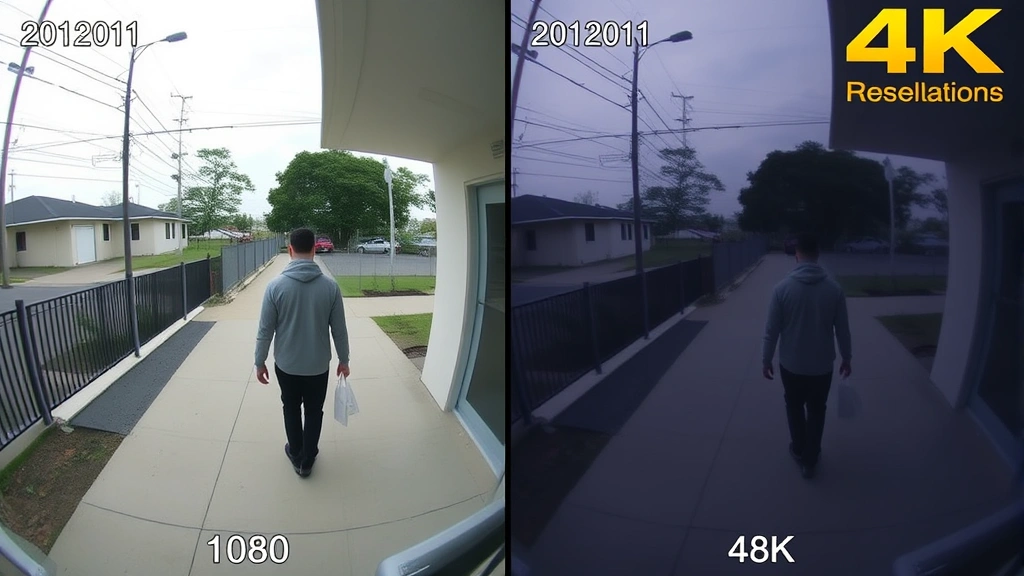
The resolution landscape now includes 2K (2560 x 1440), 4K (3840 x 2160), and emerging 8K options, each offering substantially more pixel density than 1080p. 4K cameras deliver approximately four times the resolution of 1080p, enabling facial identification at distances up to 25-30 feet and reliable license plate capture at 40-50 feet. This significant forensic advantage comes with corresponding increases in storage requirements, bandwidth consumption, and processing demands.
Storage implications become apparent when comparing resolution options. A single 1080p camera recording 24/7 at 30fps typically consumes 100-150 GB daily when using H.264 compression, or approximately 50-75 GB with H.265 compression. The equivalent 4K camera requires 400-600 GB daily storage, representing a four to six-fold increase in infrastructure costs. For organizations operating dozens of cameras across multiple locations, this storage burden becomes financially significant and operationally complex.
Bandwidth requirements similarly scale with resolution increases. A 1080p stream typically consumes 2-4 Mbps bandwidth depending on compression and frame rate settings, while 4K streams demand 8-15 Mbps per camera. Organizations with limited network infrastructure or remote locations with constrained connectivity frequently find 1080p systems more practical despite lower forensic capability. The decision between 1080p and higher resolutions ultimately depends on balancing forensic requirements against operational constraints and budget limitations.
Real-World Applications and Use Cases
1080p security cameras prove entirely adequate for numerous common applications. Retail environments using 1080p systems effectively deter shoplifting, document suspicious activity, and provide general loss prevention monitoring. The combination of multiple strategically positioned 1080p cameras creates comprehensive coverage while maintaining manageable storage and bandwidth requirements. Most retail loss prevention professionals confirm that 1080p resolution suffices for their investigative needs when combined with appropriate camera placement and lighting optimization.
Small business perimeter monitoring, warehouse inventory tracking, and office access control applications similarly benefit from 1080p systems. These environments typically feature controlled distances, consistent lighting conditions, and limited subject complexity compared to outdoor or high-traffic scenarios. 1080p resolution provides adequate detail for general activity documentation while maintaining cost-effectiveness for budget-conscious organizations. Integrating 1080p cameras with access control systems enhances security posture by correlating video footage with authentication records.
Applications requiring positive facial identification, such as high-security facilities, sensitive government installations, or law enforcement evidence collection, typically necessitate 4K or higher resolutions. Financial institutions, jewelry stores, and other high-value target environments increasingly deploy 4K systems despite higher operational costs, recognizing that superior forensic capability justifies the investment. However, many organizations successfully implement hybrid approaches, deploying 4K cameras at critical points (entrances, cash registers, safes) while using 1080p cameras for general area coverage and perimeter monitoring.
Best Practices for 1080p Systems
Organizations committed to maximizing 1080p system effectiveness should prioritize several essential practices. First, implement rigorous camera placement strategy, positioning cameras to minimize distance to subjects of interest and optimize viewing angles. Perpendicular camera positioning (capturing frontal views rather than profile angles) dramatically improves facial recognition accuracy and identity verification capability. Avoid placing cameras at extreme heights or angles that distort facial features or obscure identifying characteristics.
Second, optimize lighting conditions through environmental assessment and supplemental illumination when necessary. Backlighting scenarios where subjects appear in silhouette severely degrade 1080p image quality and forensic value. Installing supplemental lighting, reflectors, or repositioning cameras to eliminate backlighting represents a cost-effective improvement strategy. For outdoor installations, regular lens cleaning maintains image clarity and prevents weather-related degradation from dust, pollen, or moisture accumulation.
Third, establish comprehensive firmware update and security patching protocols. Manufacturers regularly release security updates addressing newly discovered vulnerabilities in 1080p camera systems. Organizations should maintain inventory of all deployed cameras, track manufacturer security advisories, and implement updates within defined timeframes. This security discipline prevents exploitation of known vulnerabilities and reduces breach risk substantially. Additionally, implement strong authentication through unique passwords, multi-factor authentication where supported, and role-based access controls limiting camera management privileges.
Fourth, design storage architecture supporting extended retention periods. The forensic value of recorded footage increases when investigators can access weeks or months of historical data. Organizations should calculate storage requirements based on investigation timelines, regulatory retention obligations, and budget constraints. Cloud storage solutions offer scalability and redundancy benefits but introduce additional cybersecurity considerations regarding data transmission security and third-party access controls. Local storage provides superior security but requires robust backup and disaster recovery planning.
Fifth, integrate 1080p systems with professional monitoring services or security operations center (SOC) capabilities. Live monitoring enables rapid response to detected incidents, while recorded footage review supports post-incident investigation. Many organizations combine 1080p cameras with motion detection algorithms that generate alerts when activity occurs in designated zones, enabling efficient use of limited security personnel. This integration approach maximizes forensic and deterrent value from 1080p system investments.
FAQ
Is 1080p sufficient for identifying suspects?
1080p resolution provides adequate facial detail for identification when subjects remain within 8-12 feet of the camera under optimal lighting conditions. For distances exceeding 15 feet, 1080p frequently proves insufficient for positive identification. Law enforcement agencies recommend 4K or higher resolutions for applications requiring positive suspect identification. Hybrid approaches deploying high-resolution cameras at critical points combined with 1080p general coverage optimize both forensic capability and cost-effectiveness.
How much storage does a 1080p camera require?
A single 1080p camera recording 24/7 at 30fps typically consumes 100-150 GB daily storage with H.264 compression, or 50-75 GB daily with H.265 compression. Storage requirements vary based on frame rate, compression algorithm, and image complexity. Organizations should calculate requirements based on desired retention periods—30 days typically requires 3-4.5 TB per camera with H.264 compression, or 1.5-2.25 TB with H.265 compression.
What cybersecurity risks do 1080p cameras present?
1080p security cameras present substantial cybersecurity risks including weak default credentials, unpatched firmware vulnerabilities, unencrypted transmission, and inadequate authentication mechanisms. Compromised cameras serve as network entry points for broader system infiltration, data exfiltration, or distributed attack infrastructure. Organizations must implement network segmentation, firmware updates, encrypted communications, and regular vulnerability assessments to mitigate these risks.
Should I upgrade from 1080p to 4K?
The upgrade decision depends on forensic requirements, budget constraints, and operational considerations. 4K systems provide superior identification capability at greater distances but consume four times the storage and bandwidth. Organizations with high-value targets, stringent identification requirements, or law enforcement partnerships typically benefit from 4K investment. Cost-conscious organizations with adequate 1080p placement and controlled environments may optimize existing systems rather than upgrading.
Can 1080p cameras read license plates?
Standard 1080p cameras positioned at typical surveillance distances struggle to capture readable license plates due to insufficient pixel density on the plate area. License plate recognition typically requires 80-100 pixels of plate width, necessitating either closer camera positioning, specialized lenses, or higher resolution systems. Organizations requiring reliable license plate capture should deploy 4K cameras or implement specialized ANPR (Automatic Number Plate Recognition) systems designed specifically for this application.
How do I secure a 1080p camera system?
Security protocols for 1080p systems include implementing strong unique passwords, enabling firmware updates immediately upon release, using encrypted communication channels (TLS 1.2 minimum), implementing network segmentation, restricting administrative access, and conducting regular vulnerability assessments. Organizations should consult CISA cybersecurity guidance and manufacturer security recommendations for comprehensive hardening procedures. Regular penetration testing helps identify configuration weaknesses before exploitation occurs.


