Are You Safe? 100 Bill Security Features Explained
The $100 bill represents one of the most counterfeited denominations in circulation, making its security features critically important for financial protection. Understanding these anti-counterfeiting mechanisms isn’t just academic—it’s essential for anyone handling cash regularly. From the Federal Reserve to everyday merchants, the ability to authenticate currency prevents fraud and protects economic integrity.
The U.S. Treasury Department and Bureau of Engraving and Printing have invested decades into developing sophisticated security measures that are difficult to replicate. These features work together in a layered defense system, combining optical, tactile, and structural elements that make counterfeiting exponentially more challenging. Whether you’re a business owner, banker, or simply curious about financial security, this comprehensive guide reveals how modern currency protection works.
Historical Evolution of $100 Bill Security
The $100 bill’s security journey spans over a century of continuous innovation. The original 1914 design featured basic anti-counterfeiting measures, but modern counterfeiting technology required dramatic upgrades. In 1996, the Treasury Department introduced a completely redesigned $100 bill incorporating cutting-edge security features that fundamentally changed how currency protection works.
The 2013 redesign represented the most significant update since 1996, introducing technologies that were previously impossible to implement. These enhancements responded to increasingly sophisticated counterfeiting operations that had begun exploiting vulnerabilities in earlier designs. According to Treasury Department officials, the evolution continues as new threats emerge. Each redesign requires extensive testing and public education to ensure widespread adoption.
Modern $100 bills incorporate over 15 major security features working in concert. This multi-layered approach means that replicating even one feature requires specialized equipment, and duplicating all of them simultaneously is virtually impossible for counterfeiters. Understanding this historical context helps explain why contemporary bills look and feel dramatically different from those printed even twenty years ago.
Primary Visual Security Features
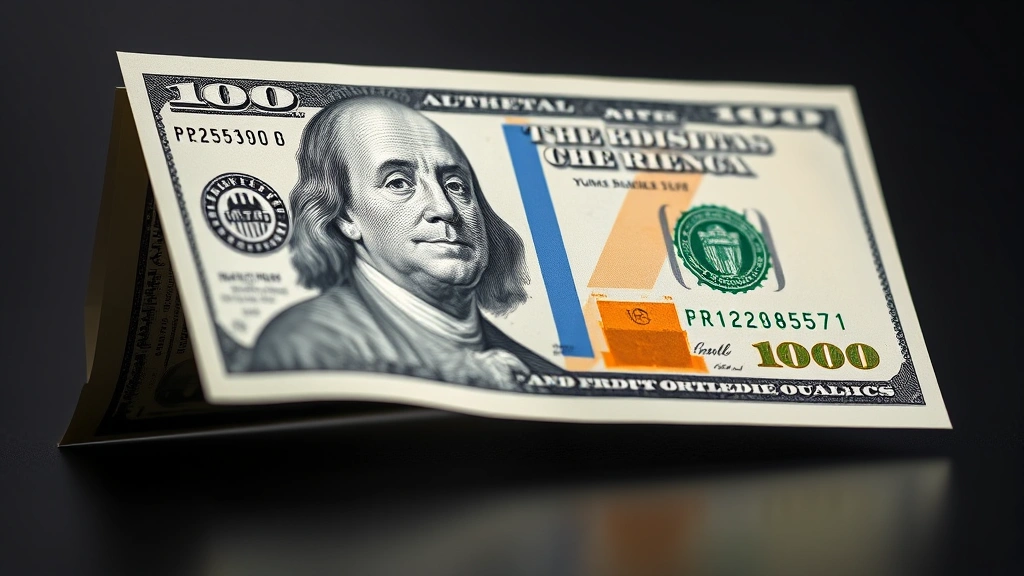
The most immediately noticeable security elements on modern $100 bills serve as first-line defenses. The portrait of Benjamin Franklin dominates the front, rendered with extraordinary detail and precision that’s nearly impossible to duplicate with standard printing technology. The portrait’s depth and shading demonstrate advanced intaglio printing techniques that require specialized presses costing hundreds of thousands of dollars.
Color is another critical visual feature—authentic $100 bills display a distinctive blend of blue, green, and black inks that create a sophisticated appearance. The background patterns on both sides incorporate intricate designs that serve dual purposes: they enhance security while creating visual interest. These background elements include fine lines, geometric patterns, and historical imagery that require precision far beyond consumer-grade printing capabilities.
The Treasury Seal appears prominently on the front, featuring an eagle and shield design with specific proportions and details. Any deviation from these exact specifications indicates a counterfeit bill. Similarly, the Federal Reserve Seal on the opposite side contains security elements that counterfeiters frequently misrepresent. The positioning, color, and fine detail work within these seals create additional barriers to successful counterfeiting.
Advanced Optical Elements
One of the most sophisticated features involves optical security elements that change appearance when viewed from different angles. The $100 bill includes color-shifting ink in the lower right corner that transitions from copper to green when tilted. This effect results from specialized metallic particles suspended in ink—a technology that requires advanced manufacturing and quality control.
The bill’s overall design employs what security experts call “visual depth perception”—the combination of multiple printing layers creates a three-dimensional effect that’s nearly impossible to replicate photographically. This depth comes from careful registration of different colored inks and the use of both raised and recessed printing surfaces. When you examine an authentic bill under magnification, you’ll observe layers of detail that suggest genuine currency rather than a flat reproduction.
Viewing windows and see-through elements represent another category of optical security. While the current $100 bill doesn’t include a window like some international currencies, the design does incorporate elements that reveal different images depending on viewing angle. These optical tricks exploit fundamental principles of light refraction and human perception, making them exceptionally difficult to counterfeit without access to specialized technology and materials.
Tactile and Structural Features
The physical feel of currency provides crucial authentication information that counterfeiters struggle to replicate. Authentic $100 bills are printed on a specialized blend of 75% cotton and 25% linen, creating a distinctive texture that differs dramatically from standard paper. This composition gives genuine currency a specific weight, stiffness, and tactile quality that trained handlers recognize immediately.
The raised printing created through intaglio processes produces actual texture variations across the bill’s surface. When you run your finger across authentic currency, you can feel the portrait, text, and design elements created by the raised ink. Counterfeiters using offset printing or digital reproduction methods cannot achieve this tactile authenticity—the bill feels smooth in comparison to genuine currency.
The bill’s overall dimensions and thickness are precisely controlled through manufacturing specifications. Authentic $100 bills measure exactly 6.14 inches by 2.61 inches and maintain consistent thickness throughout. Variations in these measurements, detectable through precise measurement or experienced handling, indicate counterfeiting. The currency’s structural integrity also includes subtle design elements positioned at specific measurements that serve as reference points for authenticity verification.
Microprinting and Hidden Details
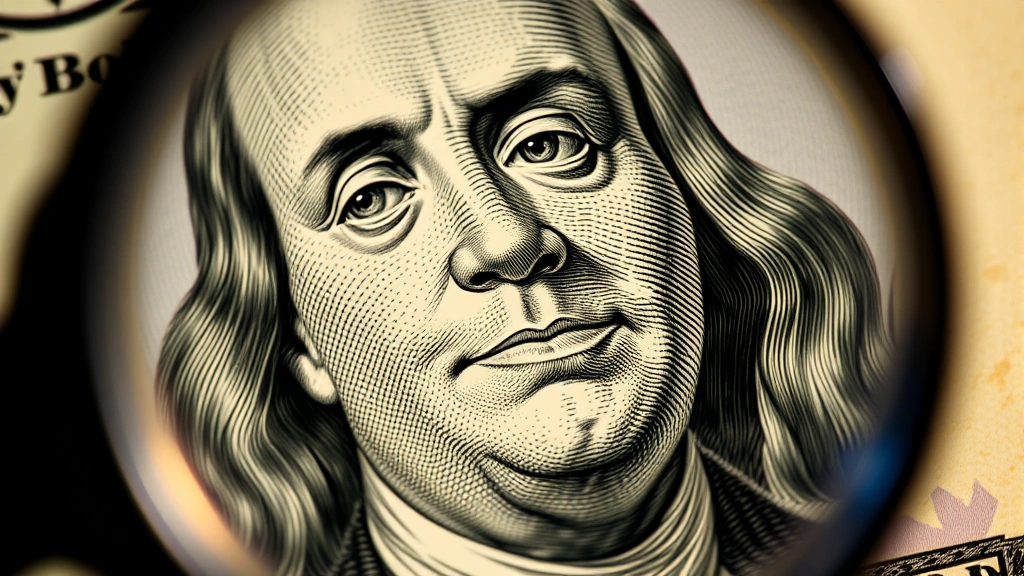
Microprinting represents one of the most effective anti-counterfeiting technologies employed on modern currency. The $100 bill incorporates microprinted text in multiple locations—including within the portrait itself, along borders, and integrated into background designs. This text is so small that it’s invisible to the naked eye but becomes clear under magnification of 10x or greater.
The challenge for counterfeiters lies in the fact that microprinting requires specialized equipment and extremely precise registration. Even slight misalignment becomes apparent under magnification. The text within microprinted areas often reads “THE UNITED STATES OF AMERICA” or similar phrases, serving as hidden verification elements that only trained inspectors or security professionals routinely check.
Beyond microprinting, the bill includes hidden images that emerge only under specific lighting conditions or magnification levels. These elements serve as redundant security measures—if one feature is compromised, others remain effective. The combination of multiple hidden details creates a security profile so complex that replicating all elements simultaneously requires access to classified manufacturing specifications and equipment that governments strictly control.
Color-Shifting Ink Technology
The copper-to-green color-shifting ink in the lower right corner represents one of the most visually striking security features on modern $100 bills. This effect results from metallic particles—typically composed of aluminum and iron oxide—suspended within the ink matrix. These particles reflect light differently depending on viewing angle, creating the characteristic color shift.
Manufacturing color-shifting ink requires precise control over particle size, shape, and composition. The particles must be uniformly distributed throughout the ink without settling or separating during production. Quality control testing ensures that every bill exhibits the same color-shifting characteristics, creating a consistent authentication standard that consumers and businesses can rely upon.
Counterfeiters have attempted to replicate this feature using various techniques, from holographic overlays to specially formulated inks. However, the specific optical properties of genuine color-shifting ink remain difficult to duplicate. The ink’s behavior under different lighting conditions—incandescent, fluorescent, natural sunlight—varies in ways that are challenging to predict and replicate without access to proprietary formulations.
Watermarks and Security Threads
Watermarks on currency represent an ancient security concept modernized for contemporary counterfeiting prevention. The $100 bill features a watermark portrait of Benjamin Franklin positioned in the upper right corner, visible when held up to light. This watermark is created during paper manufacturing by varying the density of the cotton-linen blend—it’s literally built into the currency’s substrate rather than printed on top.
Creating watermarks requires specialized papermaking equipment and precise control over fiber distribution. The watermark appears in the exact same location on every bill, with consistent density and clarity. Counterfeiters attempting to create watermarks through printing or other surface methods fail because the watermark must exist within the paper’s structure itself.
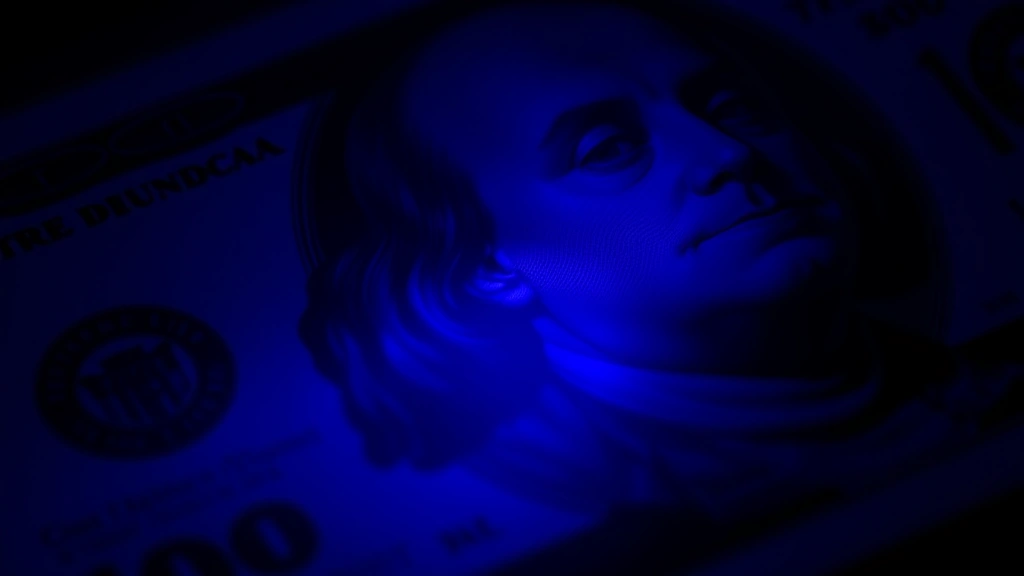
The security thread embedded within the bill’s paper represents another crucial structural feature. This thin plastic or metallic strip runs vertically through the currency and contains microprinted text that reads “USA 100” and other identifying information. The thread’s position, width, and embedded text are precisely specified, and any deviation indicates counterfeiting. Under ultraviolet light, the security thread glows with a specific color—another verification element that counterfeiters struggle to replicate accurately.
Detection Methods for Counterfeiters
Financial institutions and law enforcement agencies employ sophisticated detection methods that go far beyond visual inspection. The Federal Bureau of Investigation’s Counterfeiting Division utilizes advanced imaging technology, spectroscopy, and material analysis to identify counterfeit currency. These methods detect chemical composition variations, printing technique differences, and substrate anomalies that distinguish genuine bills from counterfeits.
Machine-based currency verification systems deployed in banks and high-volume retail operations employ optical scanning, magnetic field detection, and infrared imaging. These machines can process hundreds of bills per minute, identifying counterfeits with accuracy rates exceeding 99.9%. The technology detects subtle variations in ink composition, paper density, and design element positioning that would be invisible to human inspectors.
Forensic analysis of suspected counterfeit currency involves examining ink composition through mass spectrometry, paper fiber analysis through microscopy, and printing technique evaluation through electron microscopy. These scientific methods can definitively determine whether a bill is genuine or counterfeit, often revealing information about the counterfeiting operation’s location, equipment, and materials. The National Institute of Standards and Technology maintains reference standards for authentic currency that law enforcement agencies use for comparison purposes.
How to Spot Fake Currency
Trained currency handlers use the “FEEL” method: Feel the texture and weight, Examine the color and design details, Examine again using magnification, and Look for security features under different lighting conditions. This systematic approach catches most counterfeits through sensory evaluation rather than relying solely on visual inspection.
The texture test involves running your finger across the bill’s surface, feeling for the raised texture created by intaglio printing. Counterfeit bills typically feel smoother because offset or digital printing methods cannot create genuine tactile texture. The weight comparison—authentic $100 bills weigh exactly 1 gram—can be verified using precision scales if you suspect a bill’s authenticity.
Examining the bill under magnification reveals microprinting details, fine line work in background designs, and portrait rendering quality that counterfeits cannot replicate. The microprinting within Benjamin Franklin’s portrait should read “THE UNITED STATES OF AMERICA” when viewed under 10x magnification. Counterfeit versions often show blurry, misaligned, or completely absent microprinting.
UV light examination reveals the security thread’s glow color and watermark visibility. Authentic $100 bills display a specific ultraviolet fluorescence pattern that counterfeiters struggle to replicate. If you have access to UV light sources, this test provides definitive authentication for trained observers. The security thread should glow with a specific color (typically green or blue depending on lighting) and display clear microprinted text.
The color-shifting ink test requires tilting the bill in good lighting to observe the copper-to-green color transition in the lower right corner. This transition should be smooth and consistent across the entire area. Counterfeit versions often show abrupt color changes, uneven coloring, or complete absence of the color-shifting effect. The optical properties of this feature remain one of the most difficult elements for counterfeiters to duplicate convincingly.
FAQ
What makes the $100 bill harder to counterfeit than other denominations?
The $100 bill’s high value makes it a primary counterfeiting target, which drove the Treasury Department to implement more security features than lower denominations. The combination of color-shifting ink, microprinting, specialized watermarks, and security threads creates a security profile that’s exponentially more difficult to replicate than $1 or $20 bills. Additionally, the $100 bill undergoes more frequent authentication by banks and businesses, increasing detection likelihood for counterfeits.
Can I check my $100 bills at home without special equipment?
Yes, basic authenticity verification is possible at home using simple tests. Feel the bill’s texture, compare its weight to a known authentic bill, examine the microprinting under a magnifying glass, and hold it up to light to check the watermark and security thread. However, definitive authentication of questionable bills should be performed by banks or law enforcement agencies that have access to specialized equipment and reference standards.
How often do banks reject counterfeit $100 bills?
Banks rarely encounter counterfeit currency in modern circulation because security features are highly effective and detection technology is sophisticated. When counterfeits are discovered, they’re typically identified through automated scanning systems before entering circulation. The Federal Reserve reports that counterfeiting rates remain below 0.01% of all currency in circulation, indicating that modern security measures work effectively.
What should I do if I suspect I have a counterfeit bill?
Do not attempt to spend a suspected counterfeit bill. Contact your local police department or the U.S. Secret Service, which maintains a dedicated counterfeiting investigation program. Provide the bill in its original condition without handling it excessively. Law enforcement will conduct forensic analysis and investigate the bill’s origin to identify potential counterfeiting operations.
Are older $100 bills less secure than newer versions?
Older $100 bills printed before 1996 contain significantly fewer security features than modern versions. Bills from the 1980s and early 1990s are considerably more vulnerable to counterfeiting because they lack color-shifting ink, modern microprinting, and updated security threads. The Treasury Department periodically withdraws older currency from circulation, gradually replacing it with redesigned bills that incorporate current security technology.
Can digital printing technology replicate $100 bill security features?
Digital printing technology has improved dramatically, but it cannot reliably replicate all $100 bill security features. The raised texture from intaglio printing, the watermark embedded in the paper substrate, the metallic particles in color-shifting ink, and the security thread’s integration into the paper structure all require specialized equipment that’s beyond consumer or commercial printing capabilities. This fundamental technological limitation makes large-scale counterfeiting extremely difficult.


